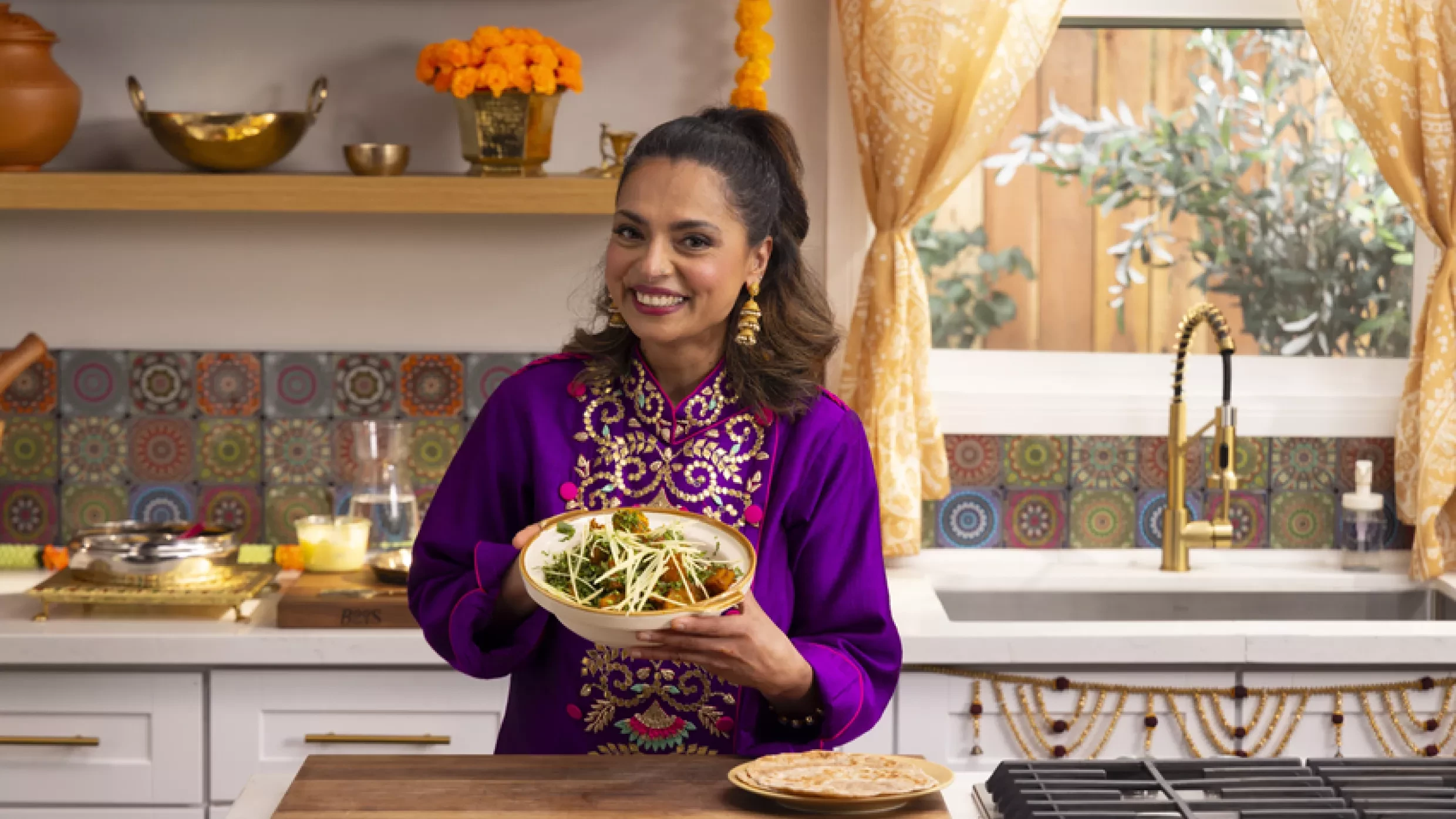
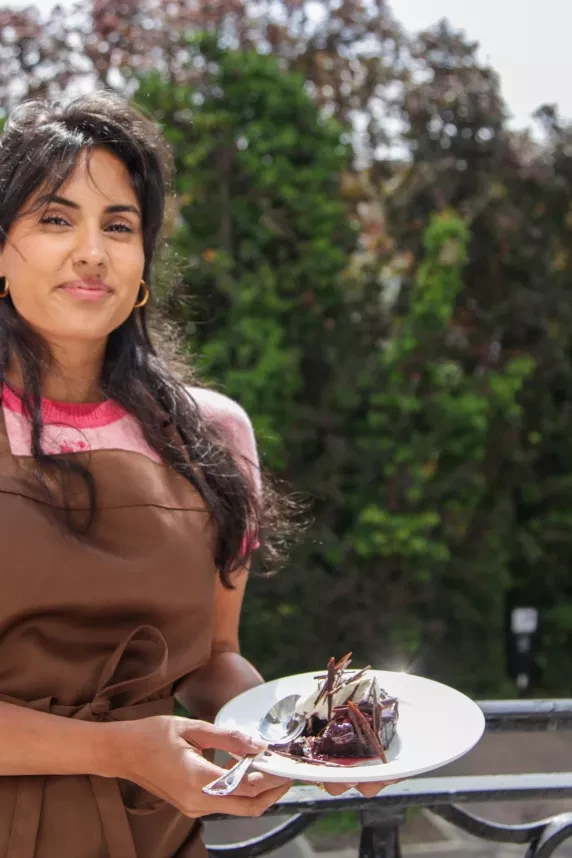



James Beard award-winning chef, author, and restaurateur, Maneet Chauhan knows a thing or two about cooking. During her trip to London, we caught up with her over a coffee and chai in the Shard, overlooking panoramic views of the city. Maneet's journey has been, in her own words, "long and dogged", from studying hotel administration to becoming a fan-favourite Food Network personality and a leading American-Indian chef. We talked through it all, including her take on what makes food authentic, her advice for those new to the industry, and just why she thinks women have been so successful in 'Tournament of Champions.'
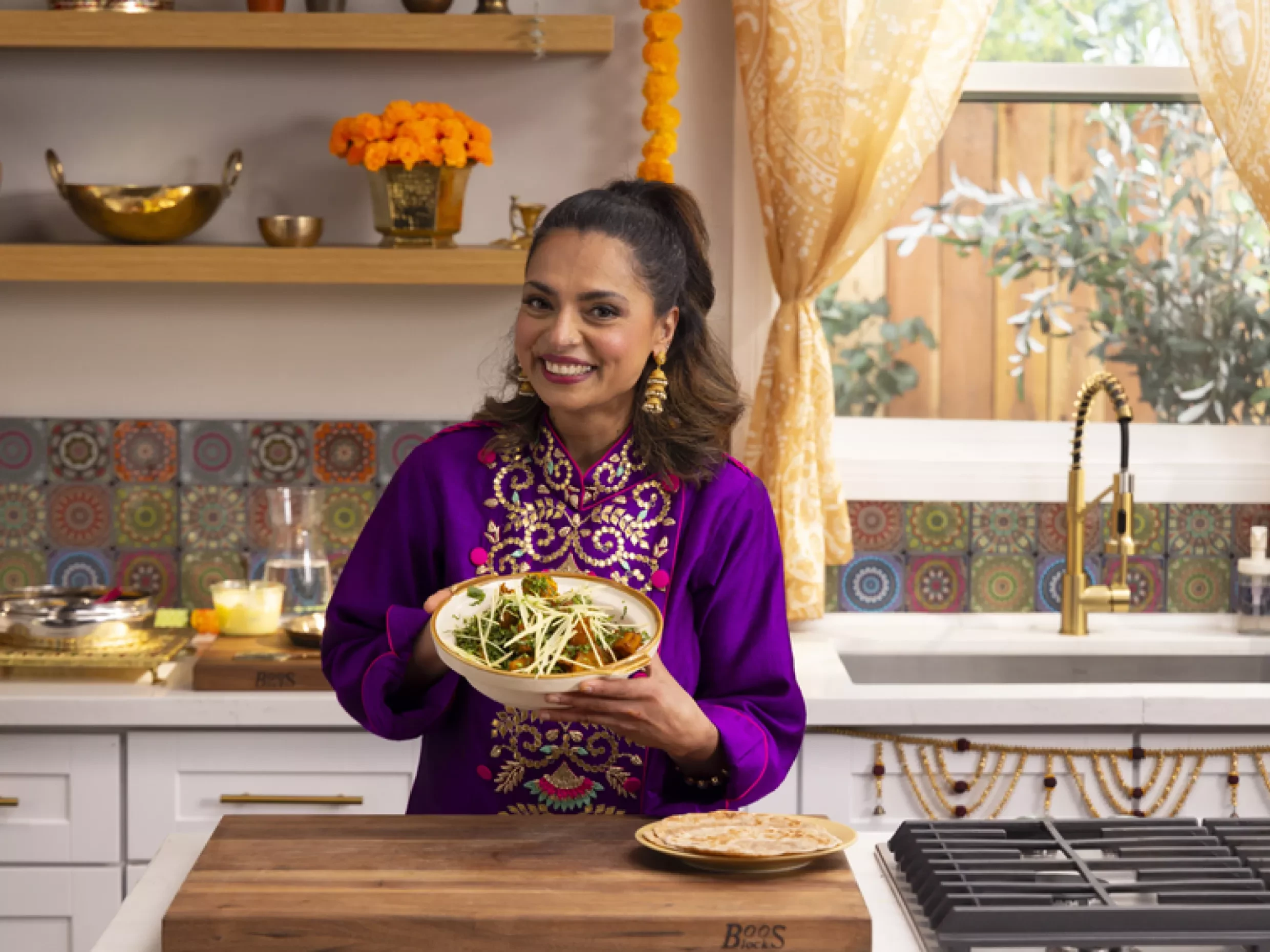
"It's been a long, dogged journey... but I guess that's why it's so gratifying."
It's safe to say, Maneet has always been a foodie. As a child, she would go over to her neighbours' houses after dinner, telling them that she hadn't been fed to get her fix of seconds and thirds. This was how she first experienced the variety of Indian food, and how food can bring people together. "One of my neighbours, she was from Southern India. She didn't know English or Hindi or Punjabi which were the three languages that I spoke. I would walk into her kitchen and I would spend hours with her, not knowing the same language, but we communicated over food. And I think that to me was what really drew me to food. I realised really early on that I could have a conversation without even words, because there was food involved. Food is such a powerful connector."
Maneet went against the norm in India. The path of a doctor or engineer was not one which she wished to follow, and the surprise that this was met with became a motivator for her: "There was also that entire; Really? You say I can't do it? I'll do it and I'll show you." Her parents supported her decision, however at that time culinary schools weren't common in India. She did her undergrad in hotel administration, which has been invaluable to her today as a business owner. With a degree in the bag, she began her journey in the US, attending the prestigious Culinary Institute of America (CIA).
"My first perception of American cuisine was the huge portions... But my lasting impression was the diversity."
When Maneet arrived in Chicago, her sister brought her to Chili's for her first American dining experience. Free from the watchful eye of her parents, she ordered a margarita. "There comes a bucket and I'm looking at it and I'm looking at my sister and I'm like... what's going on? Then came the food... It was humongous." However, the true insight she got into American food was at the Culinary Institute. "American cuisine has such an incredible rich history which has been because of people who migrated over there or who got over there. My first perception was the huge portions... But my lasting impression was the diversity. America is one of the biggest melting pots when it comes to cuisine."
"When I went to the CIA, for the majority of my time over there, I was the only Indian on campus. It was interesting... I mean, especially when you show up from the largest population in the world."
Maneet was being taught how to make focaccia, and the class were given instructions by the Chef to add whatever toppings they want. Maneet made sautéed okra and a dal with some ingredients she found at a local store. Dal and sabzi was something she ate on a daily basis, but after one bite, the Chef was astounded. "And I think from there the idea started growing in my mind that Indian food and Indian cuisine can really be incredible."
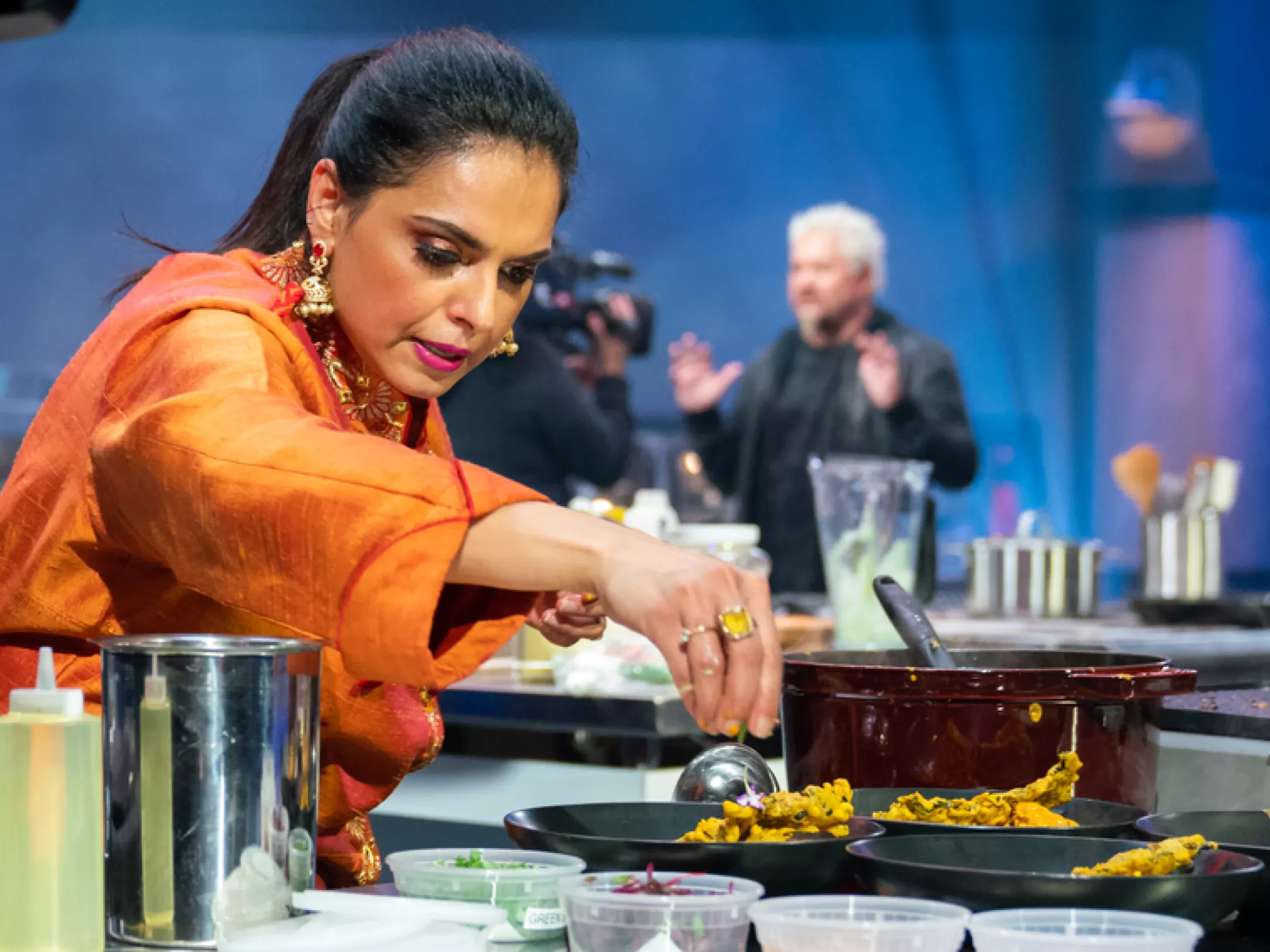
She went for Indian food with her new friends, an all-you-can-eat buffet for $8.95. Maneet promised them beautiful, vibrant dishes filled with spices. However, the food that loaded their plates was far from the seasonal, fresh kind that Maneet grew up with. "And I think that's when things started growing in my mind. The perception of Indian food at that time in America was not great. And if I don't put the best foot forward for what Indian cuisine is, then shame on me." Almost 20 years later, Maneet won 'Tournament Of Champions' by making Indian street food like Keema Pav and a Kashmiri meatball called Gushtaba. "32 of what they call the best chefs in America, and I win on Indian flavours on a blind tasting. It's a moment which is very potent for me. It's very powerful for me."
"Nashville of all places. I don't even know what we were thinking."
When Maneet and her husband and business partner, Vivek Deora, opened up Chauhan Ale and Masala House, Nashville wasn't the trendy city it is right now. However, Maneet admits they are the kind of people who explore each and every opportunity that comes their way. "So that's what we did. We flew to Nashville and fell in love with the opportunity that the city afforded us. There were some initial concerns, like whether people were going to accept the food and its flavour profile. I don't think there was a reason for us to be worried because as long as the food is good and authentic and true to who you are, people are going to find you."
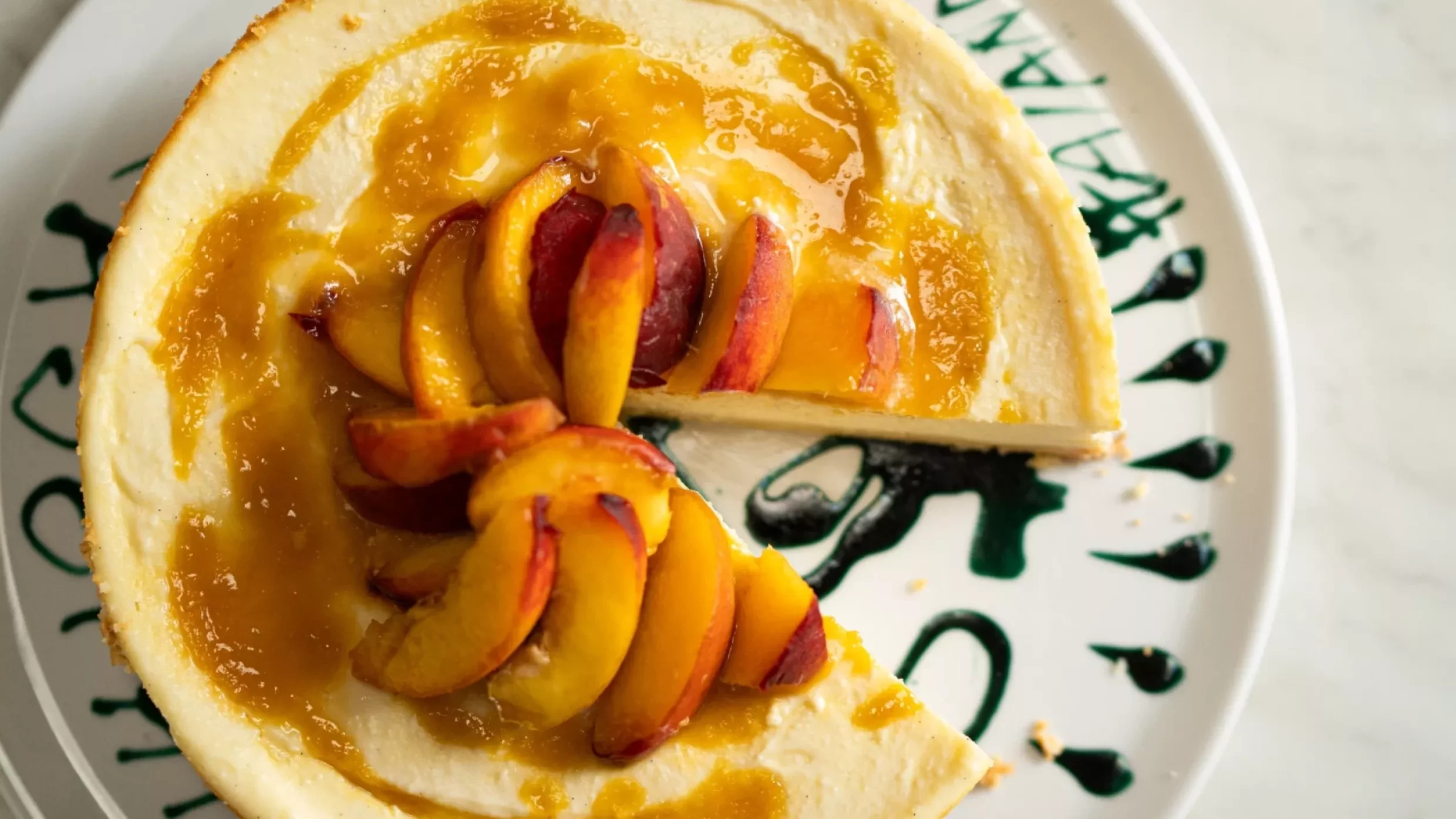
They worked with a local brewer and came up with fun brews like Saffron Cardamom IPA, lauded by Conde Nast as one of the most interesting beers in the world. "We wanted to give a global flair to Indian food. People in America are obsessed with nachos, so we did a lamb keema nacho. We went to Montreal and had poutine and thought, let's do a chicken tikka masala poutine..." However, there's still a traditional aspect to the restaurant where you can make your own dish, like prime rib with tikka sauce, or lamb chops with saag. "I think people love the fact that we are not dictating this is how you need to eat, and we want you to be a part of the menu creation process." According to Maneet, the restaurant's success is largely down to their general concept of why not? With a Gulab Jamun New York-Style Cheesecake served for dessert, the proof is, quite literally, in the pudding.
"When people say authentic Indian, I don't know what authentic Indian is..."
To Maneet, authenticity is about putting your own story on a dish. She gives Chicken Tikka Masala as an example, a dish that everybody marks as synonymous with Indian food, but was actually invented in England. "For me, my story comes from my travels, my inspirations, from where I have been and what I've been inspired by. So if we have a Nashville Hot Chicken Pakora, that's my recipe, but I'm paying homage to the city that I am in because I'm grateful to be a part of this community. You make the city a part of who you are... and I think that's what makes it so fun."
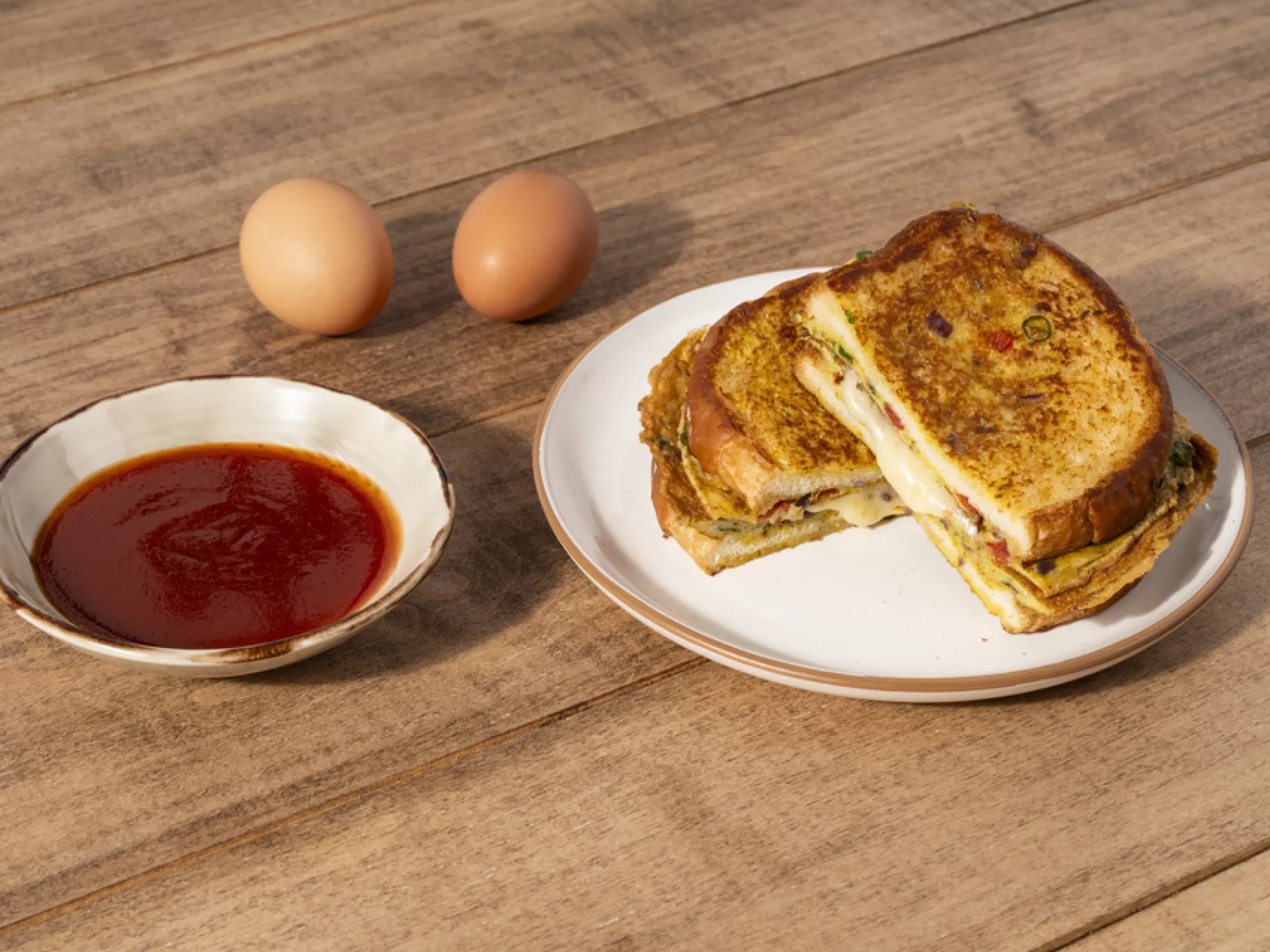
Maneet admits that Indian food can be complex, however, so too can any cuisine. "I am taking shortcuts on a daily basis. If you want foods to be easy, there's a recipe. You want it to be complex like a biryani? There's a recipe." And that is the concept of Maneets Eats. Something as simple as a masala omelette. It's an omelette, but let's go ahead and put some Indian spices in it. And then, you know, something complex as a murukku, which is difficult to make, but it's fun, it's for everyone."
"A great way to start off with spices is understanding what the basic characteristic of a spice is. Spice cannot be put under one category."
Maneet talks me through the different kinds of spices, and how they contribute to a dish. "To me, I always say the best tempered dish is a masala omelette, because then you start with cumin which gives you smokiness, you put in some turmeric which gives you that citrus and the colour that you want, then you put a little bit of chilli in it for spice, and garam masala which is a beautiful blend of warming spices." But her ultimate tip for navigating the many spices out there? "Just don't be afraid of it. Add spices, use it in drinks. Masala chai, use it in ice cream, use cardamom in desserts. The versatility is incredible."
"You cannot serve People from England or London subpar food because they have a very evolved palate because they've tasted food from all around the world."
I ask Maneet what she has in mind to visit during her time in London. "We were talking to the concierge yesterday. And he's asked, so what are you guys into? We're like... food." Some of which included a meal at Gymkhana, Dishoom, stocking up on ingredients at Borough Market, Kiln, High tea, and of course, a Donna Kabab.
"Each and every act is like a boomerang. What you send out comes back to you. So it's your choice. Positive or negative, you will get it back."
I asked Maneet for advice for women that are new to the industry. She admits it's tough, with long working hours and difficult environments, so firstly, it has to be a passion. "As long as you're passionate and you strongly believe in what you are doing, you can overcome anything."
However, her biggest piece of advice is starting off, to establish a supportive working environment around you by supporting the people around you. The day Chauhan Ale and Masala House opened, Maneet's son arrived into the world, three months early. "I wasn't there for the opening of my first restaurant because my dear son wanted to be a part of it. He was a two and a half pounder, and was in the incubator for three months at the most critical time of my career. It's the people around me who showed up and were there for me. That is the beautiful part about women being in the kitchen, you have a support system but you've got to create that support system. You've got to build up that." She gives Asma Khan as a prime example of why this attitude works. "The fact that her entire kitchen is women, supporting women. Each and every act is like a boomerang. What you send out comes back to you. It will come back to you. So it's your choice. Positive or negative, you will get it back."
Plus, a sense of humour helps. "Because there will always be naysayers and you need to love them."
"I might start a controversy over here, but us women, we very easily multitask."
Speaking of women in kitchens, six seasons of 'Tournament Of Champions', and each winner has been one. Maneet says that she often gets asked why, and she thinks it's down to "a couple of reasons, one being the blind tasting." She goes on to explain how women are fighting generations of the chef being associated with a man. "Even though at home, all you want to do is you want to taste your mom's and your grandma's cooking. But in a professional kitchen, it's still a he. So no matter how much you say it's an unbiased panel of judges in front of you, there's always a bias which does creep in because of human nature." Blind tasting eliminates this bias. "The second thing, I might start a controversy over here, but it's because we very easily multitask. It is inherent. And I think when it comes to Tournament Of Champions and other competitions, and functions in general, you need to be a master in multitasking."
"It's never about a singular success. It is about all of us rising together, all of us creating something that everybody is proud of."
On her proudest moment, Maneet answers without hesitation; "when your team gets the recognition for what they deserve. I'm the loudest one and I take the most amount of oxygen but I would be nowhere without my team, right? So it is them, it's their successes. Vivek and I, we strongly believe that a rising tide raises all ships. It's never about a singular success. It is about all of us rising together, all of us creating something that everybody is proud of. But yeah, winning Tournament Of Champions for a second time comes very close."