




You may know baklava as a quintessential Middle Eastern pastry or have seen it on the dessert menu at Greek, Turkish or Lebanese restaurants. But what exactly is baklava? For more info, we consulted Tarik Fallous, chef-owner of Au Za’atar restaurant in New York City.
What Is Baklava?
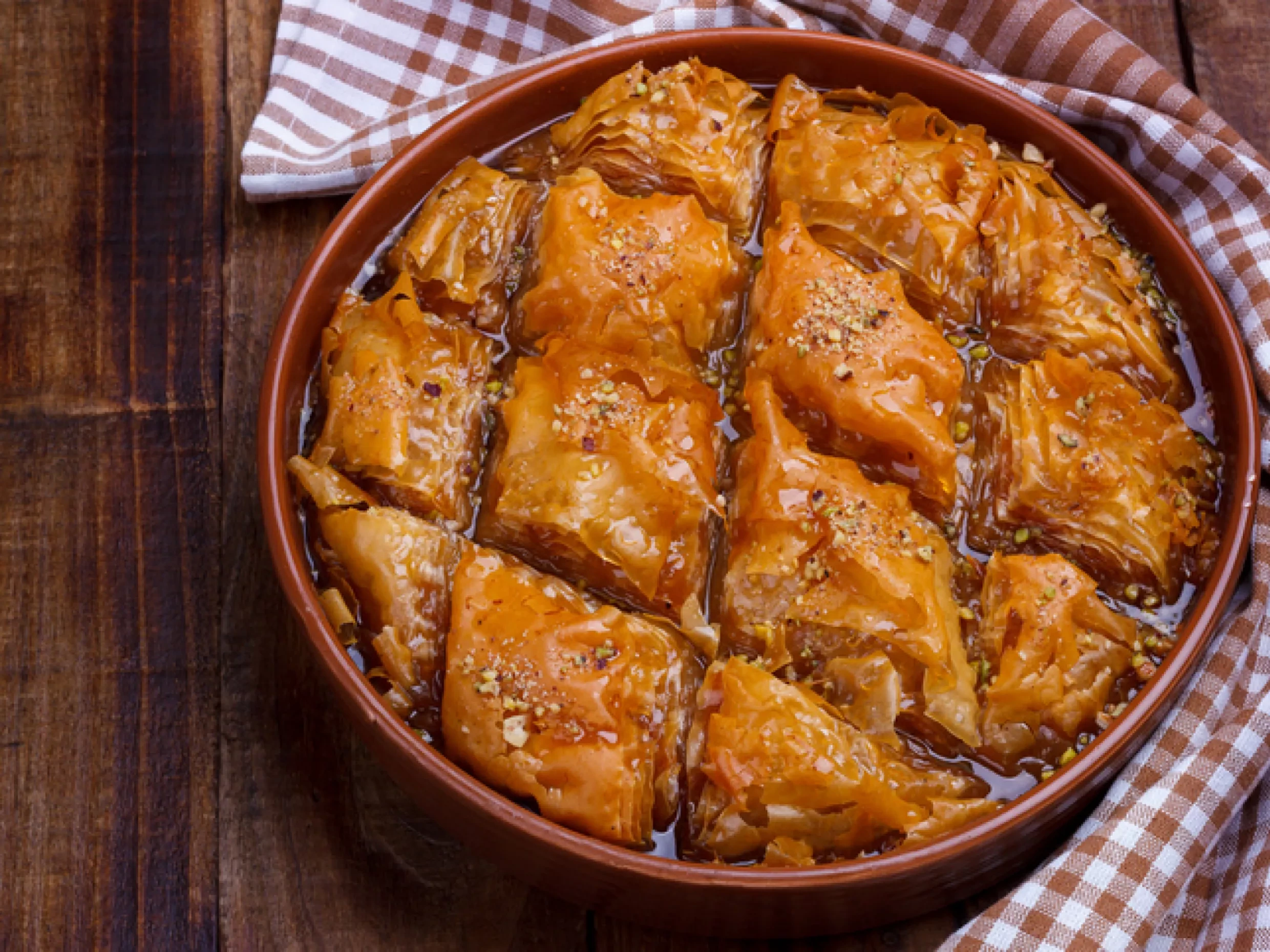
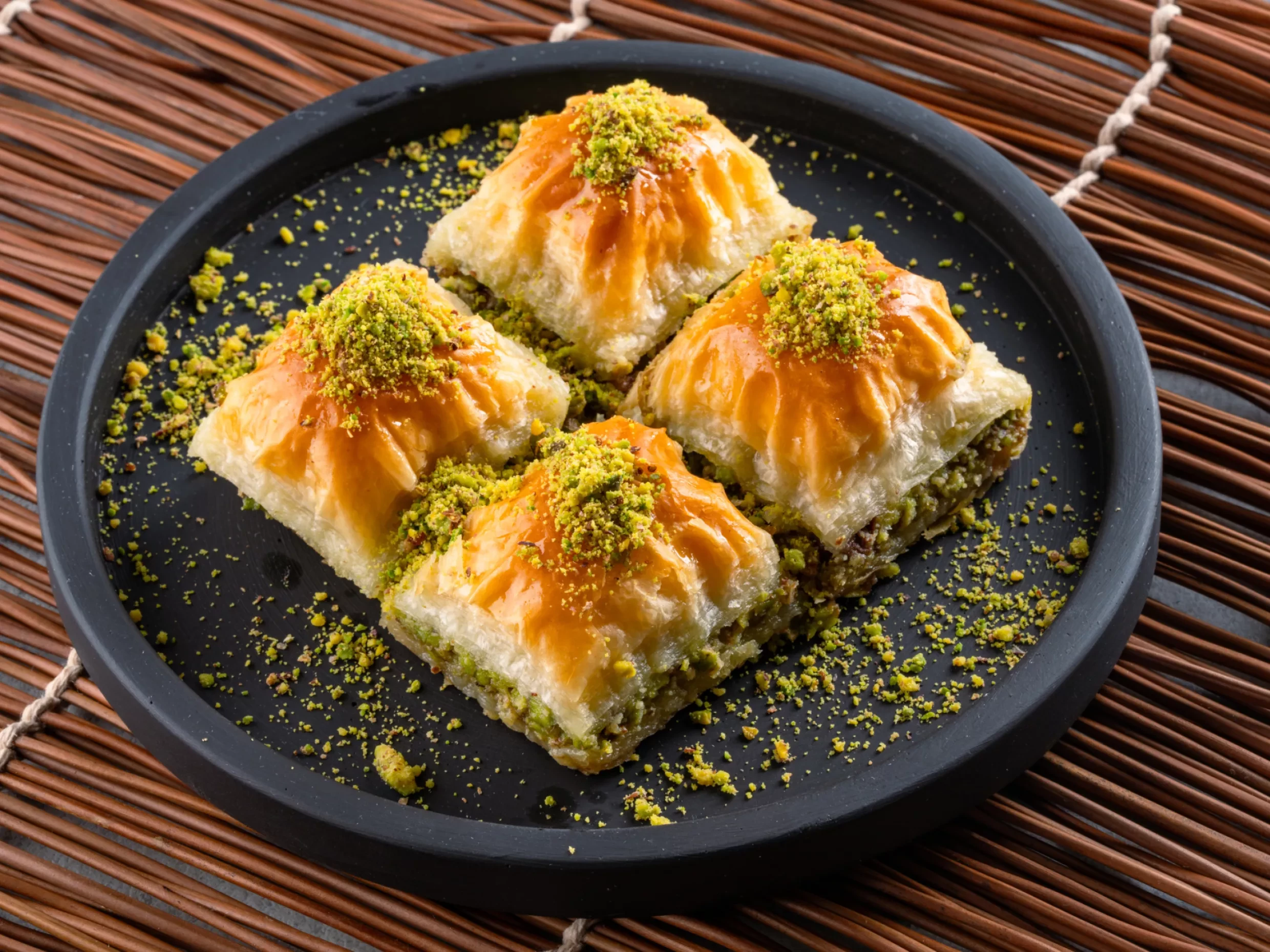
Baklava is a sweet, flaky pastry made with layers of filo dough, filled with chopped nuts and soaked in syrup or honey.
Baklava is a popular and traditional dessert in in the Middle East and parts of the Mediterranean. “Baklava, also known as baklawa, holds special significance and is often served during festive occasions such as weddings, gatherings, graduation parties, promotions and even until recently, when visiting someone recovering in the hospital, we would take a tray of baklawa,” Fallous says.
He notes that many people in these communities have their favourite pastry shop and preferred baklava iterations. “Many baklawa masters are third or fourth generation and there are some pastry shops that have been around for 100 years. There are places that I’ve had baklawa in my childhood, and it still tastes the same.”
Different Types of Baklava
Baklava can be made with all sorts of ingredients depending on regional and personal preferences, Fallous explains. Three common types are Greek, Turkish and Lebanese baklava.
Greek Baklava
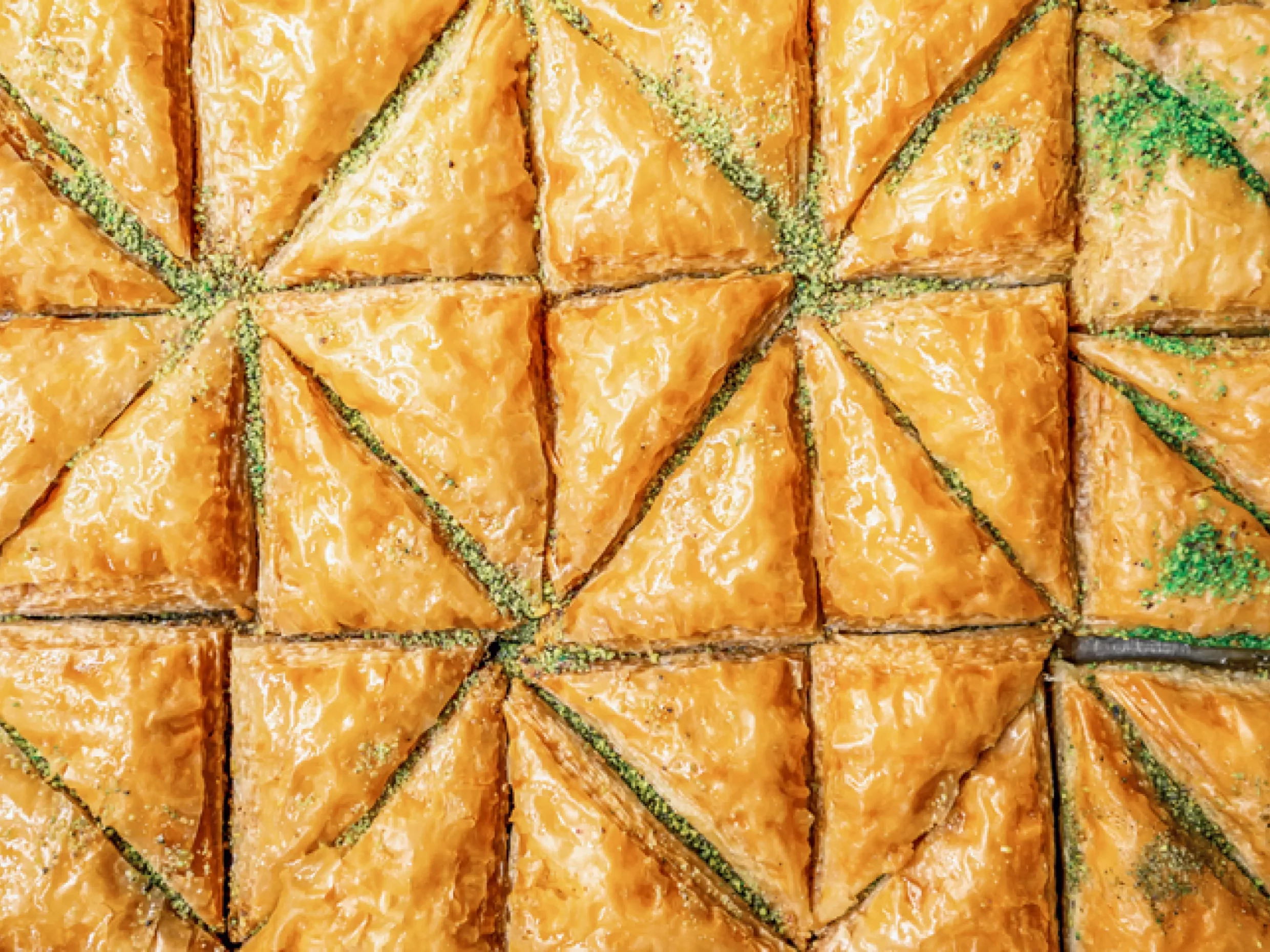
Greek baklava often calls for walnuts as the primary nut filling and is typically seasoned with ground cinnamon. The syrup used in Greek baklava generally includes honey in addition to sugar and water, which gives Greek baklava its distinct glossy finish. Typically, Greek baklava is cut into large triangles.
Turkish Baklava
Turkish baklava is typically made with a pistachio based filling and is usually cut into square or diamond shaped pieces.
Lebanese Baklava
Lebanese baklava can be made with a variety of nuts, including walnuts, pistachios, cashews or almonds. Typically, the syrup is not as sweet as in Greek or Turkish baklava syrups. The syrup is often perfumed with rose water or orange blossom water, as well as lemon juice, which also helps thicken it. Lebanese baklava pieces tend to be smaller in size than in other regions and the pieces also vary in shape, including squares, diamonds, triangles or cylinders.
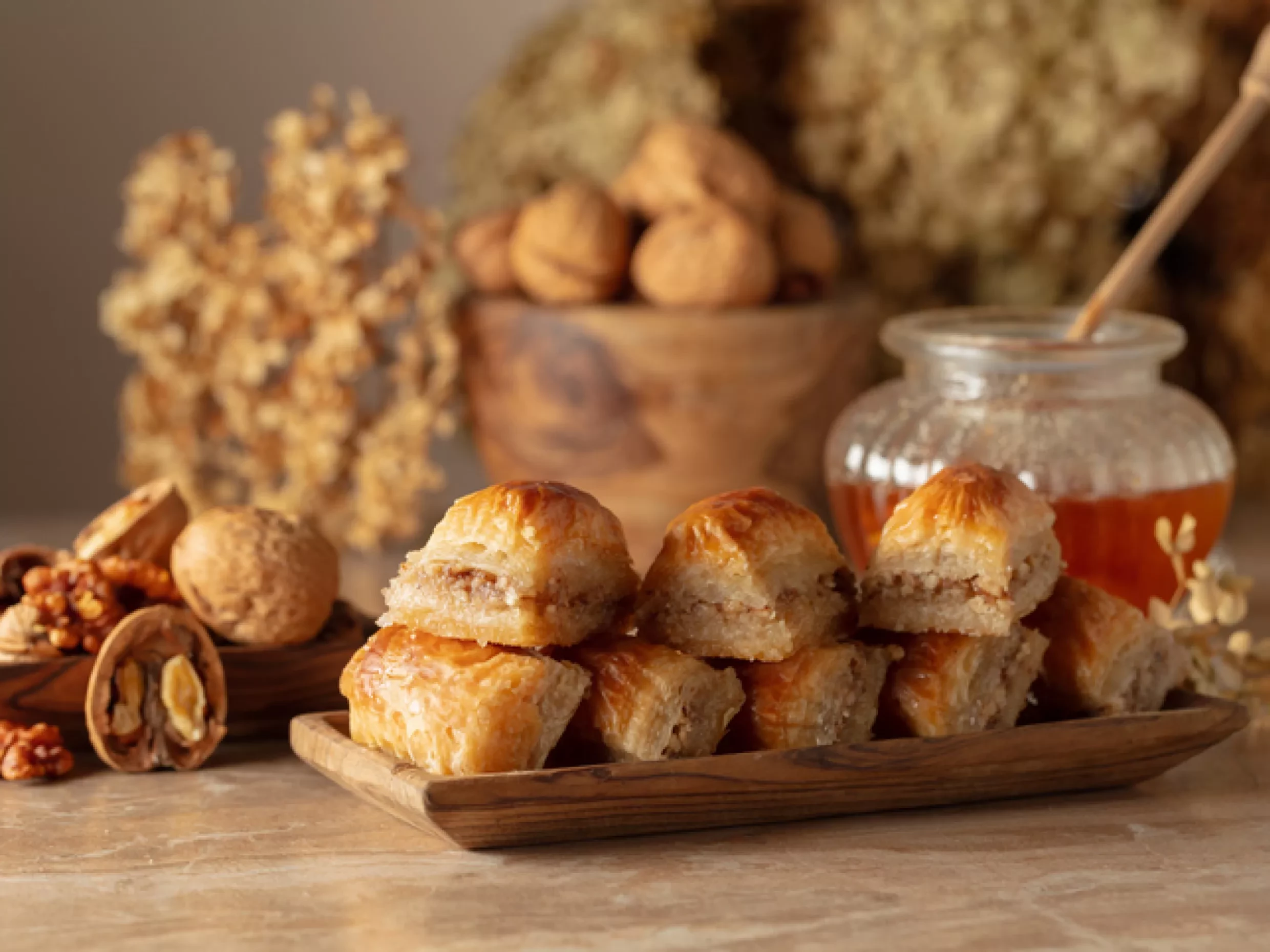
Ingredients In Baklava
Fallous outlines a list of common ingredients used to make baklava.
Phyllo (or Filo) Dough: Thin sheets of unleavened pastry dough.
Nuts: Chopped nuts, typically walnuts, pistachios, almonds or cashews.
Butter or Oil: Melted butter or vegetable oil, used to brush the layers of dough.
Sugar: Added to the nut mixture and the sweet syrup.
Spices: Optional ground spices include cinnamon, clove or cardamom for flavouring the nut mixture.
Syrup: A sweet syrup made from sugar, water and sometimes lemon juice, rose water or orange blossom water. In some variations, honey may also be used in the syrup.
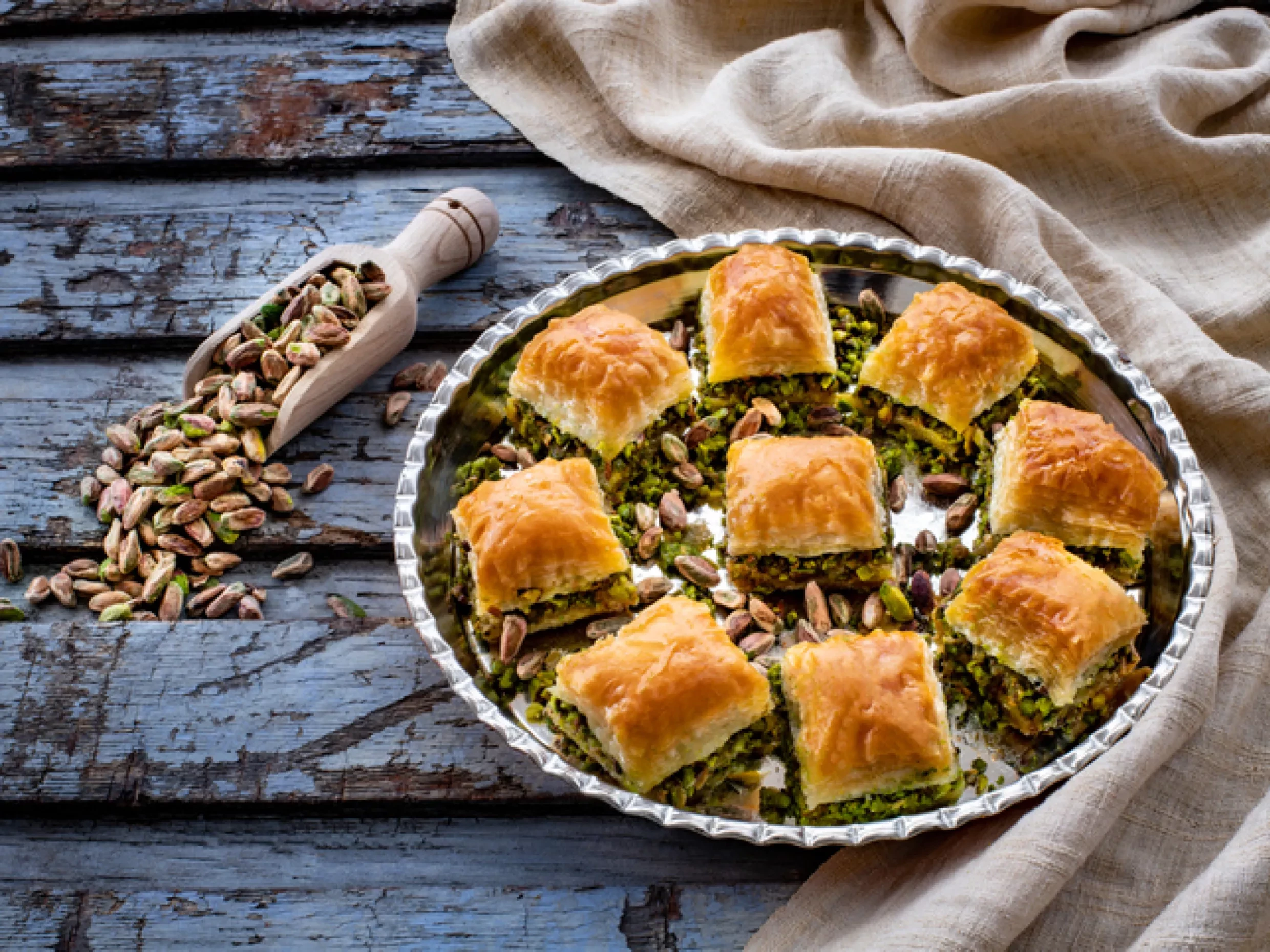
How to Make Baklava
Step 1: Preheat the oven. Preheat the oven to 350 degrees F.
Step 2: Prep the ingredients. Chop nuts such as walnuts, pistachios, almonds or cashews. Melt butter if using (alternatively, vegetable oil may be used). Make a sweet syrup by boiling together sugar and water, and add lemon juice, rose water, orange blossom water or honey, depending on your preference. Allow syrup to cool.
Step 3: Make the filling. Mix the nuts of your choice with syrup and additional spices, such as ground cinnamon, cloves or cardamom, if desired.
Step 4: Layer filo and filling. Stack layers of filo dough sheets in a baking pan, brushing each sheet with melted butter or vegetable oil. Add the filling and then add more layers of filo, each brushed with melted butter or vegetable oil.
Step 5: Cut the baklava. Cut baklava into individual pieces in your desired shape, such as squares, rectangles, triangles or diamonds.
Step 6: Bake the baklava. Bake until golden brown, about 40 to 45 minutes.
Step 7: Add the syrup. Slowly pour the cooled syrup over hot baklava to evenly soak. Let baklava rest before serving.
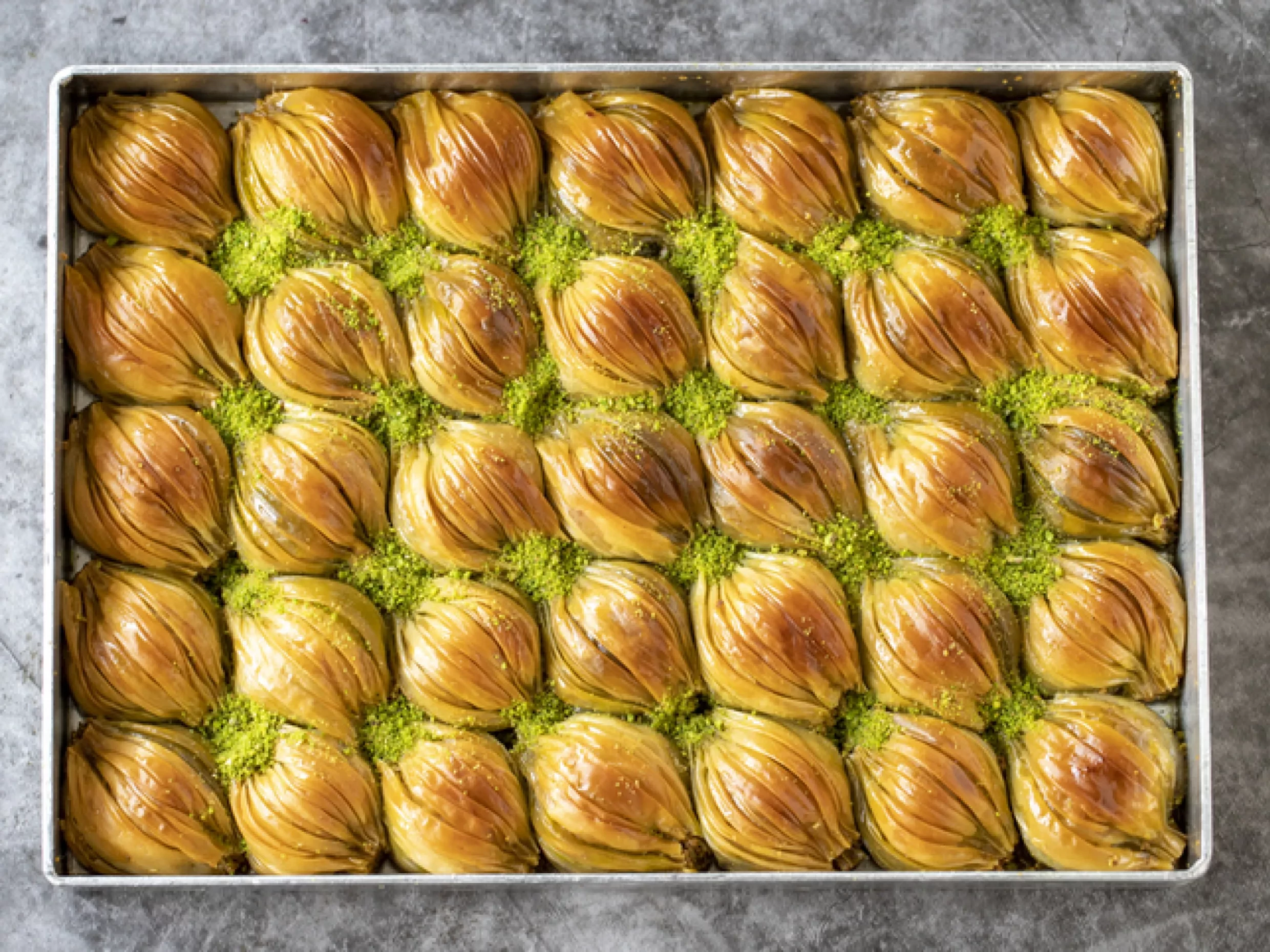
How to Store Baklava
Proper storage is important to maintain both the freshness and flavour of baklava. Fallous outlines three different ways to store baklava and offers tips for thawing after storing baklava in the fridge or freezer.
How to Store Baklava at Room Temperature
Baklava can be stored at room temperature in an airtight container or tightly covered with plastic wrap or aluminium foil. Keep it in a cool, dry place away from direct sunlight, as heat and humidity can affect its texture and freshness. At room temperature, baklava can typically stay fresh for up to one to two weeks, depending on factors like humidity and the specific ingredients used.
How to Store Baklava in the Fridge
Baklava is traditionally stored at room temperature, but you can also store it in the fridge. Place baklava in an airtight container or wrap it tightly with plastic wrap or foil to prevent moisture absorption and maintain freshness. When stored in the fridge, baklava can last two to four weeks.
How to Store Baklava in the Freezer
For long-term storage, store baklava in the freezer. Wrap individual pieces or the entire tray in plastic wrap and then in aluminium foil. Alternatively, you can store baklava in an airtight container or freezer-safe bag. Be sure to label and date the package. Baklava can last for up to six months stored in the freezer.
How to Thaw Baklava
To enjoy baklava after refrigeration or freezing, let it come to room temperature for the best texture and flavour. Avoid frequent temperature fluctuations, as they can lead to moisture condensation and affect the crispiness of the pastry.