





















Much like hot dogs, deli meats are often said to be unhealthy. Deli ham, in particular, is usually the most scrutinised, but does it truly deserve all the negative attention? The truth might actually surprise you! Below, a registered dietitian takes a closer look at the nutrition facts behind this classic sandwich ingredient.

Which Nutrition Facts Should You Pay Attention to When Buying and Eating Deli Ham?
A two-ounce portion of deli ham contains 60 to 70 calories, 1 to 2 grams of fat (0 to 0.5 grams of saturated fat), and 9 to 12 grams of protein. Sodium can vary significantly; some brands may have as much as 600 milligrams per serving, while lower sodium varieties may have closer to 300 milligrams. Ham flavoured with honey or maple will contain a small amount of added sugar per serving, too.
Something unique to pork products, including deli ham, is thiamin, a B-vitamin that plays a crucial role in energy metabolism as well as growth and cellular health. A 2-ounce portion of deli ham contains nearly 20 percent of the daily recommendation.
Like other cold cuts and preserved meats like hot dogs, ham is preserved with added nitrates and nitrites to help retain freshness and colour and to prevent bacterial growth. When consumed in large quantities, these preservatives have been associated with an increased risk of certain types of cancer. Some food manufacturers use naturally existing sources of nitrates, including celery or beet powder; these packages will typically be labelled as "uncured." Although these powders are naturally derived, they do contain nitrates allowing for the same preservation benefits, and, therefore, should also be consumed in moderation.
Can Deli Ham be Healthy?
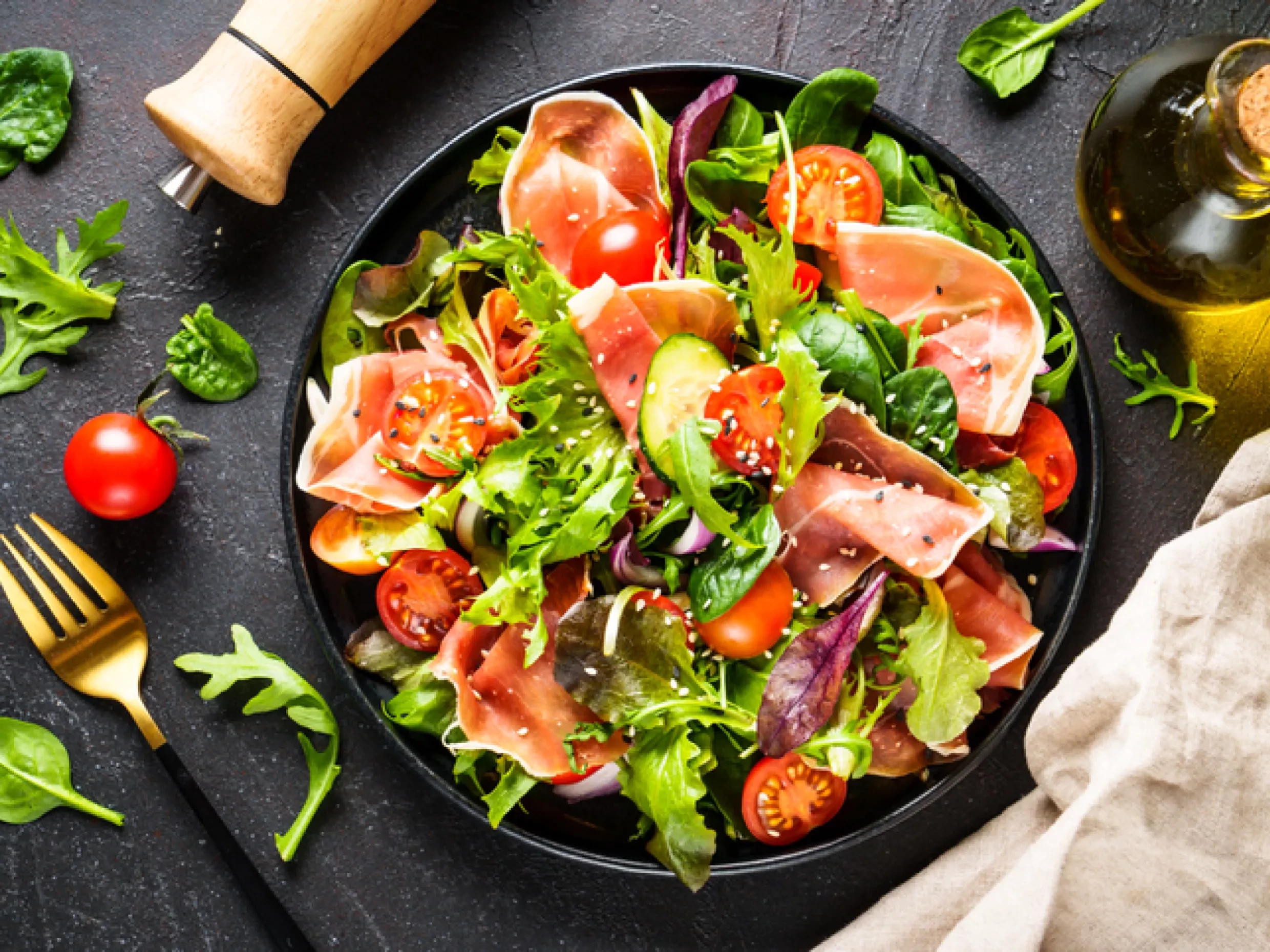
There’s no denying the convenience and accessibility of deli ham and when it comes to evaluating the health factor, it (like many other foods) comes down to how you choose to use it, and how much of it you use. Remember, healthy meals have more than one food component. A two-ounce portion of ham can be a wonderful, high-protein addition to an egg or grilled cheese sandwich. It can also be a smoky, flavourful mix-in for an omelet, frittata, or pasta salad in place of bacon, which is much higher in fat and calories. The biggest area to pay attention to is the sodium content, which can quickly stack up with a few slices. When adding it to recipes, consider lowering the amount of salt used to season your dish to offset the extra sodium, or look for lower sodium varieties of deli ham.

How Can You Shop for the Healthiest Ham?
On your next shopping trip, check the packaging or online information (all large chain supermarkets have nutrition information readily accessible) to review your favourite brands. Check the sodium content carefully and scan ingredient lists to review which types of preservatives are used.
Bottom Line: Have some ham, but keep portions appropriate, choose brands with less sodium, and combine it with other nutrient-dense foods like whole grains, eggs, fruits, and vegetables.