


















Dragon fruit, also known as pitaya, is visually stunning and has health benefits to match (vitamins, prebiotics and loads of fibre and antioxidants). But before you buy one and slice it on your smoothie bowl, let's discuss what it tastes like.
What Does Dragon Fruit Taste Like?
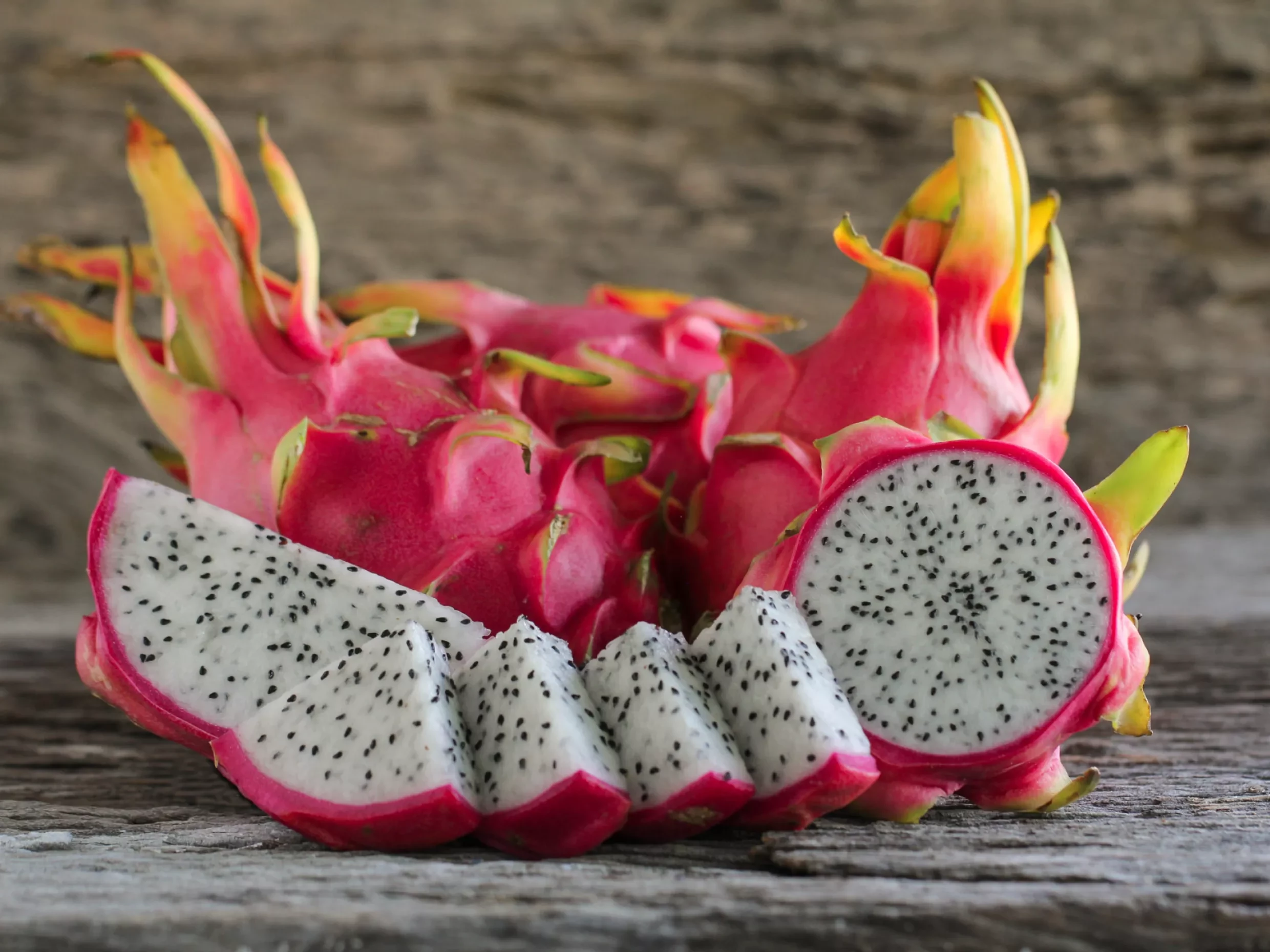
When ripe, dragon fruit has a mildly sweet flavour often described as a blend of pear and kiwi, and a soft texture similar to a ripe kiwi. Under-ripe dragon fruit, on the other hand, is basically flavourless.
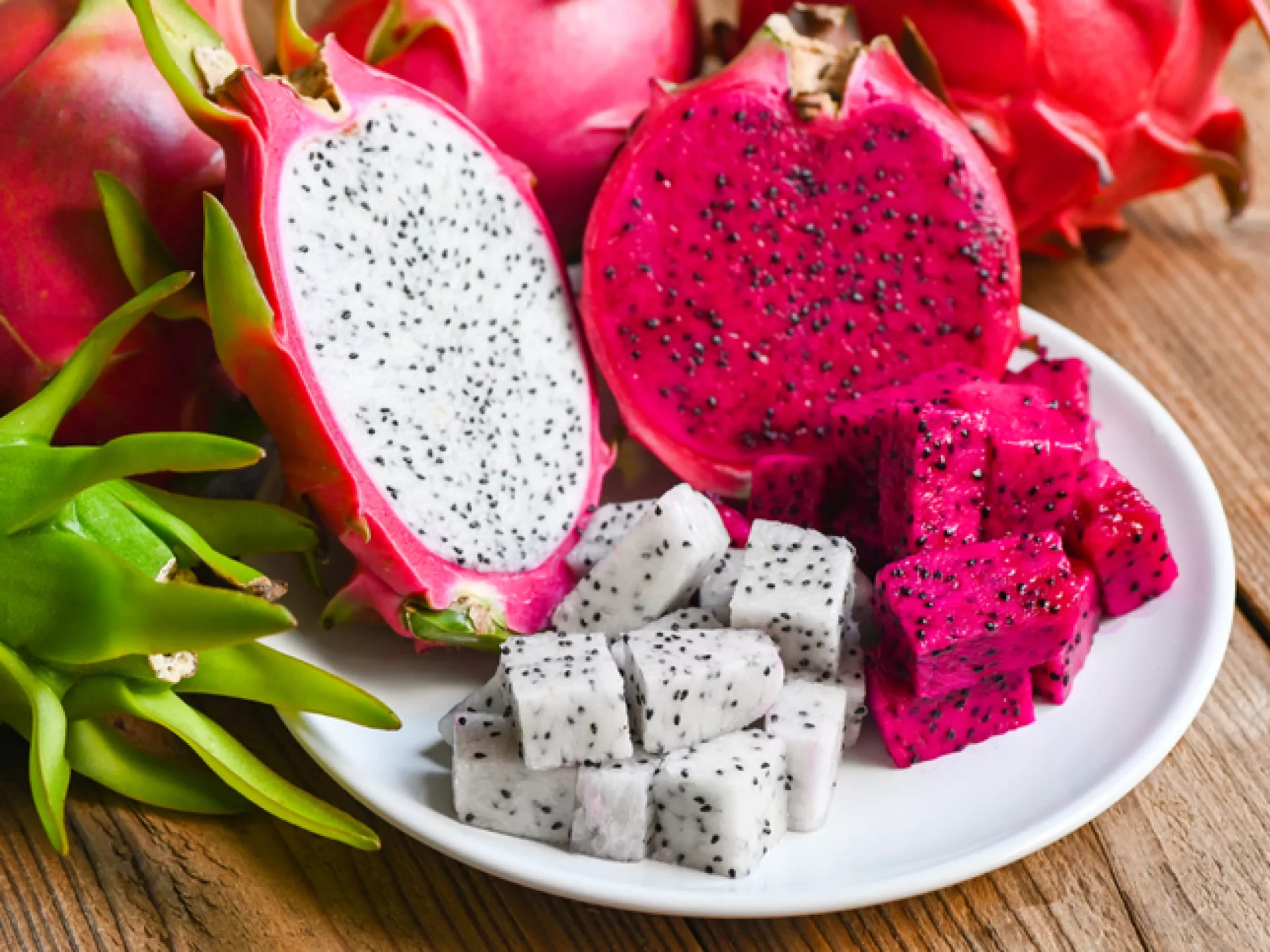
Native to Mexico, Central and South America, the dragon fruit plant is a cactus. Each fruit starts out as a flower that blooms just once in the dark. Although you've probably seen dragon fruit that's hot pink on the outside with white flesh inside, dragon fruit actually comes in a spectrum of colours including pink on the outside and inside, yellow on the outside and white on the inside, and white on the outside and inside. All have tiny, edible black seeds like kiwi seeds.
Cacti have thorns and the dragon fruit plant, with thorns on all its branches, is no exception. The fruit is a different story, as only the yellow variety has thorns on the fruit itself and they are easily removed.
How Do You Know When Dragon Fruit Is Ripe?
Given that pink-skinned dragon fruit is the most common variety, we’ll focus on that. The fruit is harvested when it’s under-ripe for easy shipping: it’s firmer and doesn’t bruise as easily, plus it won't be likely to spoil on the journey.
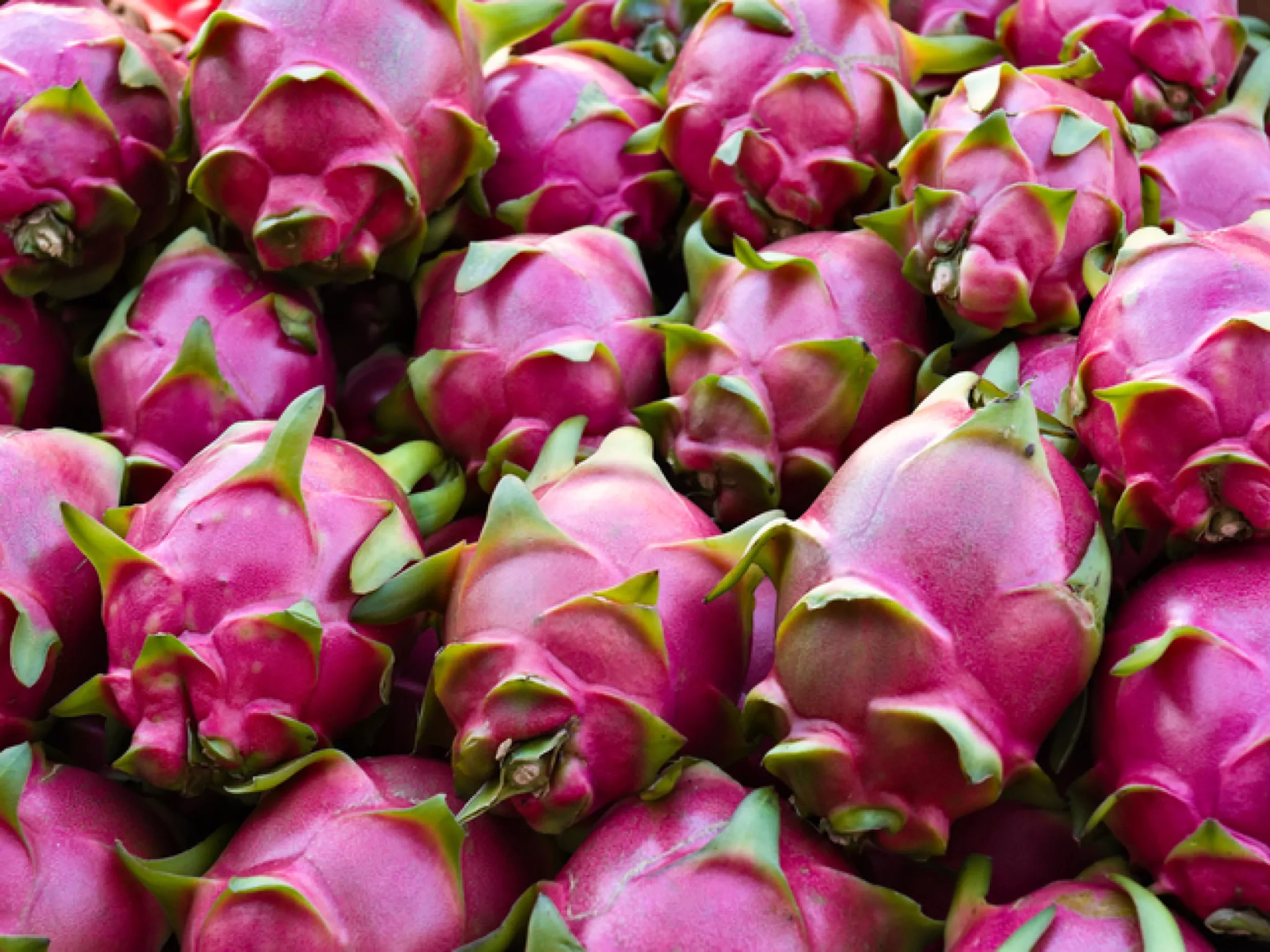
Pink-fleshed dragon fruit is sweeter than the white variety. The grower’s sticker on the fruit should indicate the flesh colour. If not, size and shape are a clue: pink-fleshed dragon fruit is round with short wings (the petal-shaped pieces on the outside of the fruit) while white-fleshed dragon fruit is elongated with long wings.
When picking dragon fruit at the market, look for fruit that is heavy for its size (pick up several and you’ll notice a difference) because that will be the juiciest fruit. The fruit itself should be consistently pink on the outside, with no signs of bruises. Dragon fruit is a bit firm when ripe but will give under the pressure of your thumb if you squeeze it, like a ripe avocado. When dragon fruit is ripe, its wings will dry out, turning yellow with some brown at their tips. When you buy them, leave them on the counter until they reach that stage and then they’re ready to eat.
How Do You Eat Dragon Fruit?
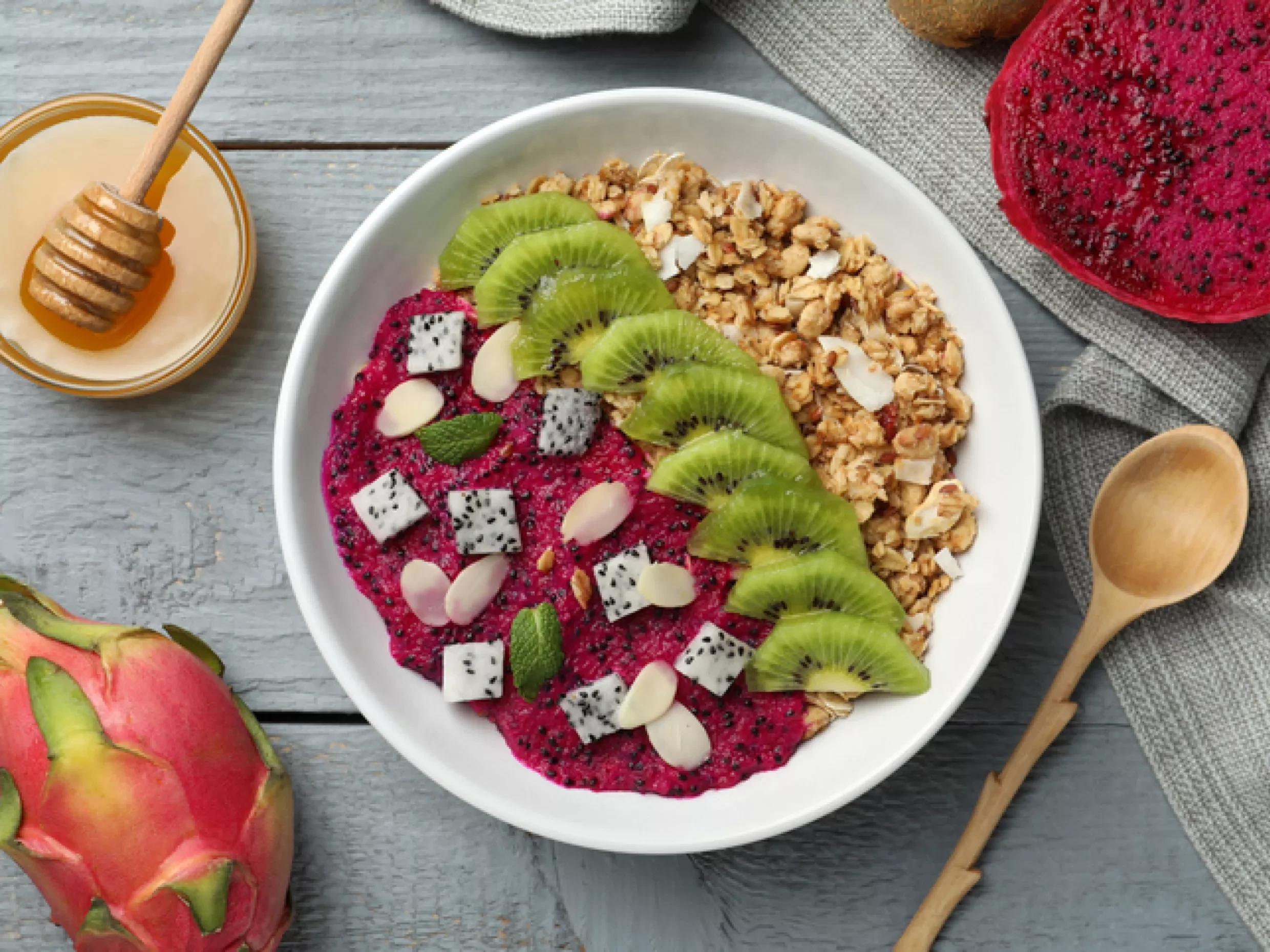
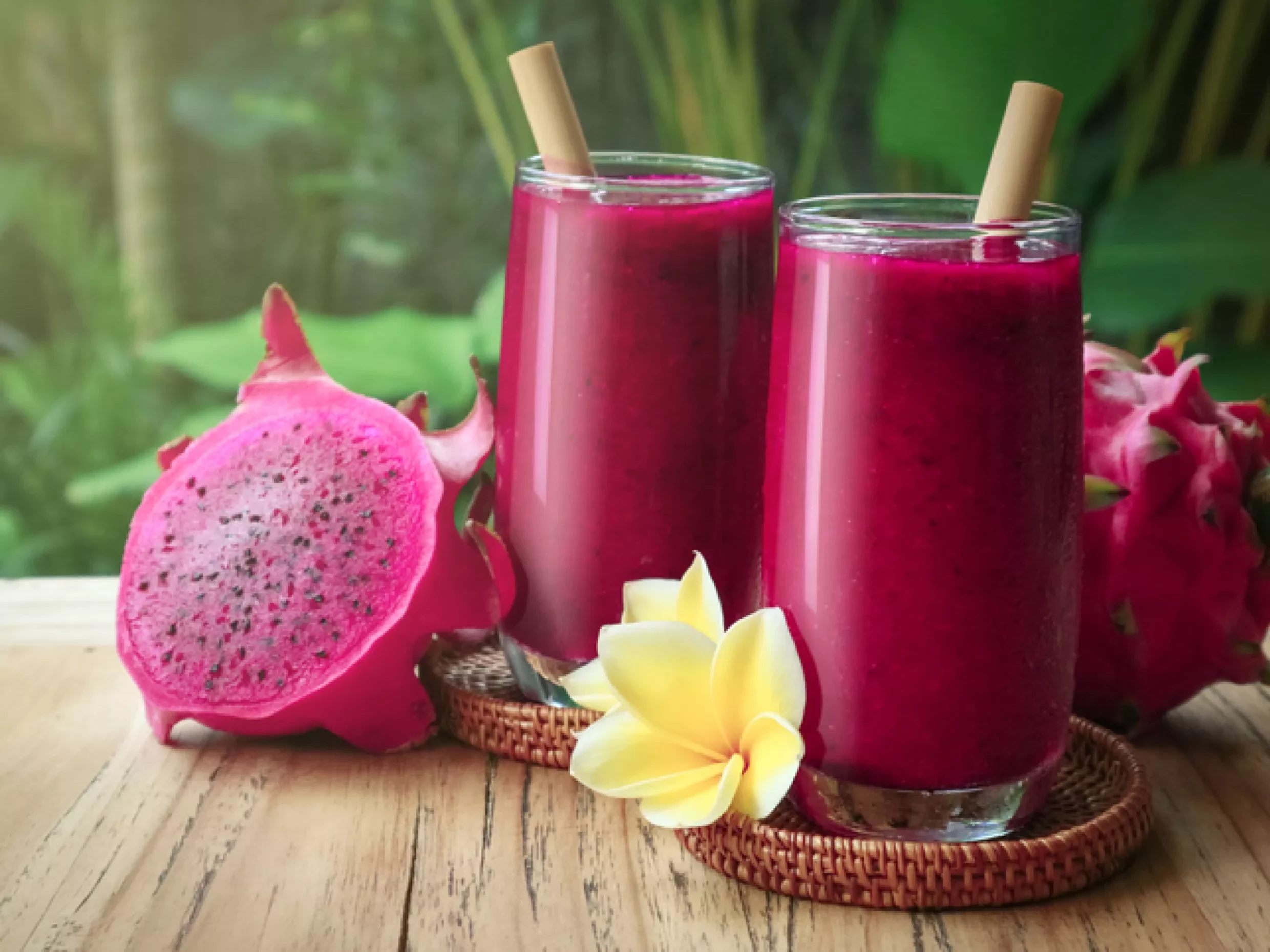
When dragon fruit is ripe, it’s soft and juicy, so cutting it in half and eating it right out of its peel is the easiest way to appreciate it. Even when dragon fruit is ripe, it can be cut in slices or cubes and maintain its shape for a fruit salad. Dragon fruit is popular in smoothies and other drinks. If you want to ensure that you’re getting red fruit, you can buy bags of frozen dragon fruit cut into cubes or pureed.
Is Dragon Fruit Good for You?
The answer here is a resounding yes. Dragon fruit has the vitamins C and B. The flesh itself is a good source of fibre, but it’s the seeds that have the power. Unlike some seeds that must be ground for your body to access the good stuff on the inside (we’re looking at you, flax) the natural bacteria in your gut can break down the fibrous shell of dragon fruit seeds and unlock their prebiotic benefits.