

Perhaps no dish captures the gastronomic spirit of Spain quite like paella. But while the Valencian original may be the most famous, there are in fact many other variations of this iconic Iberian classic. From seafood-filled recipes along the coast to hearty inland versions, these regional paellas each have their own tasty twist. Welcome to the wonderfully delicious world of paella.
A Short History of Paella
First off, a fact that might surprise you. Paella is the Spanish word for the big shallow two-handled frying pan the dish is cooked in - not actually the food itself! Beyond that literary twist though, the history of paella the dish is actually much disputed.
Rice cultivation itself spread through parts of the Iberian Peninsula when under Muslim rule - it’s documented in al-Andalus by the tenth century, while Valencian sources trace rice-growing around Valencia to the eighth century. By the Late Middle Ages, rice was a staple food in many regional Spanish diets.
One theory about paella’s origin itself, is that around the fifteenth or sixteenth centuries rice farmers working around Valencia’s l’Albufera lagoon cooked a big one-pot dish in the field with the rice they grew, plus whatever else they had to hand, including snails, green beans, and local wetland birds. Historical accounts of early rice dishes around l’Albufera also mention water voles or marsh rats.
However, there are two other posited theories about the dish’s origins. The first suggests that the word paella comes from the Arabic word baqiyyah, meaning ‘leftovers’. The story goes that royal servants at the Moorish royal court would gather up the leftovers from grand regal banquets, and mix them with rice to take home for the family.
The second is a popular folk tale that says a man invented the dish to win the affection of a girl, and the word paella is a corrupted version of para ella, which translates in Spanish as ‘for her’.
However it came into being, by the 1800s, a more formalised paella recipe had taken hold, and it became known as paella Valenciana. This core recipe then changed as it spread through the country, with each regional variation bringing something of its own local ingredients to the dish.
Paella Valenciana
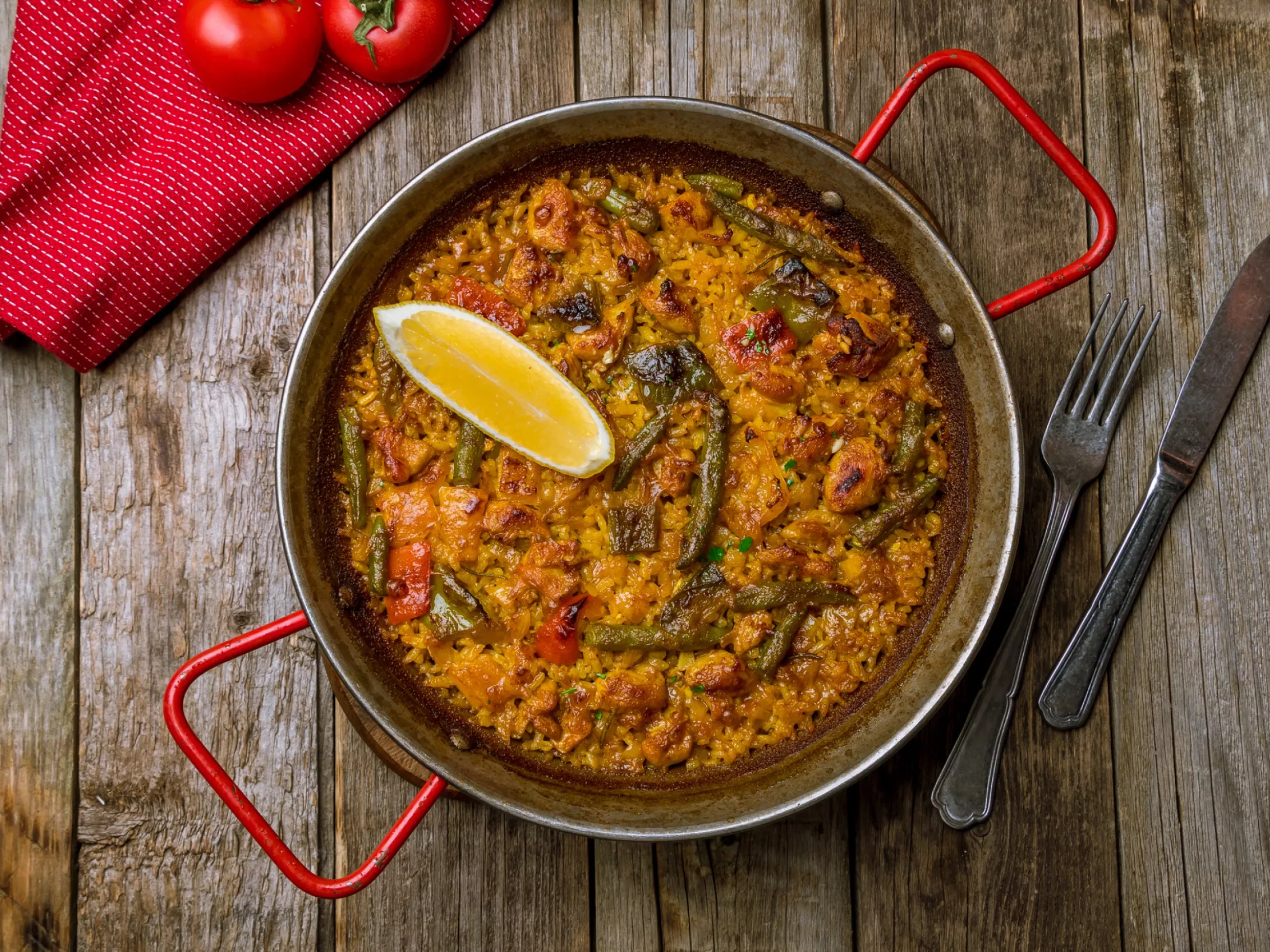
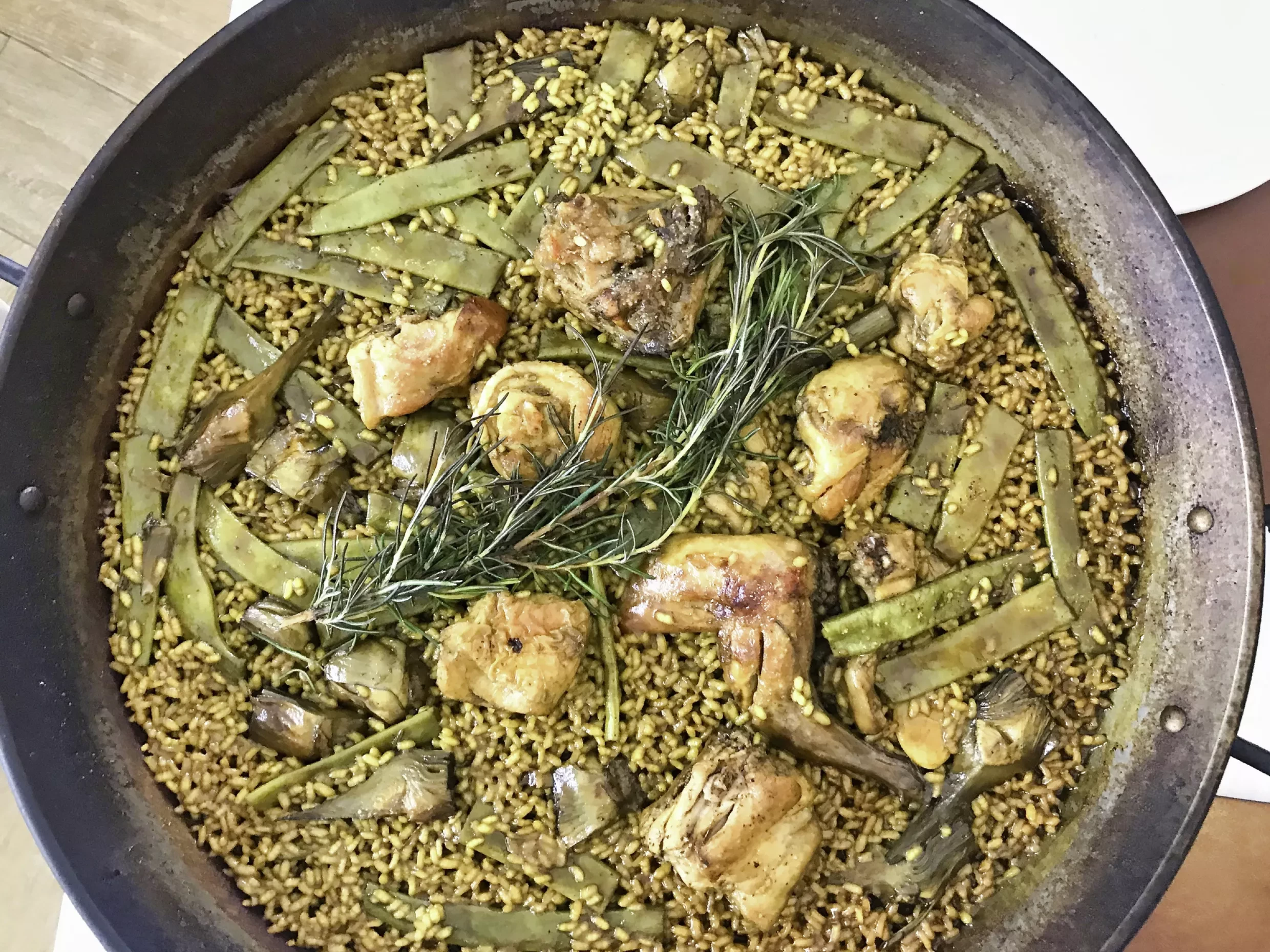
Paella Valenciana is widely regarded as the most authentic paella recipe. It’s a dish born in the fields and wetlands around Valencia, particularly the rural communities bordering l’Albufera lagoon.
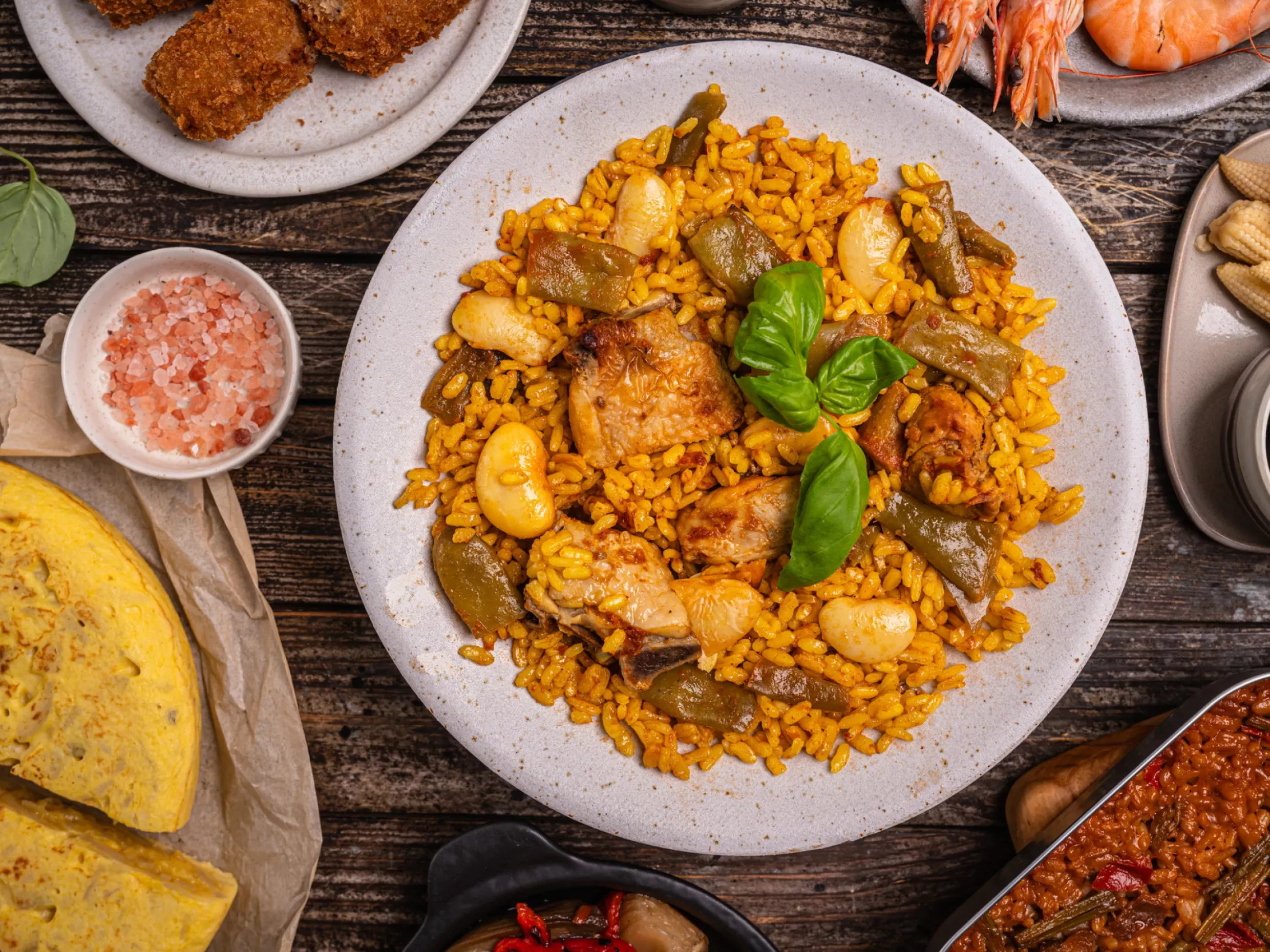
The classic version combines short- or medium-grain Valencian rice (usually Sénia, Bomba and Albufera varieties) with chicken, rabbit, flat green beans and butter beans. Tomato, olive oil, salt, saffron, sweet paprika and water form the foundations of the cooking liquid, and some recipes also include rosemary, artichokes, duck or snails. Although variations exist between households and seasons, you won’t find seafood or chorizo in the traditional Valenciana.
The wide, shallow pan helps the rice cook in an even layer and develop socarrat, the iconic golden-brown crust on the base. Like all varieties of paella, it’s traditionally served straight from the pan in the middle of the table.
Paella de Mariscos
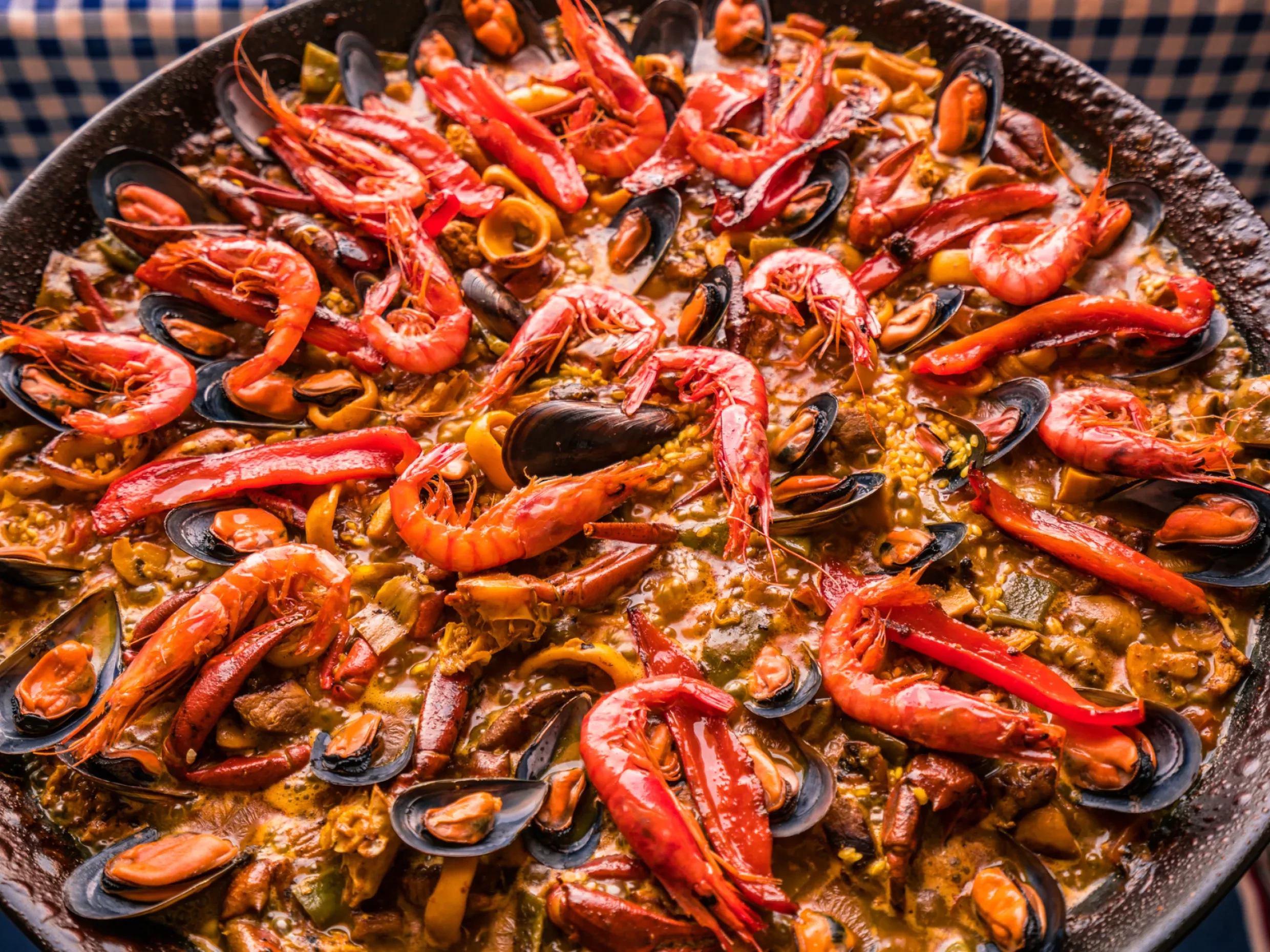
While Valenciana is perhaps the most popular version of paella in Spain, the seafood version, paella de mariscos (literally ‘seafood paella’) is perhaps the best known outside of the Iberian peninsula. It’s most closely associated with Spain’s coastal regions, where fresh fish and shellfish are plentiful.
The best-known seafood version combines short- or medium-grain paella rice with prawns, mussels, clams, squid and sometimes cuttlefish, monkfish or langoustines. Fish stock (known as caldo de pescado), olive oil, tomato, garlic, peppers, saffron and paprika create a base, while the absence of meat and beans gives the dish a lighter, distinctly maritime character.
As with other paellas, it’s cooked in a wide, shallow pan, allowing the rice to absorb the flavour of the stock and develop socarrat on the base. The exact combination of seafood varies according to the region and the daily catch.
Paella Mixta
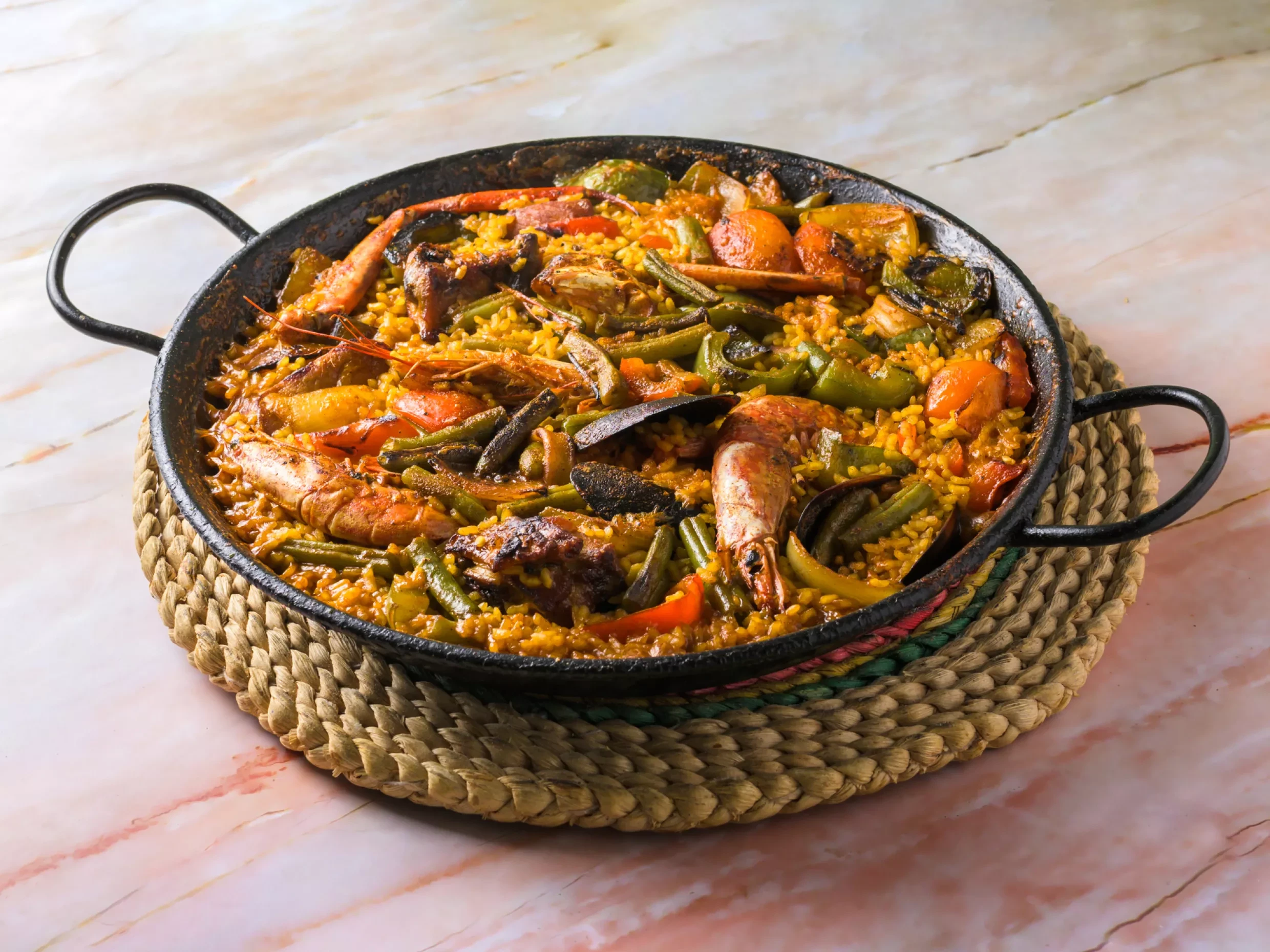
Paella mixta is the best-known combination of land and sea, bringing together meat, seafood and vegetables in one dish. Although it’s popular in tourist hubs and on international restaurant menus, it isn’t considered a traditional Valencian paella and is generally viewed as a later, more international variation.
The ingredients can vary widely, but common additions include chicken, rabbit or pork, prawns, mussels, squid, peppers, peas and tomatoes, with saffron and paprika providing colour and depth. The rice is cooked in meat or mixed stock, absorbing the flavours of both the seafood and the meat.
One legend says that mixta was created in Castellón to satisfy indecisive diners, but whatever the origin story it’s a delicious riff on a true classic.
The Paella Puzzle
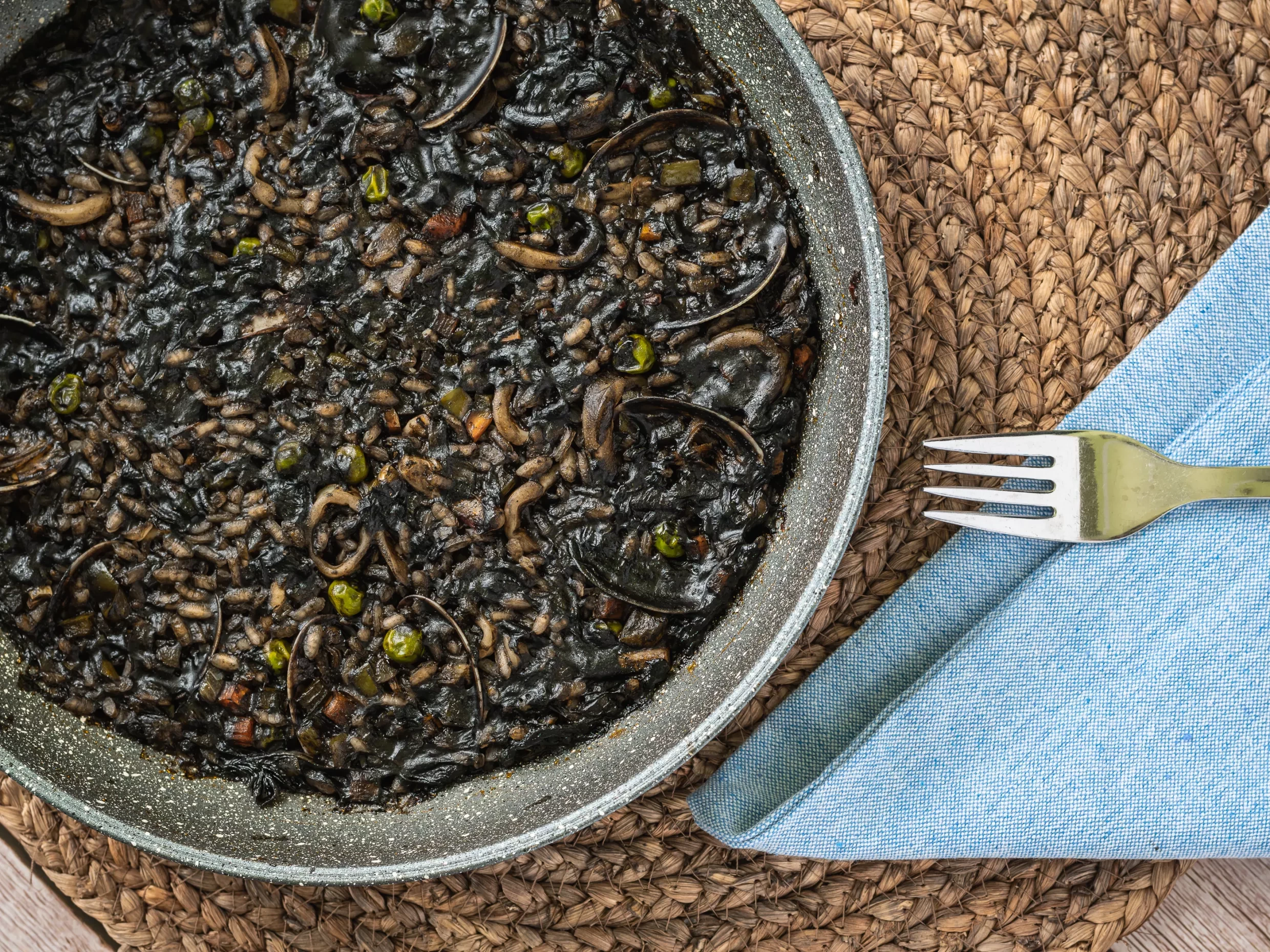
Think you know your paella? There’s still plenty more to discover. Beyond the three best-known styles, Spain’s regions offer countless variations and imaginative riffs (even though some aren’t strictly paella dishes). These range from ink-black arroz negro and seafood-rich arroz del senyoret, to noodle-based fideuà and rustic mountain paella, known as paella de montaña. Some versions follow local recipes, others put an entirely new spin on the legendary dish. In The Paella Puzzle: Tradition, Twists And What To Look For, we explore the regional dishes and creative ideas that prove almost anything can belong in a paella!