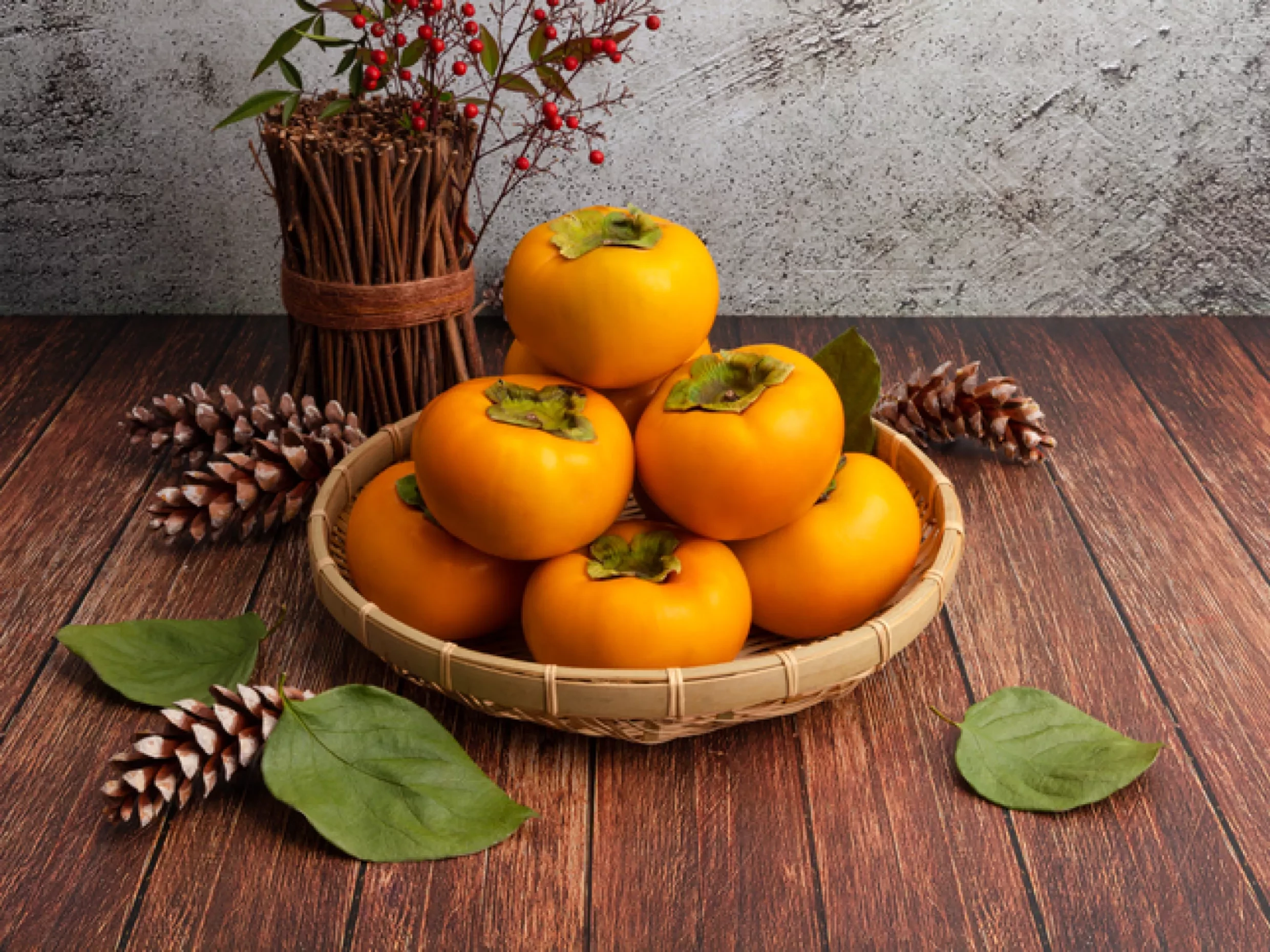











Perhaps you’ve noticed persimmons at the supermarket or farmer’s market, with their bright orange skin and papery green cap. But what exactly are persimmons, and how do you eat them? For more info, we consulted master gardener Sharon Burnham, and Hannah Patrick, a farmer, edible landscaper, both based in Roanoke, Virginia.
What Is a Persimmon?
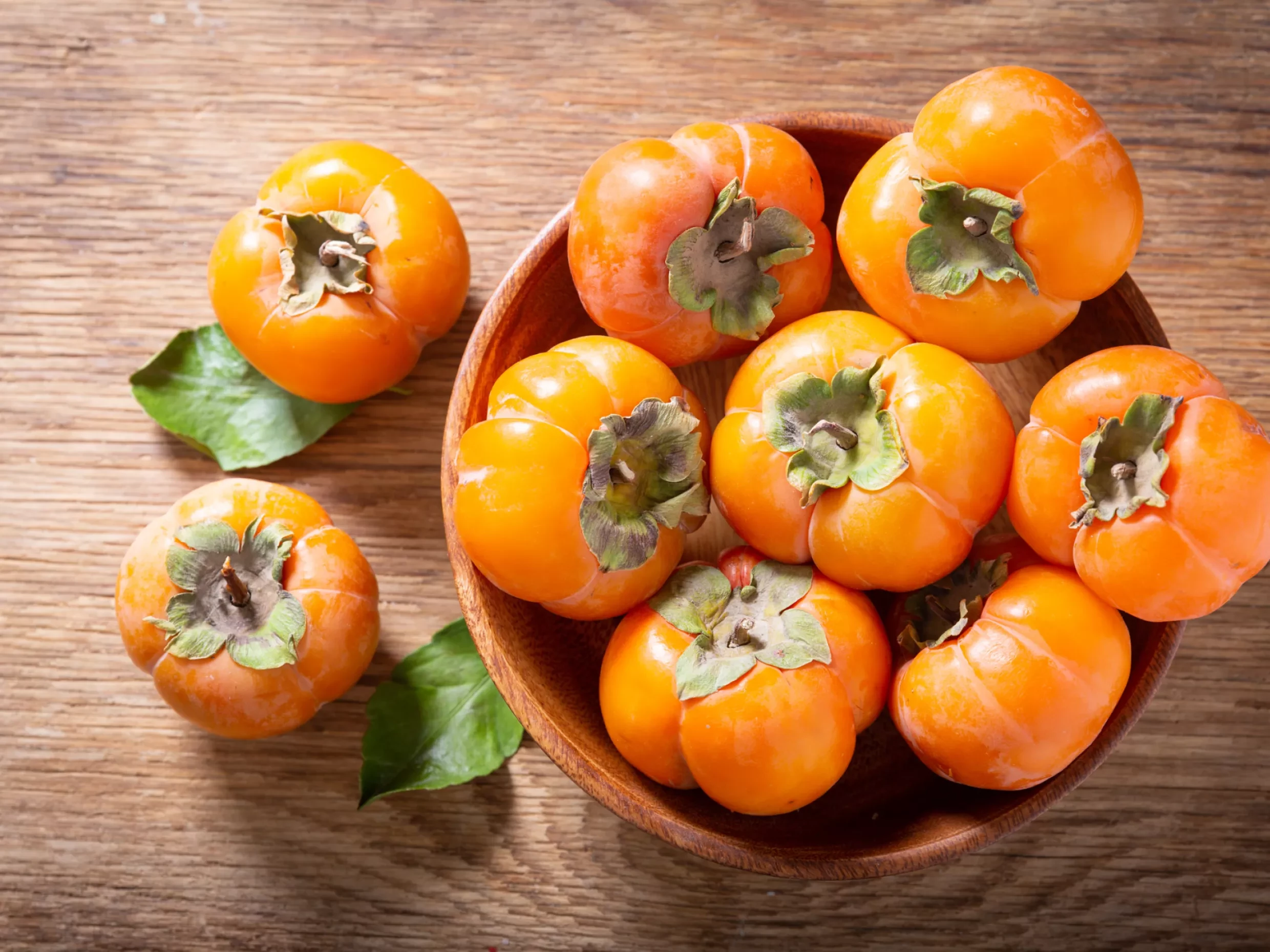
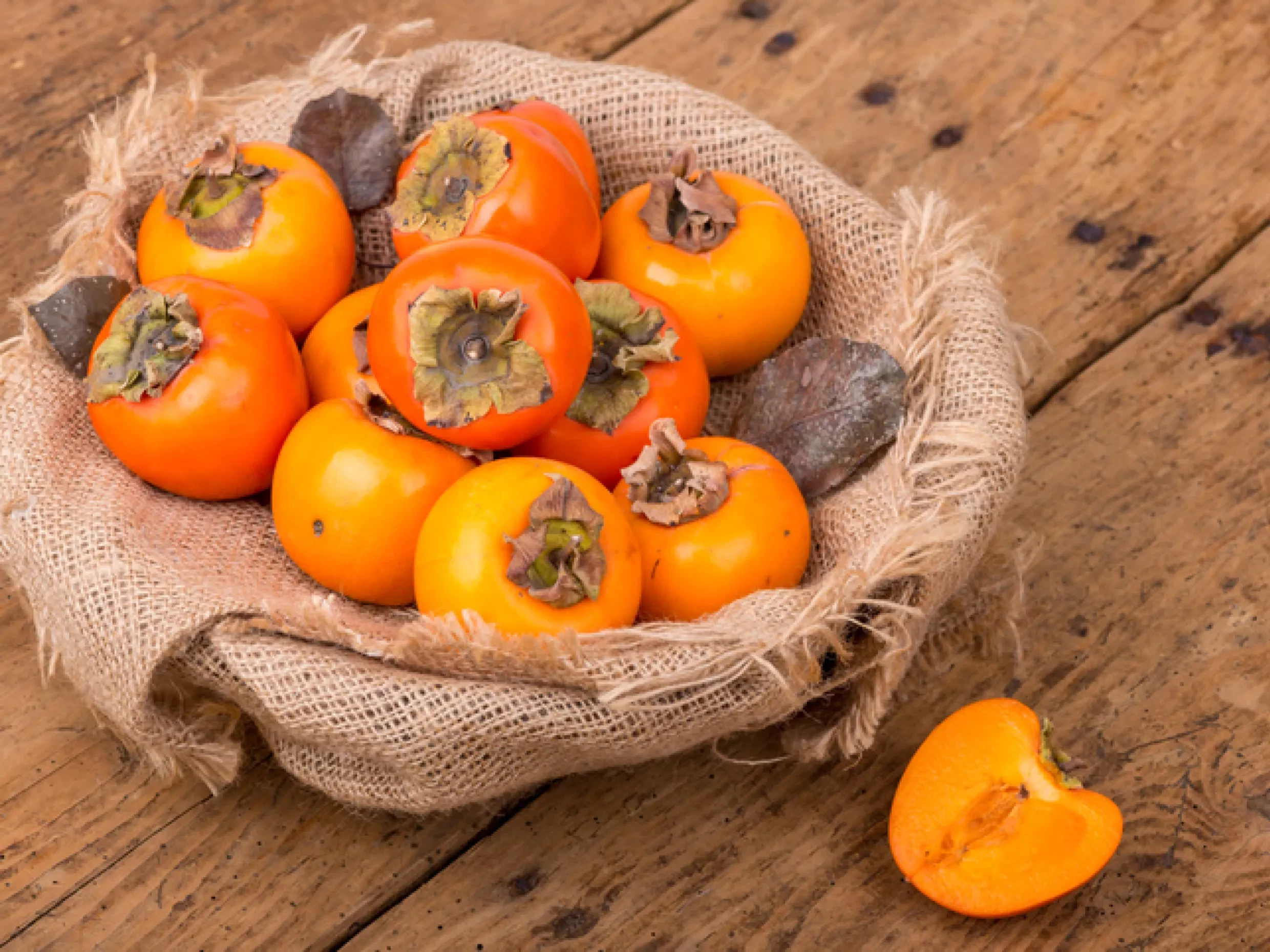
Persimmons are a bright orange fruit with a glossy skin and a large papery blossom. A persimmon’s flesh is bright orange, with a tender, jelly-like texture and a mildly sweet but rich, honeyed flavour.
Fresh persimmons are typically available from October through January. There are three main types of persimmons available, including Fuyu, which is a flatter/rounder Asian persimmon, Hachiya, an oblong Asian persimmon, and the American persimmon, which is smaller and oblong in shape.
“Persimmons are one of the most beautiful fruits of autumn. They have pumpkin-orange skin and a bright green cap,” Burnham says. “About the size of a tennis ball, they have two basic shapes. They might be slightly oblong or flatter and rounder. There are persimmons native to Asia (Diospyros kaki) and native to the United States (Diospyros virginiana).”
How to Eat Persimmons
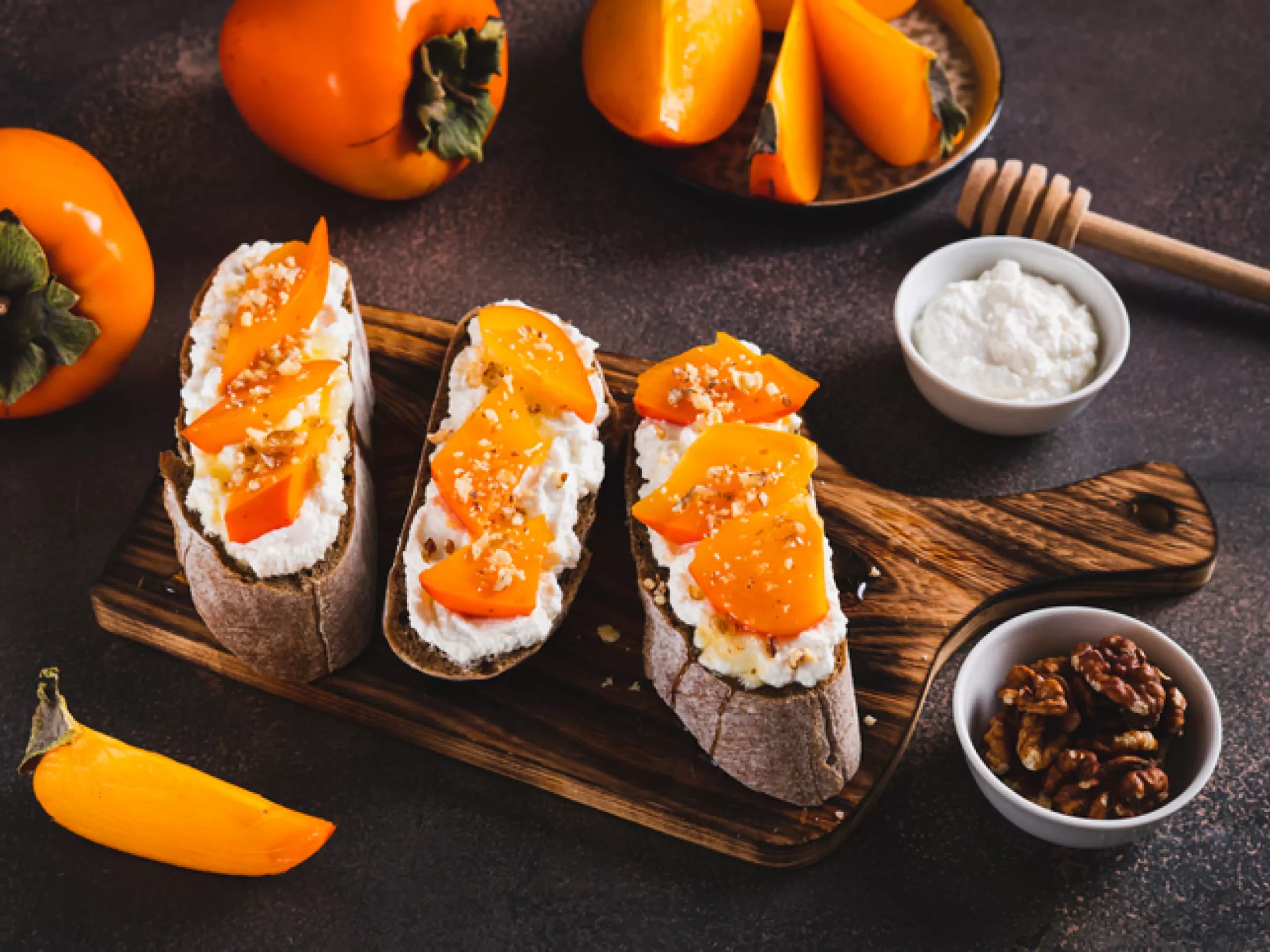
You can eat ripe persimmons raw or add them to fruit salads, baked goods, cheese boards, or savoury salads and appetisers. Generally, you’ll know persimmons are ripe when they are soft to the touch and the skin has an almost translucent quality. Persimmons should be peeled before consumption and seeds should be thrown away.
“I enjoy persimmons when they are soft and squishy,” Burnham says. “I cut them in half, tease out any large seeds and eat the fruit pulp as is or swirl it in yoghurt or ice cream.”
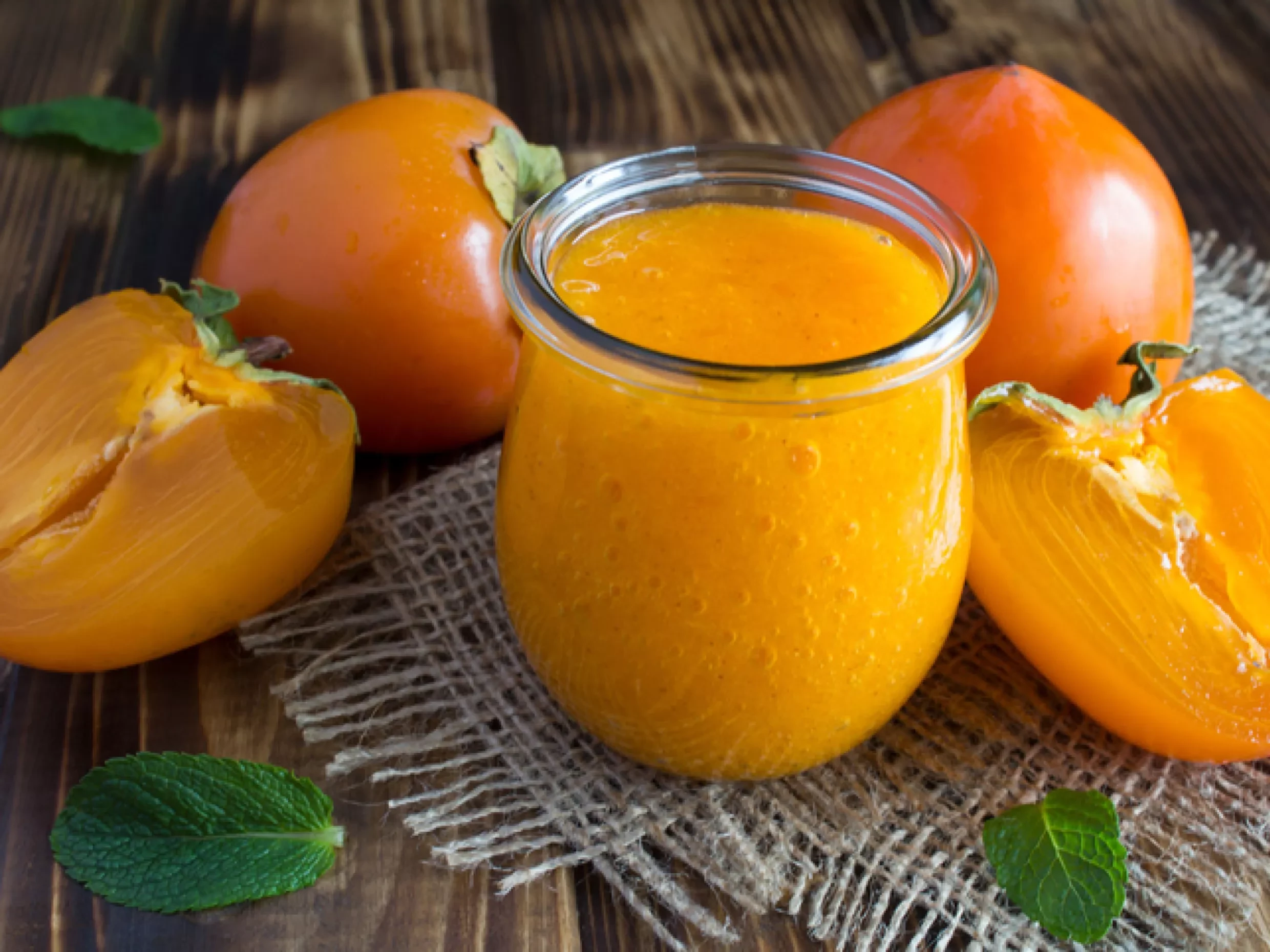
For her part, Patrick prefers foraging for American persimmons in autumn and eating persimmons like apples. “You can eat them sliced up in a salad with goat cheese or feta or bake them in a pie,” she says. “People also make jam, which is a forever favourite way of preserving seasonal delicacies like persimmons.”
Avoid eating underripe persimmons as they can taste bitter and have a chalky texture. “When persimmons aren't yet ripe, they can have an astringent taste that is really unpleasant,” Patrick says. “This is rarely an issue with shop-bought Asian persimmons but is something to look out for when foraging for American persimmons.”
How to Tell When Persimmons Are Ripe
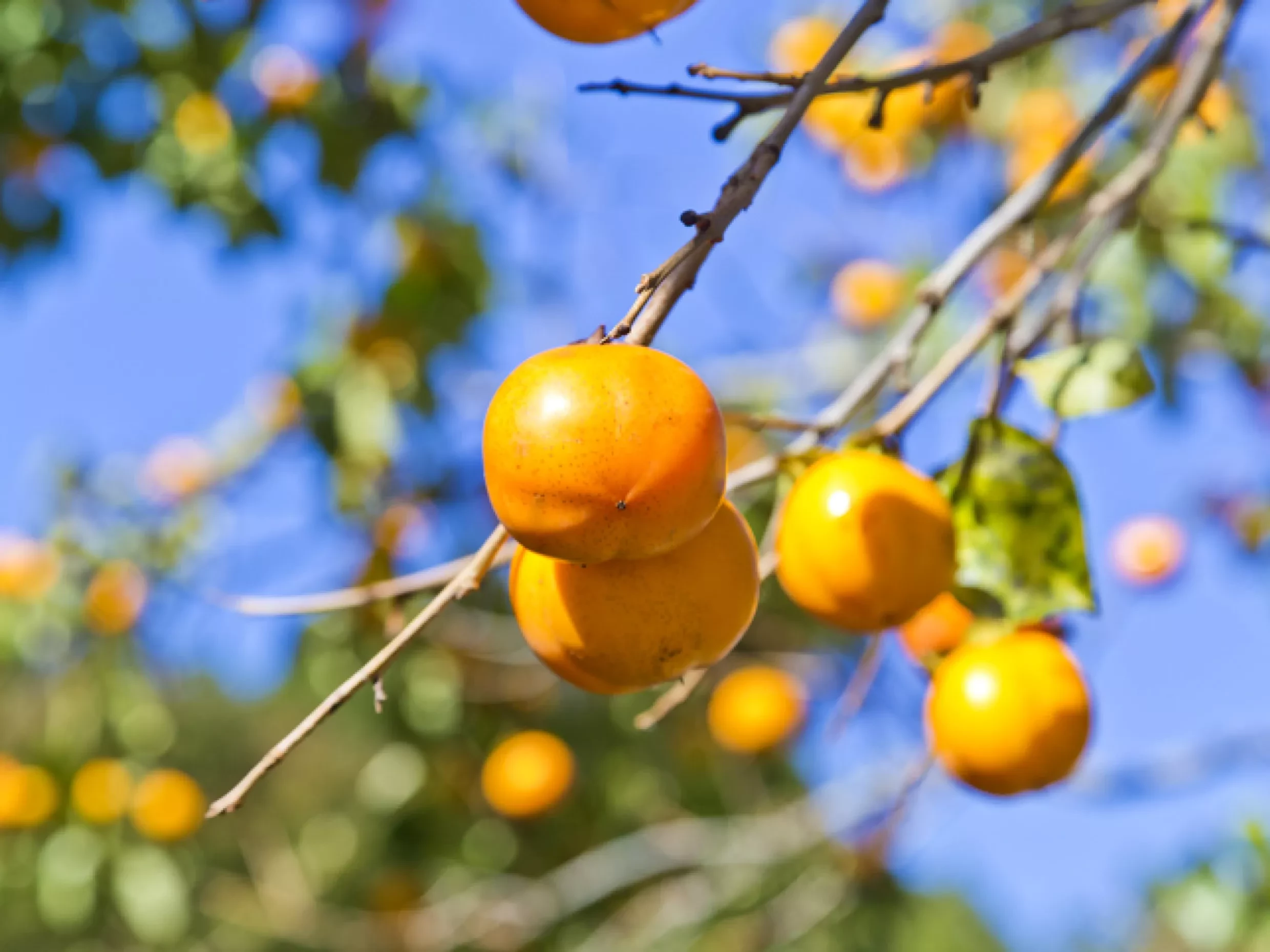
“All persimmons taste wonderful when ripe, with a fragrant, fruity, mango-papaya taste. But knowing when they are ready to eat depends on what type of persimmon it is,” Burnham explains. “The flatter/rounder Asian persimmon (Fuyu type) can be eaten while firm. The oblong Asian persimmon (Hachiya type) and the smaller oblong American persimmon should be fully soft and squishy before eaten. Some Hachiya persimmons are treated so that they can be eaten while firm. But you’ll never go wrong waiting until a persimmon is soft.”
Nutritional Value of Persimmons
“One medium piece of fruit (6oz) contains 120 calories, 0g fat, 32g carbs, 6 grams of fibre and 1g of protein,” says Dana White, MS, RD, ATC, a FoodNetwork.com contributor, cookbook author, registered dietitian nutritionist and certified athletic trainer. “That bright orange colour also means persimmons are full of the inflammation fighting and cell-protecting antioxidant beta-carotene. Like other fruits, persimmons also contain some vitamin C and potassium.”
How to Buy and Store Persimmons
When buying persimmons, look for bright orange fruits with smooth skin and without any blemishes or dark bruises, Burnham advises. “Asian persimmons are readily available in large supermarkets and are likely to be pre-ripened and ready to eat.”
Store persimmons on the counter and allow them to ripen and soften at room temperature. Stored this way, they will last a few weeks if the skin is unbroken.