













Every day around the world, more than two billion cups of coffee are drunk, but would it surprise you to know we’ve only been drinking coffee in its recognisable form since the fifteenth century? But while you’re longing for a lungo, contemplating a cappuccino, or musing on a macchiato, have you ever wondered how coffee gets from tree to cup? Let’s chart the brew-tiful journey of your favourite morning pick-me-up.

Quick Cuppa? It’s Actually Quite Slow…
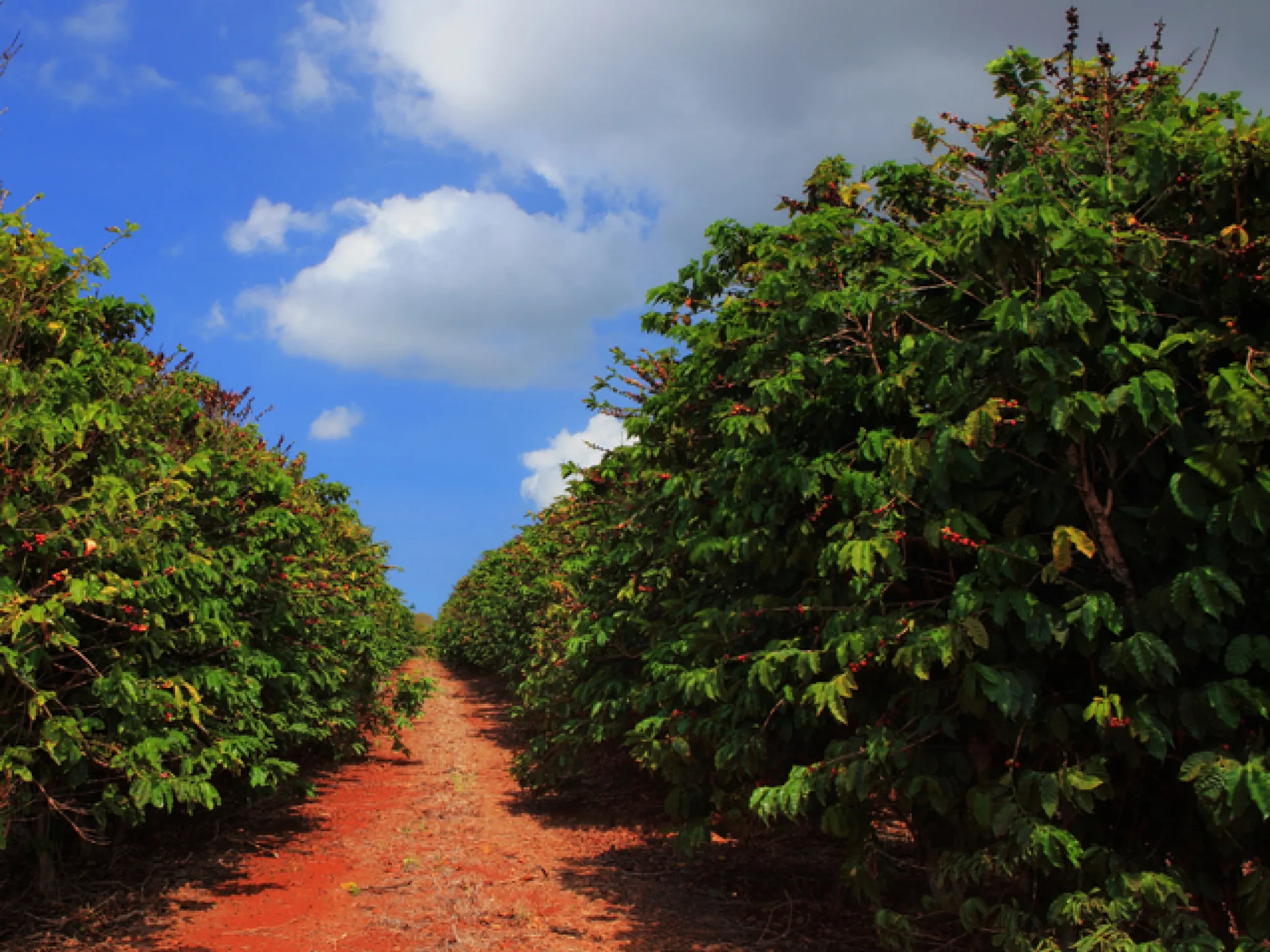
Coffee is big business. In 2025, the branded coffee shop market alone was valued at over £6 billion, with billions more coming from independent cafés, supermarkets and online retailers. The top five coffee-growing countries - Brazil, Vietnam, Colombia, Indonesia and Ethiopia - produce almost eight million tonnes of coffee a year. So how does coffee get from halfway around the world into your mug? Well, it all starts in the trees…
A Very Short History of Coffee
No-one’s quite sure how coffee as we know it was originally dreamed up. In fact the origins of coffee tend to get wrapped up in all sorts of stories, myths and legends. What we do know for certain, is that the Yemeni people were working with coffee seeds by the 1400s, particularly among Sufi communities.
Over the following two hundred years, the drink travelled west via the Ottoman Empire to Europe. By the late seventeenth century, the Dutch had introduced coffee cultivation to Java, while the crop became established across parts of the Americas during the eighteenth century.
In Europe, cafés flourished as hubs of conversation, debate and new ideas. Britain’s coffee shops became known as ‘penny universities’. These were places where, for the price of a penny, customers could get a hot coffee, read the latest newspapers and pamphlets, and encounter lively debates on politics, art, literature, scientific discoveries, and other issues of the day.
In more modern times, coffee continued to thrive, with a wealth of new coffee production methods and ideas, each bringing their own spin on the cafe culture we know today. So, if we know the potted history of coffee, how exactly is it made and how does it get into your cup? Let’s find out.
Step 1 | The Harvesting
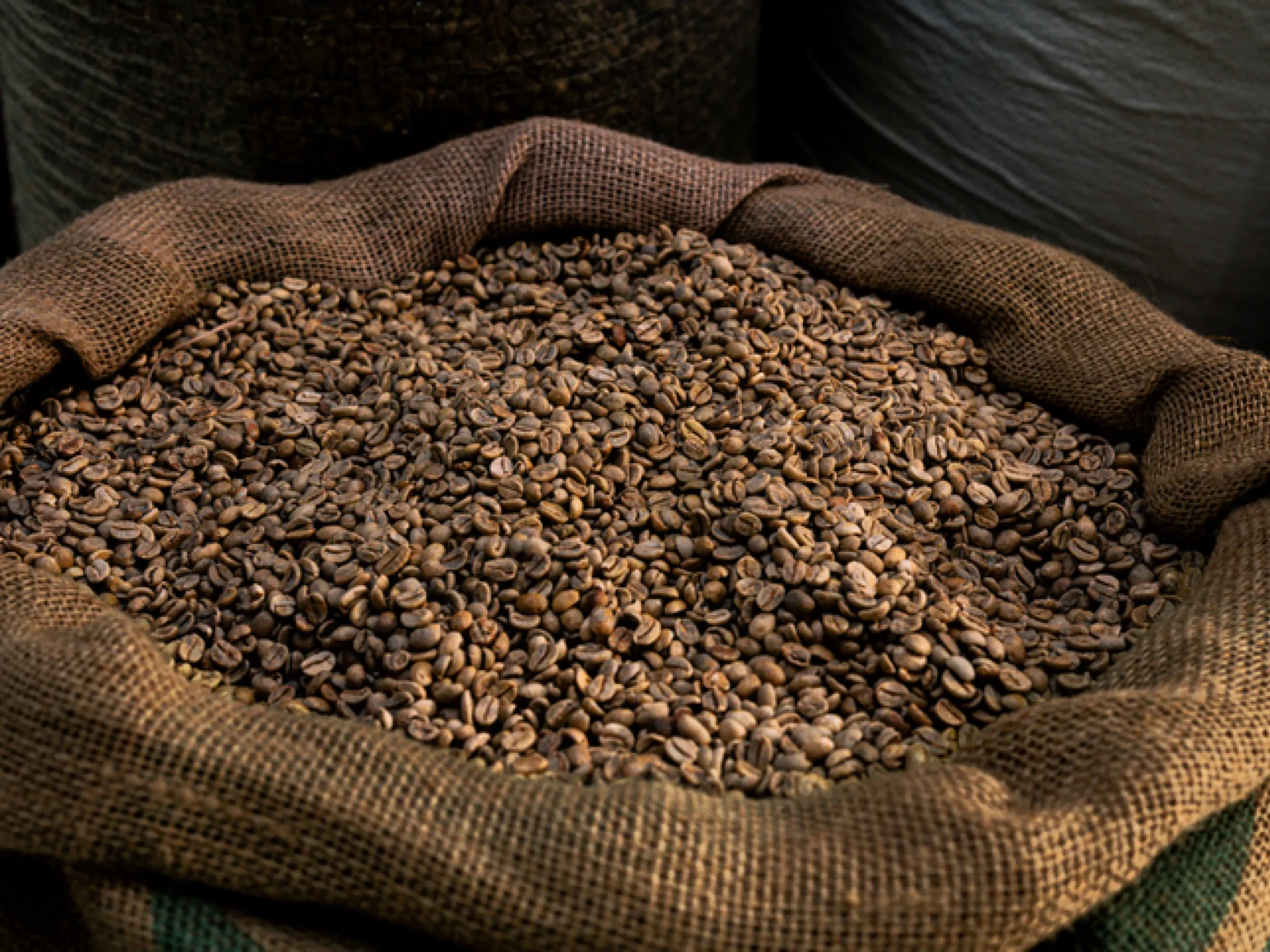
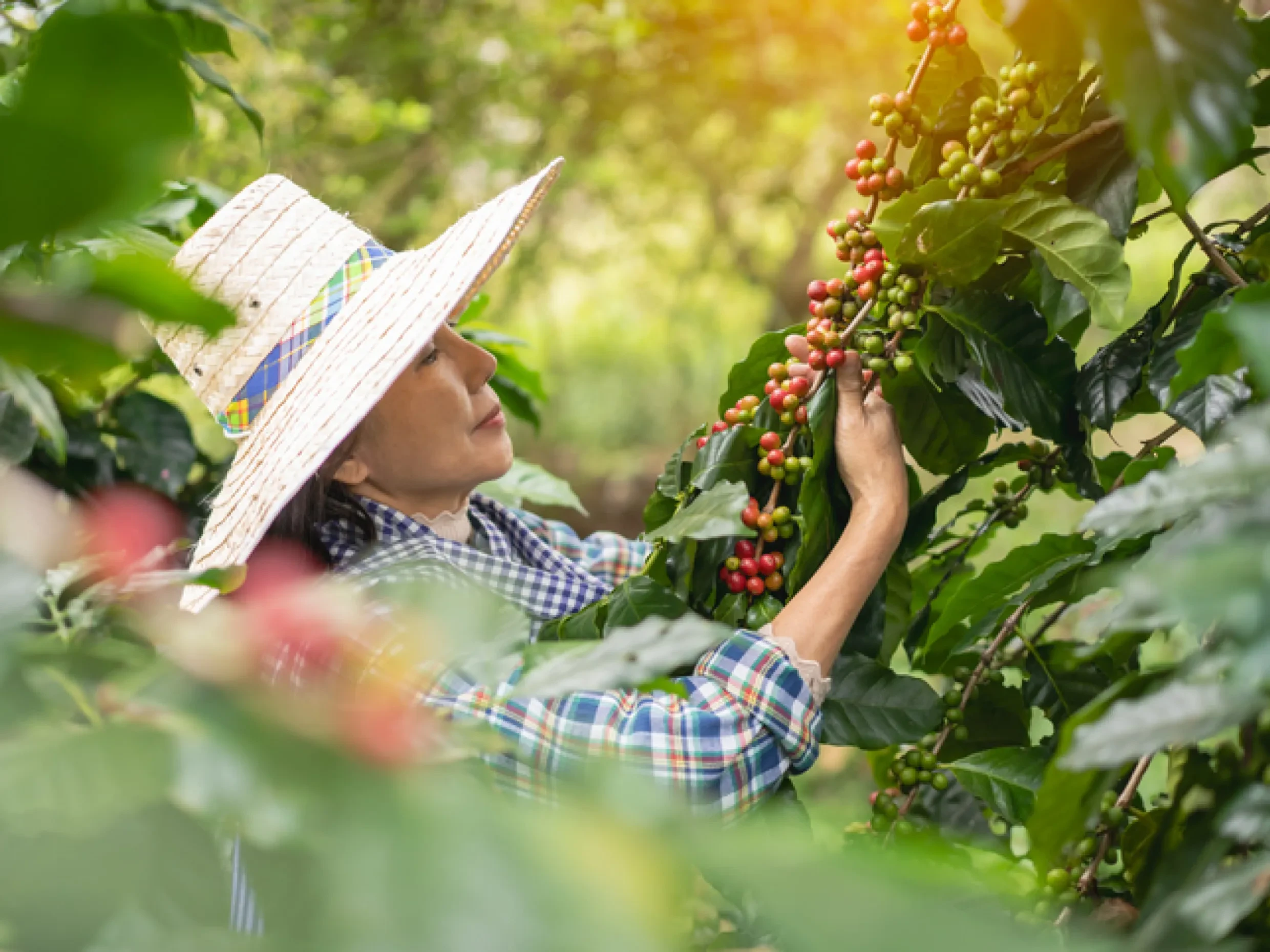
The coffee plant is a flowering shrub or small tree which bears cherry-like fruit. Inside each cherry sit the seeds we call coffee beans, the part ultimately roasted and brewed. A coffee cherry has an outer skin, sweet fleshy pulp, and a papery layer called parchment surrounding the beans. As the fruit ripens, its skin turns from green to red or yellow, signalling that it is ready to pick.
Harvesting is the first major stage of production. Much of the world’s coffee crop is still gathered by hand, with pickers selecting fully ripe cherries - red or yellow, depending on the variety.
While the species itself was originally native to Africa, today the plant flourishes across what’s known as the tropical ‘Bean Belt,’ from Colombia, Brazil, Peru, Honduras and Mexico in the western hemisphere, to Ethiopia, Uganda, India, Vietnam and Indonesia further east.
Step 2 | The Processing
This stage of the process turns the picked cherries into green coffee beans. There are two main methods of how this is done, although other methods are also used.
Washed (or Wet) Process
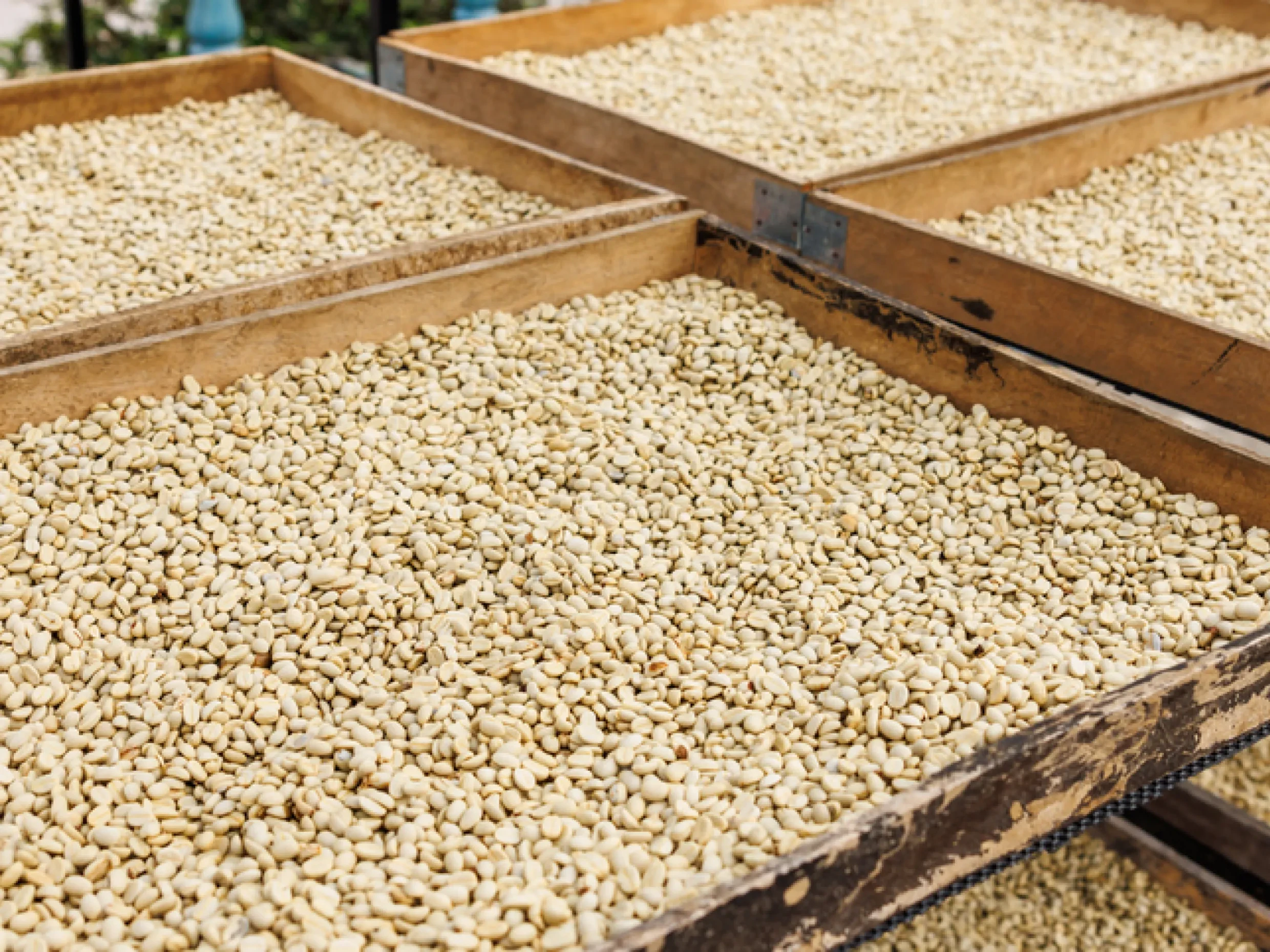
This begins by using water to separate floating, lower-density fruit from those that sink, helping to remove unripe or defective cherries. Then a depulper strips away the skin and pulp. The beans still carry mucilage and parchment, so they’re soaked in fermentation tanks for anywhere between six and 72 hours, allowing naturally occurring microbes and enzymes to break down the sticky coating. Next, the beans are washed, dried in the sun or with mechanical dryers, and passed through a huller to remove the parchment. They’re then sorted and graded before heading to roasters.
Natural (or Dry) Process
This process involves laying out the whole coffee cherries in the sun, often for several weeks. Once their moisture content falls to roughly 10 - 12%, machinery, or on smaller farms, manual labour, removes the dried outer layers to release the beans.
Step 3 | The Grading
Each batch of beans is assessed according to a number of different factors, including bean size and density, moisture content, colour and odour, the number and severity of defects, plus details such as altitude, region, variety and processing method.
Samples from each batch are roasted and ‘cupped’ – tasted by trained coffee experts – who assess their flavour, aroma, acidity, aftertaste and balance. Traditionally, coffee has been graded on a 100-point scale, with scores of 80 or above considered speciality coffee, provided other quality standards are met.
On this scale, 80.00 - 84.99 is rated Very Good, 85.00 - 89.99 is Excellent, and 90.00 - 100.00 is Outstanding. Coffee scoring below 80 is generally considered commercial-grade and can be sold as whole beans, ground coffee or used to make instant coffee. Although newer grading methods take more factors into account, this traditional scoring system is still a useful guide to coffee quality.
Step 4 | Decaffeination
If a decaffeinated version is required, this is usually the stage at which it happens - while the beans are still green and unroasted. There are several ways to remove caffeine, but two of the most familiar are water processing and solvent processing.
In water-based decaffeination, green coffee beans are soaked in water to draw out the caffeine along with some of their flavour compounds. The caffeine is then removed from the liquid, while most of the flavour is retained. The resulting extract can be used to soak further batches of beans, allowing caffeine to escape while helping to preserve their natural flavours. This process continues until the beans reach the required caffeine level.
The solvent method begins by steaming or otherwise opening up the green beans, then rinsing them with a solvent that dissolves caffeine. Ethyl acetate - often described as a naturally occurring compound found in fruits - is one option. Methylene chloride is another. The solvent is removed, and the beans are steamed and dried before roasting.
Step 5 | The Roasting
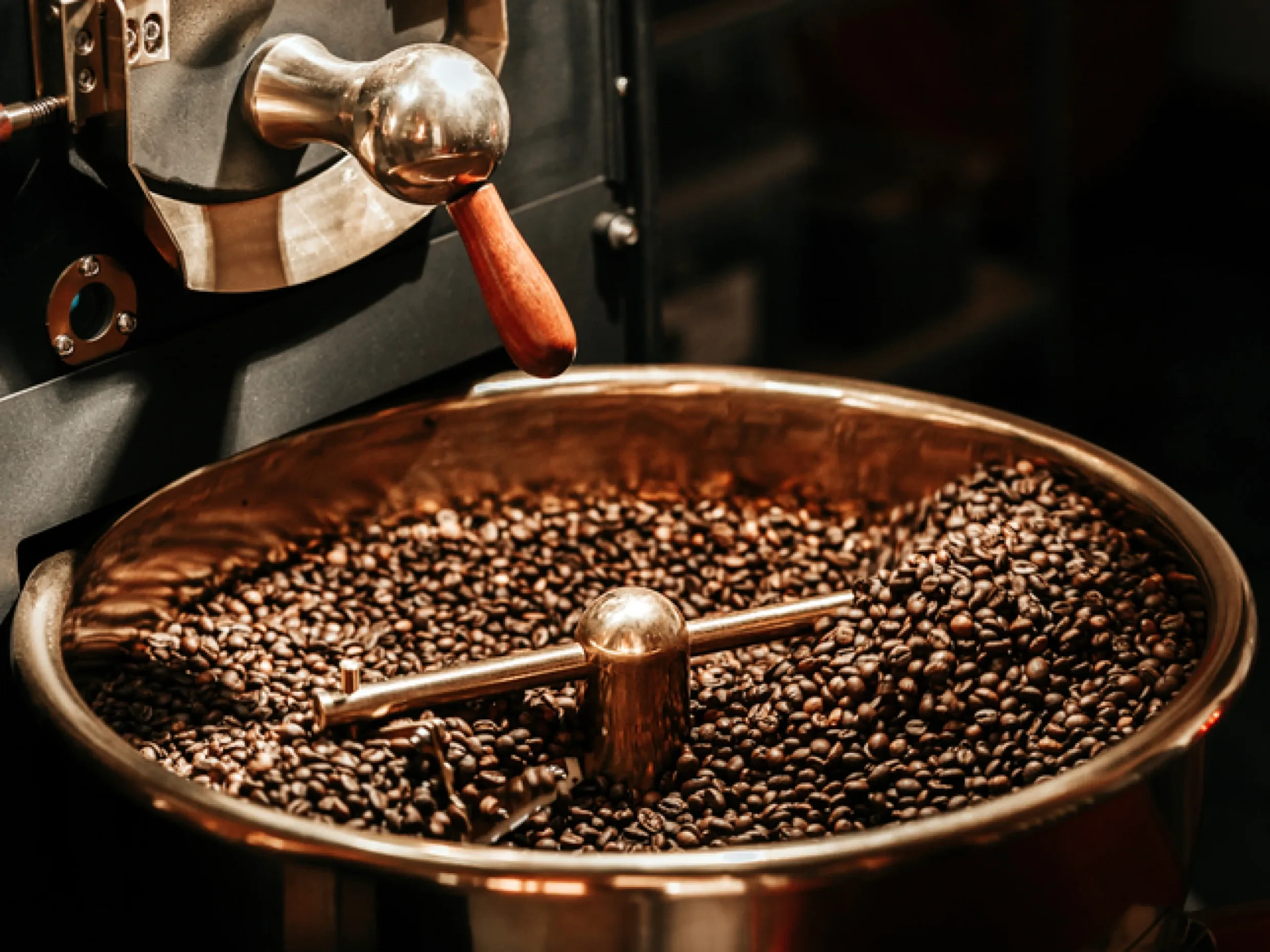
The next step is roasting, which turns green coffee into the familiar brown beans. Depending on the process and the desired roast, large rotating drums or other industrial roasting equipment heat the beans to roughly 200 - 230°C. This process generates many of coffee’s characteristic aromas, flavours, and the signature deep brown colour.
As the beans approach roughly 180 - 205°C, steam and carbon dioxide build up inside and there’s an audible popping sound known as ‘first crack.’ Lighter roasts are often stopped soon after this point, keeping more of the coffee’s natural acidity and fruity flavours. Roasting for longer creates darker beans which taste more bitter and smoky, though they’re not necessarily “stronger” - caffeine changes very little with roast level, although it can vary depending on bean density and weight.
To stop the roasting process, the beans are cooled quickly with air, or with a light spray of water.
Step 6 | The Finished Product
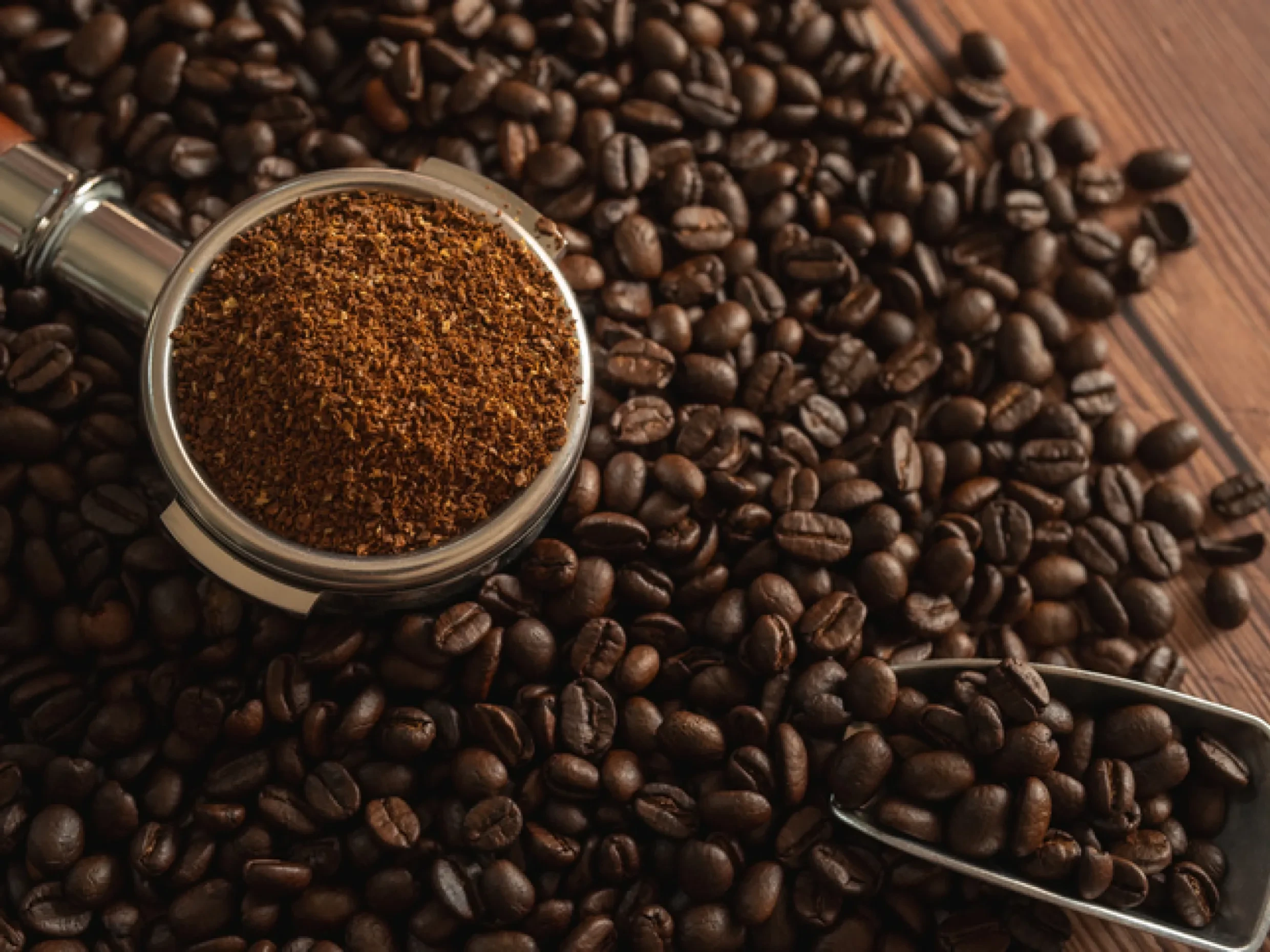
After harvesting, processing, grading and roasting, coffee beans generally follow one of three routes. They’re packed whole, ground for filter or espresso-style coffee, or ground and brewed on an industrial scale to make instant coffee.
Whole Beans
Some roasted beans are packaged and sold as whole beans. They’re often rested briefly to release carbon dioxide, then sealed in bags with one-way valves to let gas escape while keeping oxygen out, helping to keep them fresh.
Ground Coffee
For filter, cafetière, espresso or pod coffee, the roasted beans are ground to a size suited to the brewing method - coarser for cafetière, finer for espresso. The ground coffee is then sealed quickly, often vacuum-packed or protected from oxygen, before being distributed.
Instant Coffee
Instant coffee begins in much the same way. The beans are roasted and ground, then brewed on an industrial scale with hot water under pressure to extract the soluble flavour compounds. That liquid coffee is concentrated and dried - usually by spray-drying or freeze-drying - into granules or powder, which are then packaged.
Grounds for Appreciation
Whether you’re a filter fan, a cappuccino connoisseur, or a pod purist, every cup of coffee carries the work of farmers, pickers, roasters and tasters. So next time you take that first delicious sip, you’ll know exactly how much care, skill and effort has gone into getting it there.