






Hearty and hot with soft, slow-cooked mutton, onion gravy and crispy potatoes, the Lancashire hotpot is British comfort food in its purest form. Born from thrift and necessity in the mill towns of northwest England, it transformed simple ingredients into a wonderful one-pot, perfect for family dining. Over generations, this humble supper has come to reflect the very heart of home cooking - patient, practical, and delicious. So how did this modest dish become a culinary emblem of northern hospitality? Let’s lift the lid on the story of the Lancashire hotpot.
What is Lancashire Hotpot?
Food writer and restaurant critic Tom Parker-Bowles described Lancashire hotpot as ‘a stew that’s as straight talking as a Bolton costermonger* after his third pint of Thwaites Gold’, and he’s right. But what exactly is a Lancashire hotpot?
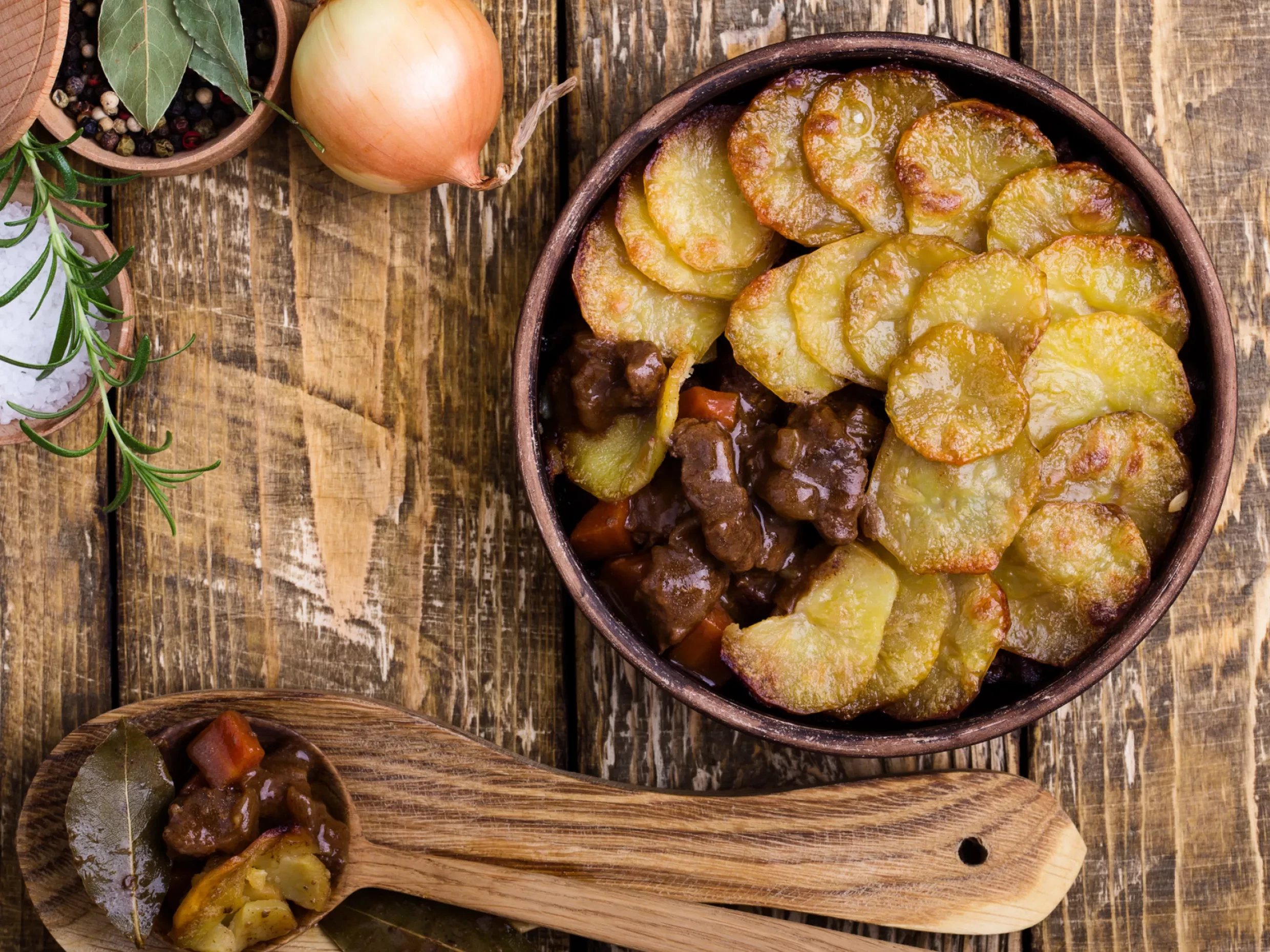
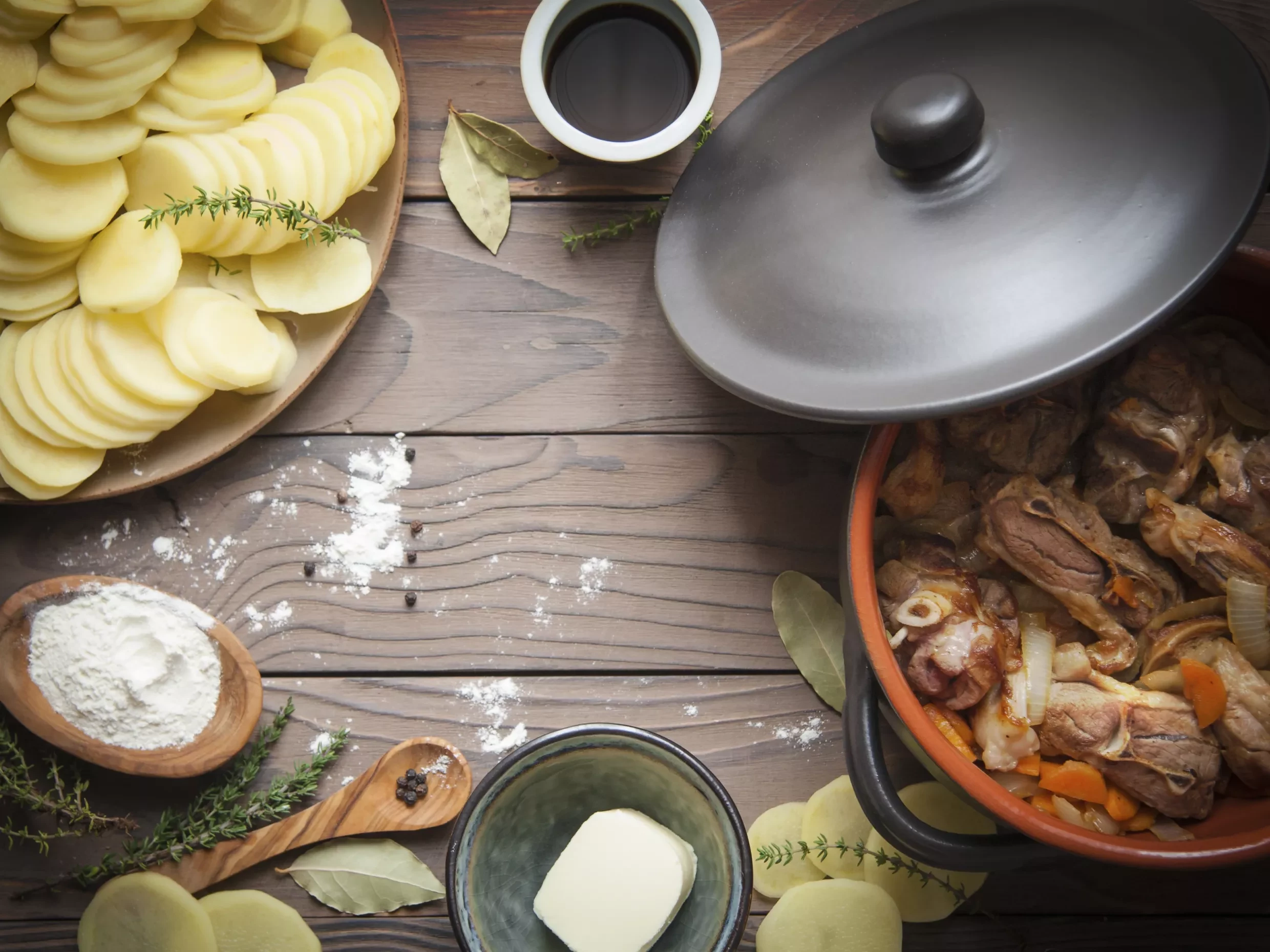
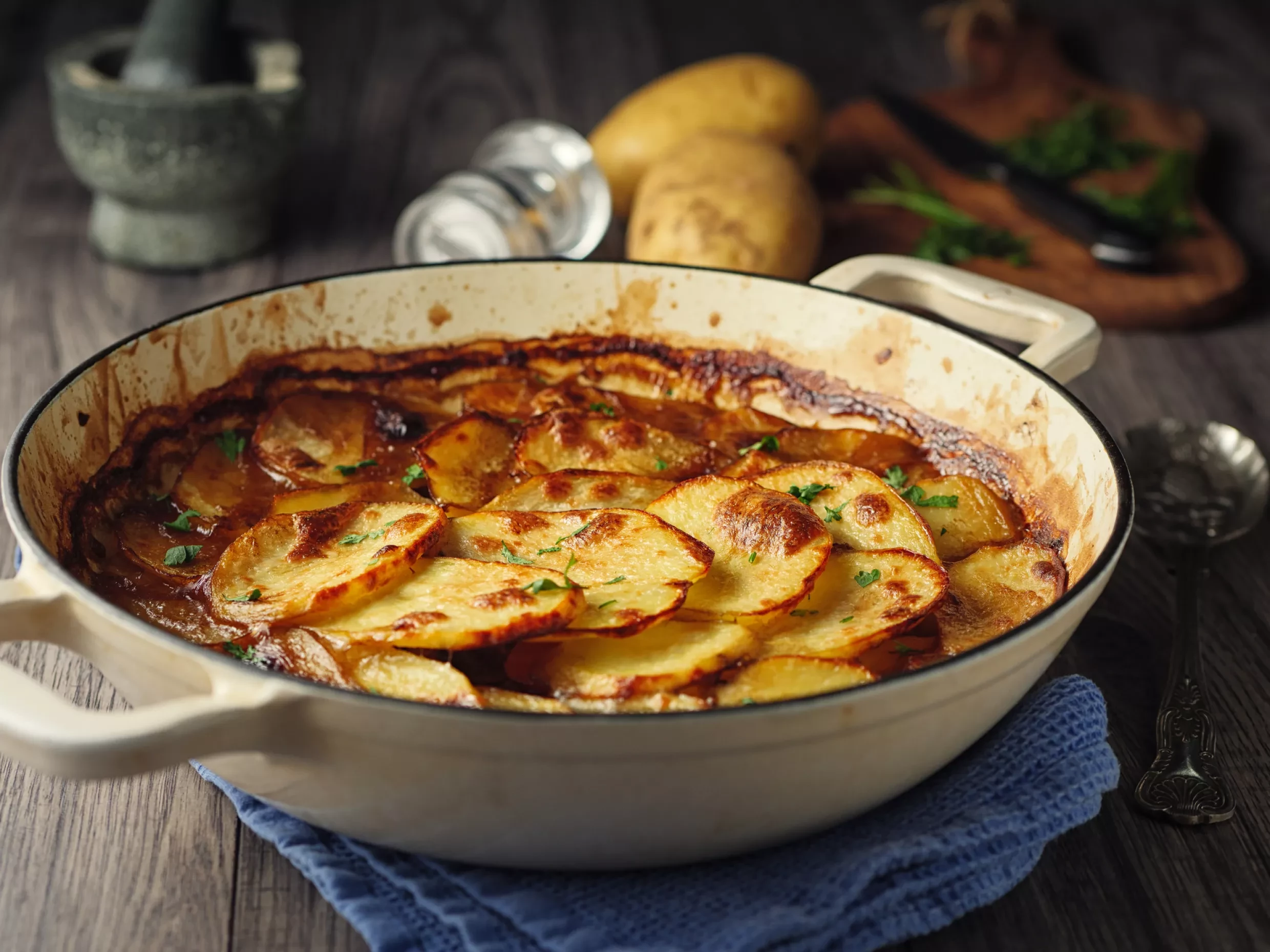
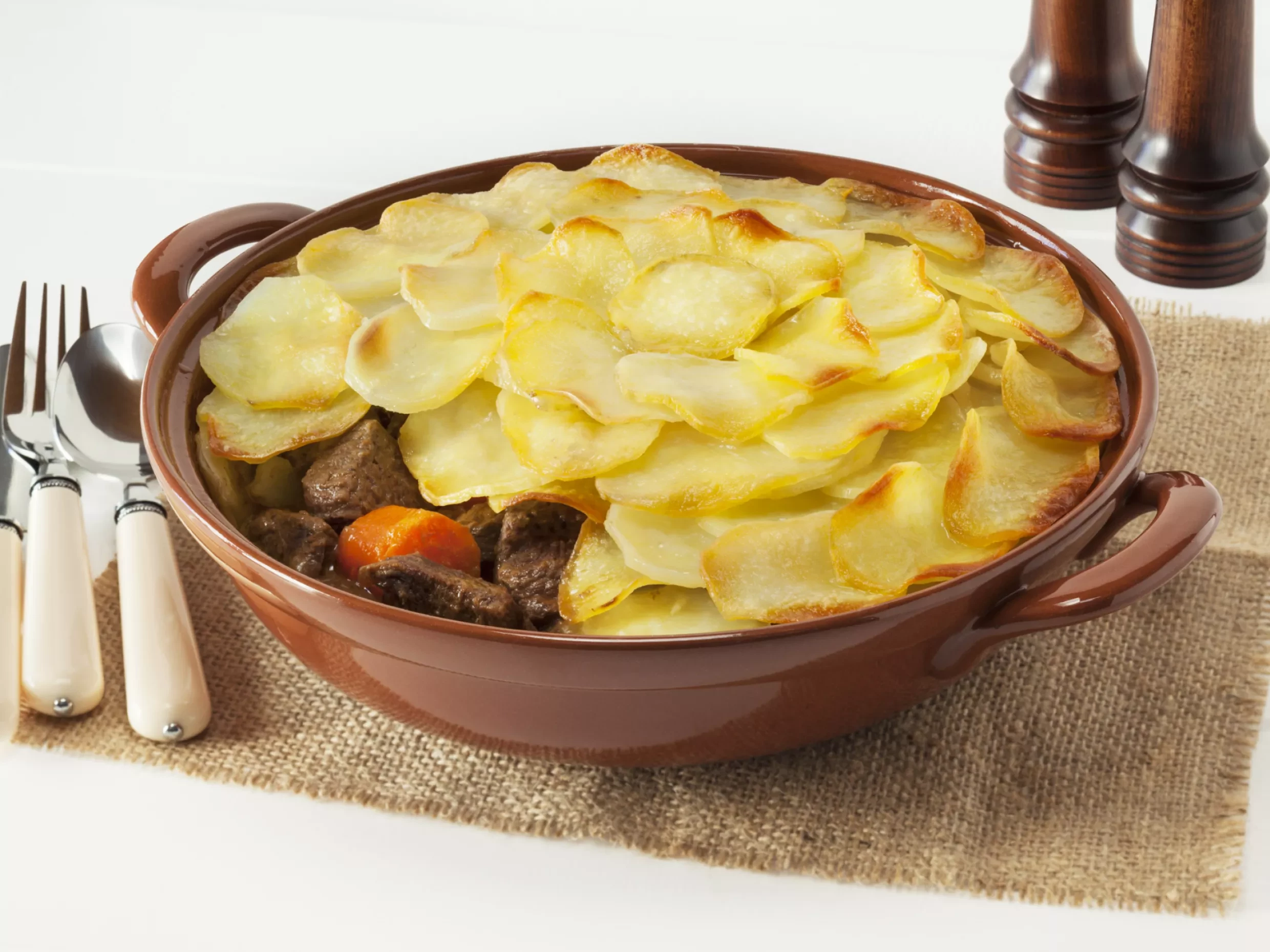
In basic terms, Lancashire hotpot is a simple stew topped with sliced potatoes and baked until the top is crisp and the filling is tender and brothy. Traditionally, it was made with inexpensive cuts of mutton, often including kidneys (and, remarkably, oysters, long before they became incredibly expensive), piled with plenty of onions, then doused with stock and cooked very slowly.
Over the years, cooks have tinkered with the basic template, but they haven’t strayed too far from the original idea. Some modern recipes switch mutton (sheep over two years old) for lamb shoulder or neck (or even hogget, meat from 1-2 year-old sheep), and add carrots and other root vegetables. They also enrich the gravy with flour, Worcestershire sauce or a meatier stock. You may even find a few recipes that include black pudding.
Yet however it’s dressed up, a Lancashire hotpot still revolves around the same core ingredients of slow-cooked lamb, onions and stock under a potato lid, baked until the meat is soft, the potatoes tender underneath and crispy on top.
*A costermonger is a traditional British street vendor, particularly one who sells fruits and vegetables from a handcart or barrow, originating from the word for a medieval variety of apple ("costard") and "monger" (seller).
From Hearthside Stew to Northern Staple
In its earliest form, Lancashire hotpot was less a recipe than a method - a way to turn tough mutton, onions, and potatoes into something tasty with nothing more than time and a steady heat. Its origins stretch back to at least the early nineteenth century, where big iron pots were left to burble slowly over an open hearth while other chores were done. Cheap, accessible ingredients and long, slow cooking made it ideal for feeding large families on limited means. This was food shaped by necessity, but it was also comforting as well as filling.
Why is it called a Hotpot?
No-one actually knows for sure where the term hotpot came from, but there are a couple of possible answers. It may have been so-called after the big earthenware dish it was cooked in, literally, a hot pot. Alternatively, it could be derived from hochepot, a medieval French word meaning a type of meat and vegetable stew. In 1591, A Book of Cookrye gave a recipe for ‘hodgepodge’ using a fat rump of beef or neck of mutton, but come the nineteenth century, it became known as hotpot, and hasn’t looked back.
Into the Kitchen: Early Recipes and Working‑Class Roots
The first printed hotpot recipes appeared in the nineteenth century, tucked into cookery books aimed at thrifty households - no flourishes, just simple ingredients, easy prep, and all-day cooking - rather than upper class cooks and housekeepers.
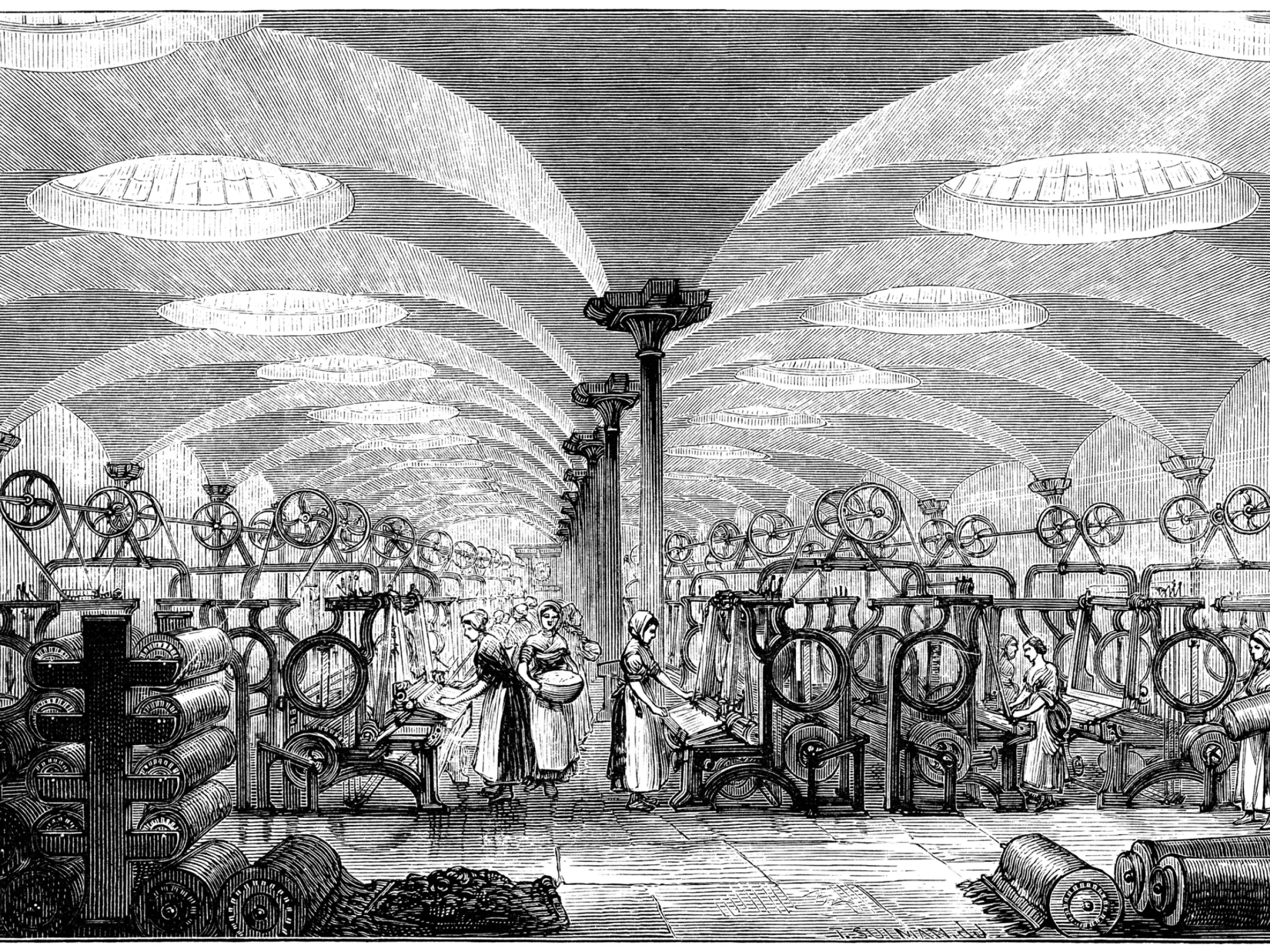
These early writings reflect a dish that emanated from the workers in Lancashire’s cotton mills, where stews could be left to cook unattended while people worked long and arduous shifts at the loom. The last thing someone wanted to do after a day’s graft was to come home and cook for the family. Lancashire hotpot in its formative years was sustenance for the industrial poor - scraps of meat stretched with root vegetables, topped with cheap potatoes.
Given its practical origins, what really sets hotpot apart from other stews is its simplicity. There’s no cream sauces or exotic spices, just a few basic ingredients that were made to last. Mill workers’ families relied on it as fuel to get them through gruelling twelve-hour days, a one-pot marvel that demanded no fuss or finery. Rooted in the terraced streets of the northwest’s industrial heartland - towns like Bolton, Preston, Blackburn, Oldham, Rochdale and Bury - it embodied the day-to-day life of the working-classes, food that didn’t just satisfy hardworking, hungry people but fortified entire communities through the grind and slog of the factory age.
Mid-Nineteenth to Early Twentieth Century
As Britain moved towards the height of the Industrial Revolution, Lancashire hotpot had become as prized a part of mill life as the incessant clatter of looms and the billowing smoke of factory chimneys. Families would assemble it in the morning, then leave it to cook slowly while the household worked, coming home to a meal that was hot, hearty, and required almost no faff. It was also perfect for communal baking and cooking days, with neighbours sharing precious oven space in industrial kitchens.
From Home Cooking to a National Treasure
As the twentieth century rolled around, Lancashire hotpot escaped the northern mill town kitchens. As wartime rationing focused the nation’s appetite on filling fare, and post-war cooks sought nostalgia in familiar flavours, hotpot's reputation swelled beyond the northwest and claimed its place on pub (and later gastropub) menus. It was made popular nationwide in no small way by Coronation Street royalty Betty Turpin’s legendary hotpot served for decades in the Rovers Return, and chefs and home cooks alike began to refine it while preserving its no-nonsense heart.
Today, Lancashire hotpot has become the poster child for classic British comfort food. From TV chefs reviving it with lamb shanks, a glug of stout or a handful of thyme, to families firing up the slow cooker, any dish that’s still beloved almost 200 years after it was created is always going to be a winner!
Watch Adam Richman Eats Britain On Discovery+
Man vs Food legend Adam Richman’s new show on Discovery+ uses the map as a menu as he worships at the dining table of Britain’s food superstars. In episode seven, he's in Lancashire to taste the historic, hearty hotpot. He also samples a Brazilian sausage roll, world-famous black pudding from a secret recipe, and a wonderful chicken-topped waffle.