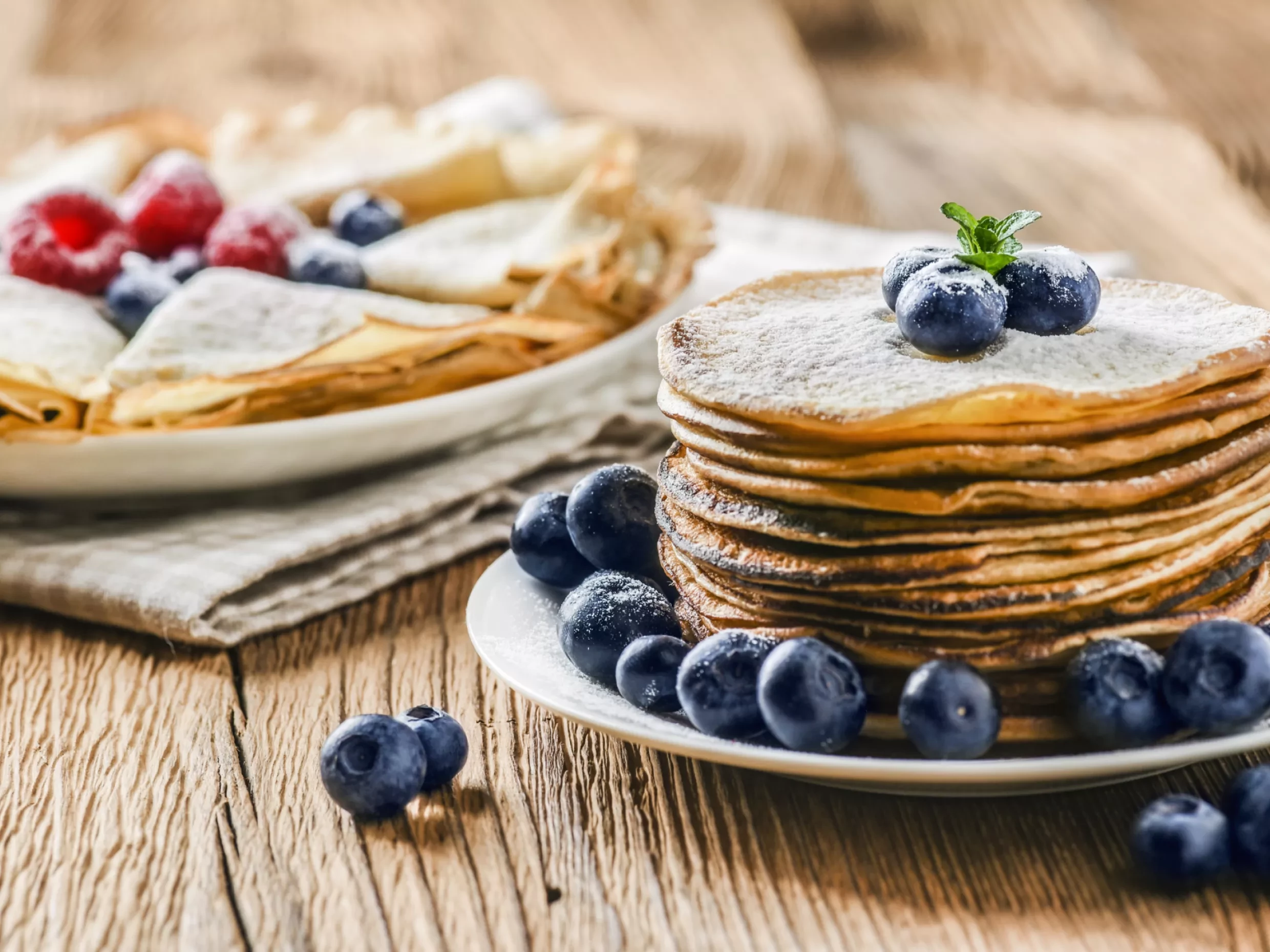


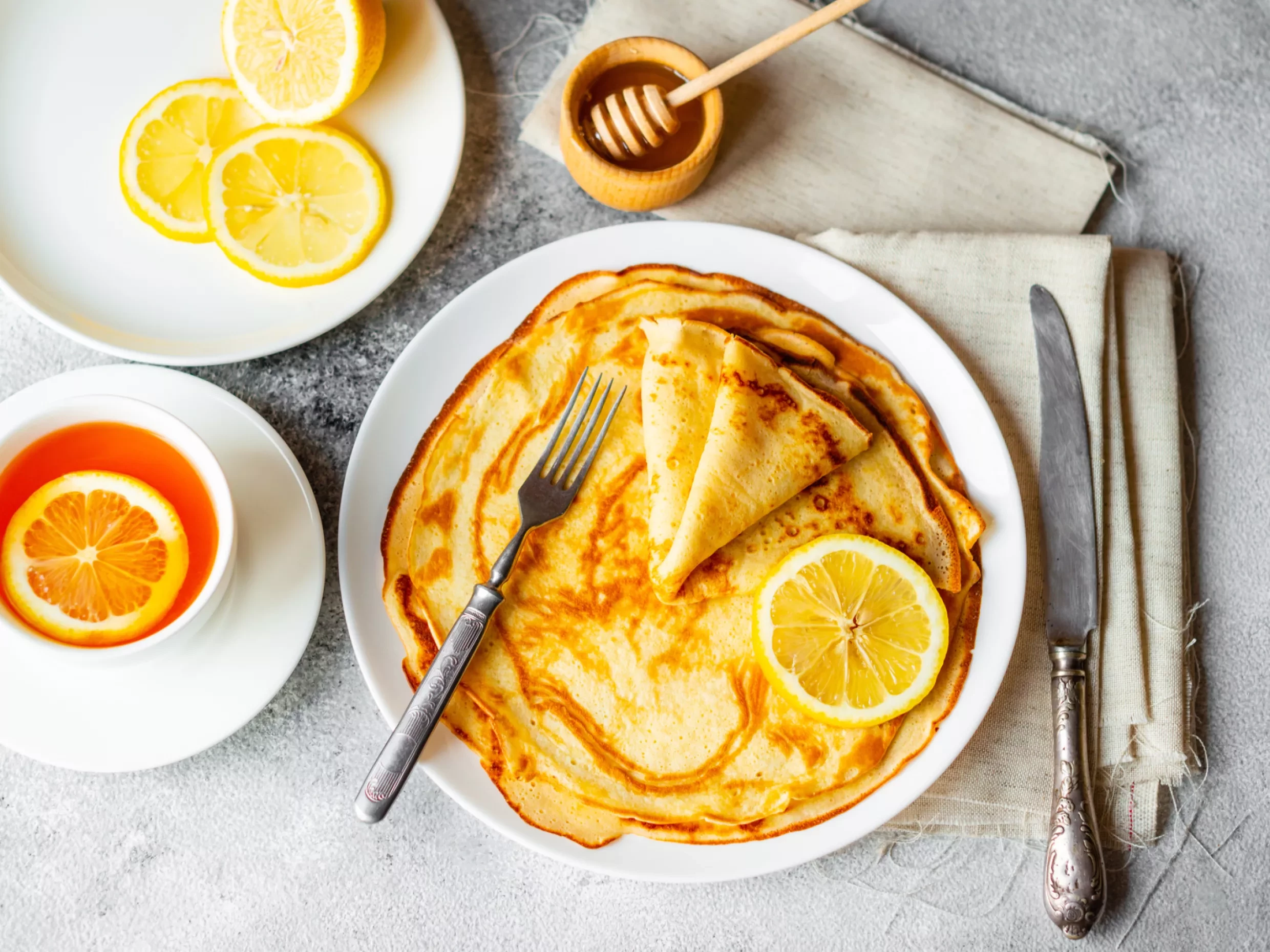
Golden and crispy round the edges, soft and fluffy in the middle, and flipped with joy and (some) skill, the humble pancake has become the star of one of Britain’s most cheerful traditions. Yet beneath the lashings of lemon and spoonfuls of sugar lies a story rooted in faith, frugality, and festivity. So how did a simple mixture of eggs, milk, and flour come to symbolise a day of indulgence before a month of restraint? Let’s flip back through history and see how Pancake Day began.
What is Pancake Day?
Pancake Day, also known as Shrove Tuesday, is the final feast before Lent begins the following day, on Ash Wednesday. Each year, the date changes according to the Christian calendar, which means it can land anywhere from early February to the middle of March. For many, it’s one of Britain’s most joyful food traditions, as we finally emerge from winter’s gloom with sizzling, batter-filled pans, and a tastebud-tantalising tower of toppings.
But there’s more to Pancake Day than sugary scrumminess. Historically, it was a way for households to use up rich ingredients like eggs, milk, and flour before Lent’s season of fasting and restraint. What began as practical pantry-clearing evolved into a much-loved yearly ritual.
So how exactly did Pancake Day start?
The Christian Traditions of Shrove Tuesday
Long before it became a day of sticky syrup and fabulous flipping, Pancake Day held an important place in the Christian calendar. Its proper name, Shrove Tuesday, comes from the old English word “shrive,” meaning absolution after confessing sins. In medieval times, it was a day of spiritual and culinary cleansing, when villagers would visit their priest to be shriven, then return home to clear their larders of rich foods forbidden during Lent.
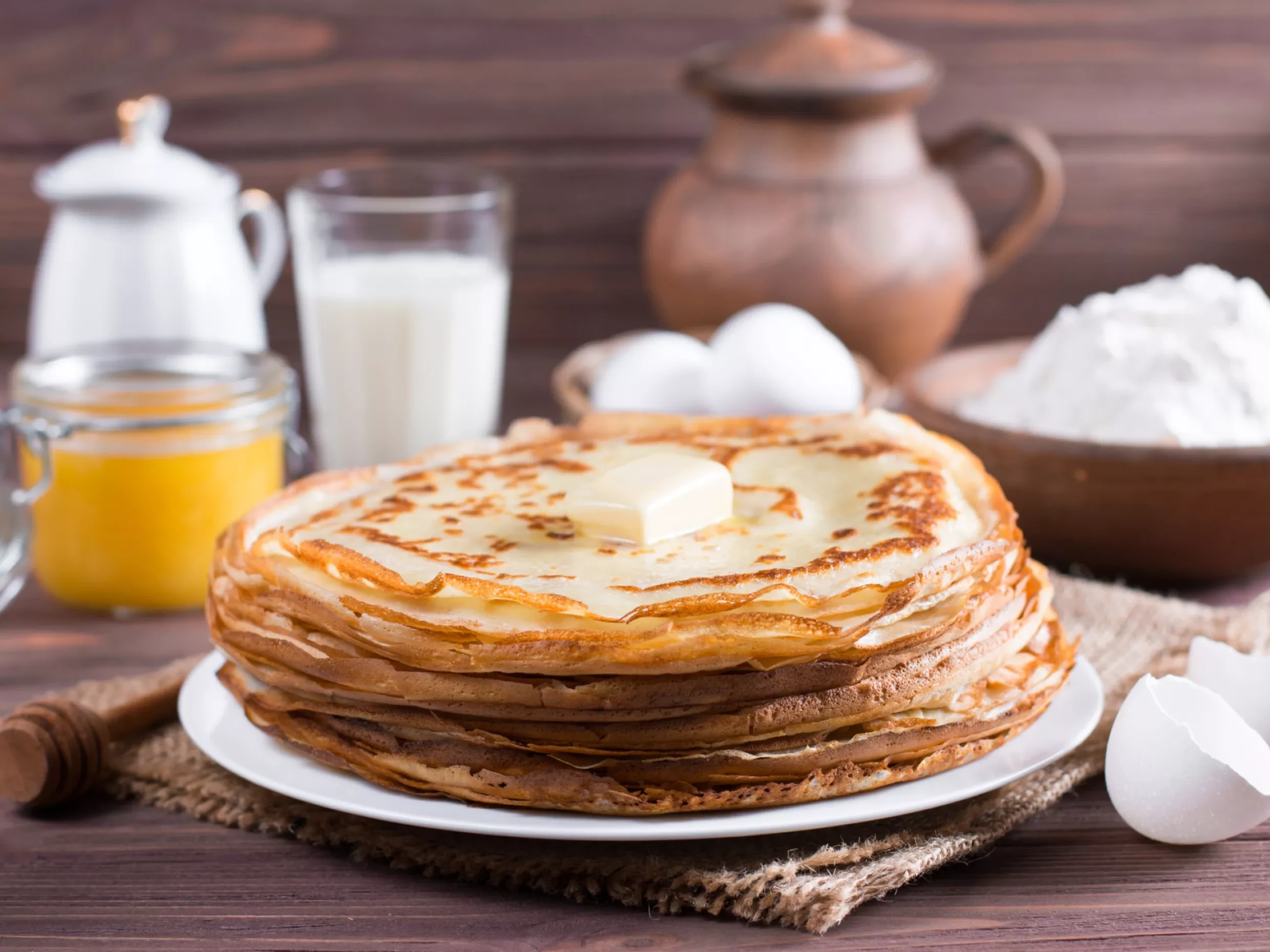
Butter, eggs, and milk - staples of medieval feasting - couldn’t go to waste, so they were whipped into pancakes, and the humble frying pan became a reminder that Lent, the forty days of fasting and reflection leading into Easter, was about to begin. In villages and towns up and down the country, church bells rang on Shrove Tuesday to remind people to repent their sins, but also to mark the start of a feast!
The History of Pancake Day
The tradition of marking the start of Lent stretches back to at least 1000 AD, when around that time, English abbot and prolific writer Ælfric of Eynsham wrote, ‘In the week immediately before Lent everyone shall go to his confessor and confess his deeds and the confessor shall so shrive him’, but it may have started centuries before. By the time the practice spread through medieval Europe, households had developed a practical ritual to mark the eve of Lent - using up foods forbidden during the fast. Meat, fats, eggs, and dairy - luxuries in many modest homes - had to be cleared from the pantry, and the frying pan was perfect for turning them into something comforting and festive.
In England, the custom took firm root by the Middle Ages. Parish communities prepared ‘shroving feasts,’ combining confession with communal meals, where pancakes were the star of the show. Records from the fifteenth century mention Shrovetide celebrations, and by Tudor times the day was an integral part of the annual calendar. As centuries passed, the solemn religious aspect of Shrove Tuesday softened, but the culinary tradition remained.
The Fun & Frolics of Pancake Day
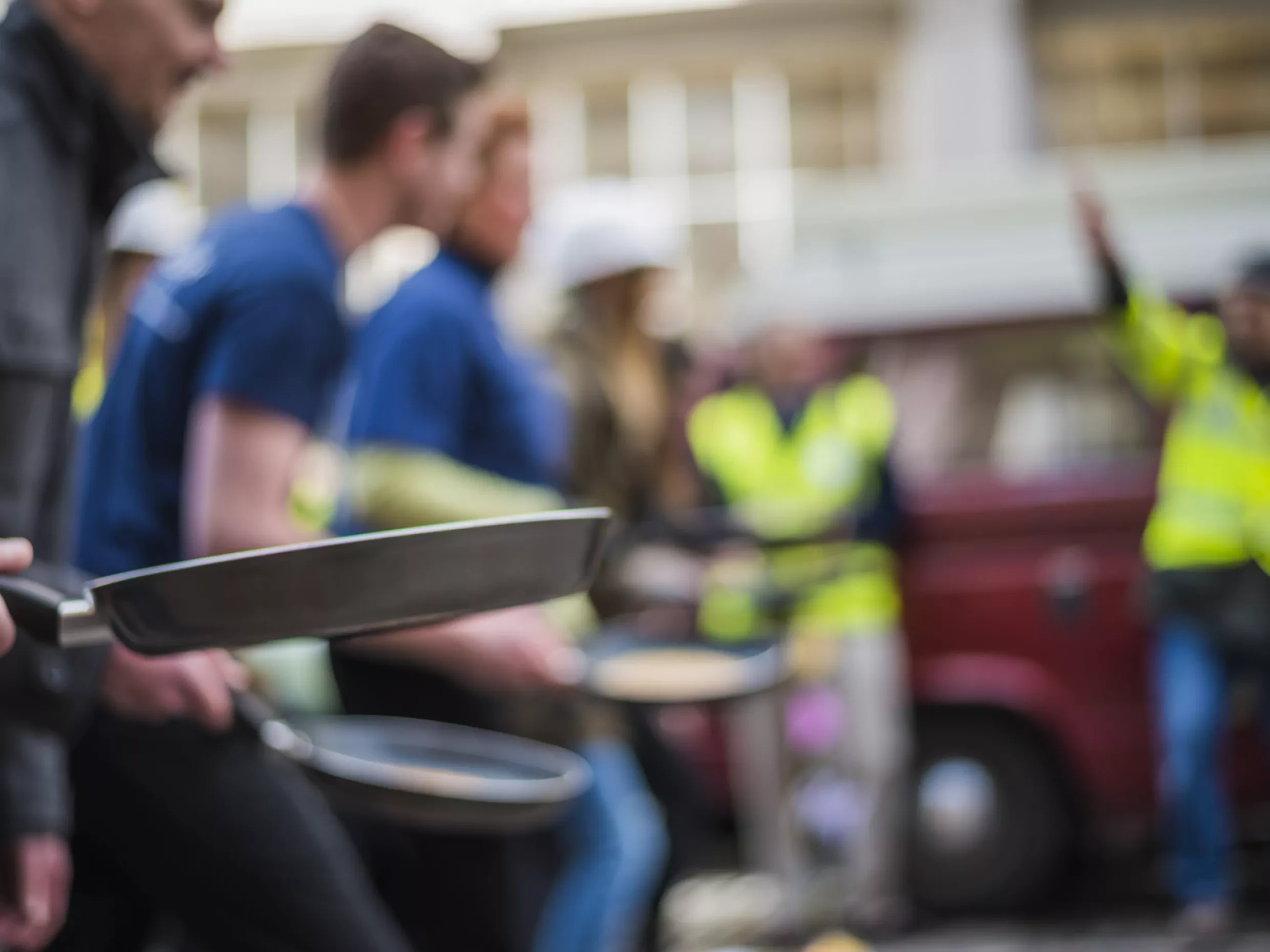
Shrove Tuesday began as a day of reflection, but it’s transformed into a day of celebration, and Pancake Day is as much about laughter as it is about batter and butter. Up and down the country, people run, flip, and cheer their way through pancake races with a joyous blend of athleticism and delightful absurdity.
The most famous race of all - and, legend has it, where the tradition of Pancake Day races started - is in the Buckinghamshire town of Olney where it’s said that in 1445, a local woman heard the shriving bell while she was in the middle of making her pancakes. In her haste, she ran to the church in her headscarf and apron, still holding her frying pan. The race still goes on to this day, where competitors must run a set course of 379 metres from the market place to the Church of St Peter & St Paul, while flipping the pancake at the start and at the end.
Another quirky time-honoured tradition is the annual Westminster School Pancake Greaze that started in 1753. On Shrove Tuesday, the school cook tosses a pancake over a high iron bar in the school hall and pupils scramble to get pieces of it. The student who secures the largest portion by weight wins a prize (traditionally a gold sovereign) and the Dean of Westminster petitions for a half-holiday.
Pancake Day & Football
Among the most enduring Shrove Tuesday celebrations are the mob football games which date back to at least the twelfth century. They’re huge chaotic community ball games, often involving hundreds of players on each side with the aim of scoring a goal on ‘pitches’ often miles apart, at each end of the local town through the streets, or on vast fields.
These games have almost no rules (some say the ball must avoid sacred places, you can’t hide the ball once it’s in play, and - reassuringly - there must be no murder or manslaughter). There are no limits as to the number of players, and the ball can be kicked, carried or pushed.
Some of the most famous mob football games include Scoring the Hales in the Northumberland market town of Alnwick, the Royal Shrovetide Football in Ashbourne, Derbyshire, the Atherstone Ball Game in Warwickshire, Hurling the Silver Ball in the Cornish town of St Columb Major, and the Sedgefield Ball Game in County Durham.

Pancake Day Around the World
Though Shrove Tuesday is rooted in Christian tradition, the act of feasting before Lent takes many forms around the world - each with its own flavours and rituals.
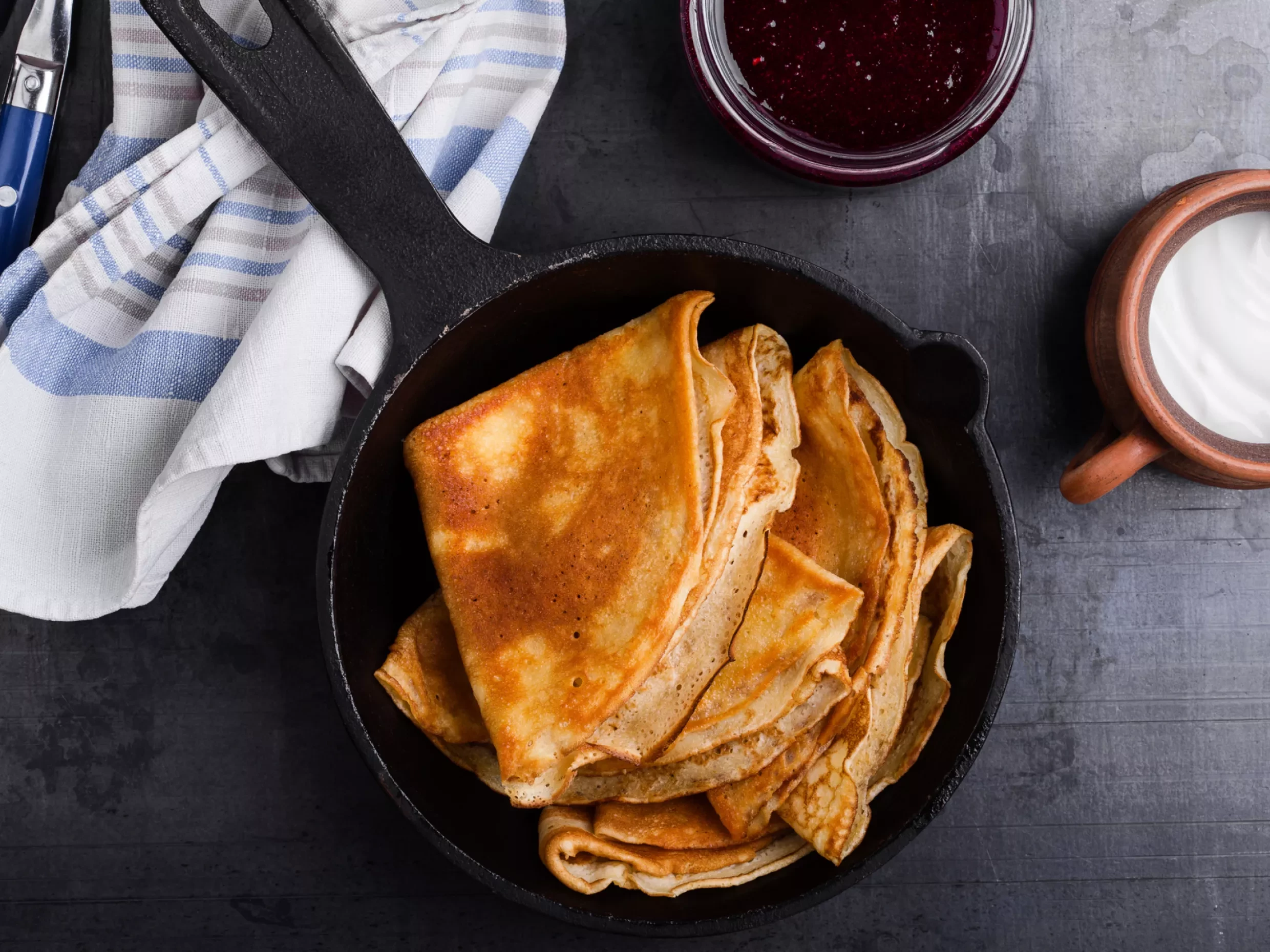
In Germany, it’s known as Fastnachtsdienstag and celebrated with fancy dress. In France, the day is celebrated as Mardi Gras, when paper‑thin crêpes are flipped for luck, sometimes with the flipper holding a coin. In many Portuguese, Italian and Spanish speaking countries, it’s known as Carnival, from carne levare, the Medieval Latin phrase meaning ‘to put away the flesh’, a typical Lenten ritual of abstaining from eating meat.
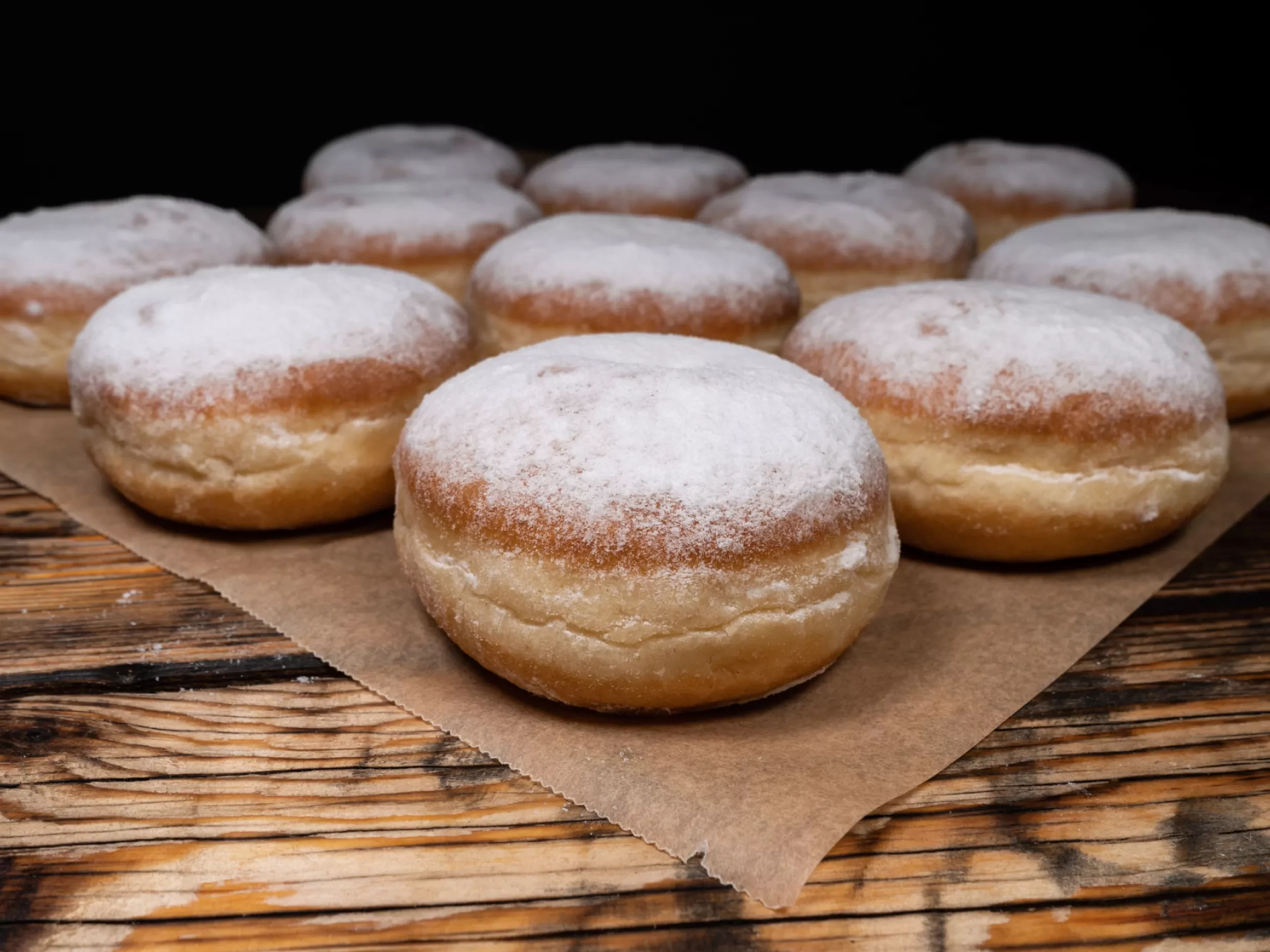
Shrove Tuesday in Denmark and Norway is called Fetetirsdag, or Fat Tuesday, and in Iceland, Sprengidagur, or Bursting Day, is celebrated by eating salted meat and peas. Finland’s Laskiainen is marked by eating green pea soup, and in Poland, the Thursday preceding Ash Wednesday is called tłusty czwartek, which translates as Fat Thursday, a day celebrated by eating doughnuts called pączki.
Whether you’re eating pancakes, filled doughnuts, or omelettes made with sausages and pork fat as they do in Spain, the essence remains the same - one final celebration of food before the quieter days of Lent begin.
Pancake Day is Flipping Brilliant!
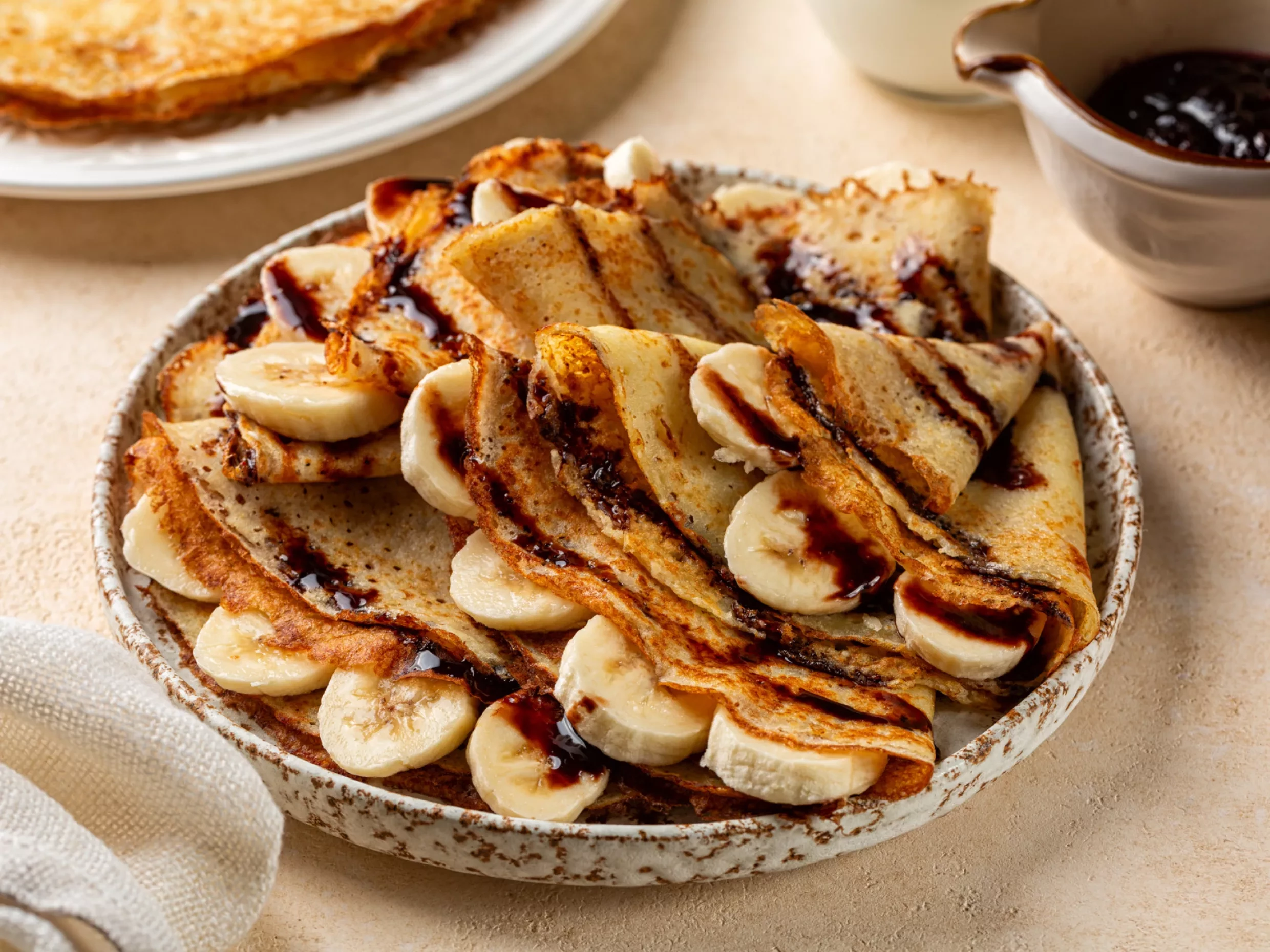
From medieval kitchens to modern frying pans, Pancake Day has never lost its charm. What began as a humble religious observance has become a festival of flavour and fun. Whether you like them simple with a squeeze of lemon juice and a sprinkle of sugar, smothered in chocolate spread and sliced banana, or with lashings of maple syrup, there’s a pancake for every plate. If you favour the savoury, think golden pancakes topped with buttery mushrooms and herbs, filled with cheese and ham, or smothered with smoked salmon and a dollop of crème fraîche. However you serve them, Pancake Day is all about the fun - a once‑a‑year excuse to fry, flip, and feast.