








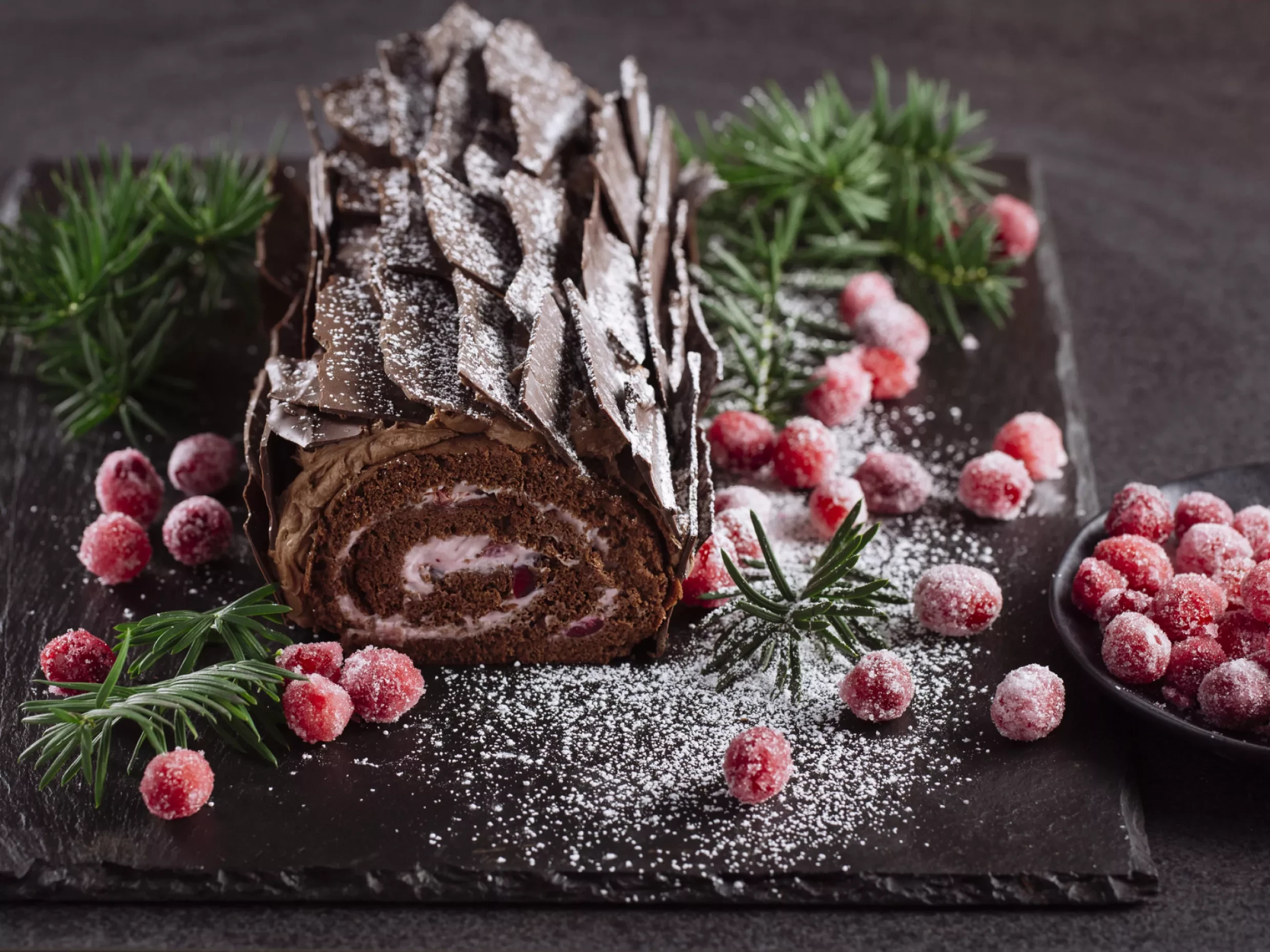
From blazing hearths to buttercream swirls, the Yule log has rolled its way through centuries of celebration! Once a pagan rite to summon light, it’s now a showstopping Christmas dessert - rich, chocolatey, and dusted with nostalgia. Slice into the sweet story of how ancient fire became the ultimate holiday indulgence.
When Did the Custom of the Yule Log Begin?
The Yule log tradition sits somewhere in the hazy space where pagan midwinter rites and later Christian customs overlap.
While no one knows for certain where the custom began, many historians think the Yule log draws on midwinter celebrations in northern Europe - possibly including Germanic, Celtic, Slavic and other pre-Christian traditions - where large fires and evergreen decorations marked the winter solstice, symbolising the return of the sun and longer days after the darkest part of the year.
In fact the word ‘yule’ is related to the Old Norse “jól” (or “júl”), a midwinter festival whose name later became synonymous with Christmas in many northern European languages.
Was the Yule Log an Actual Log?
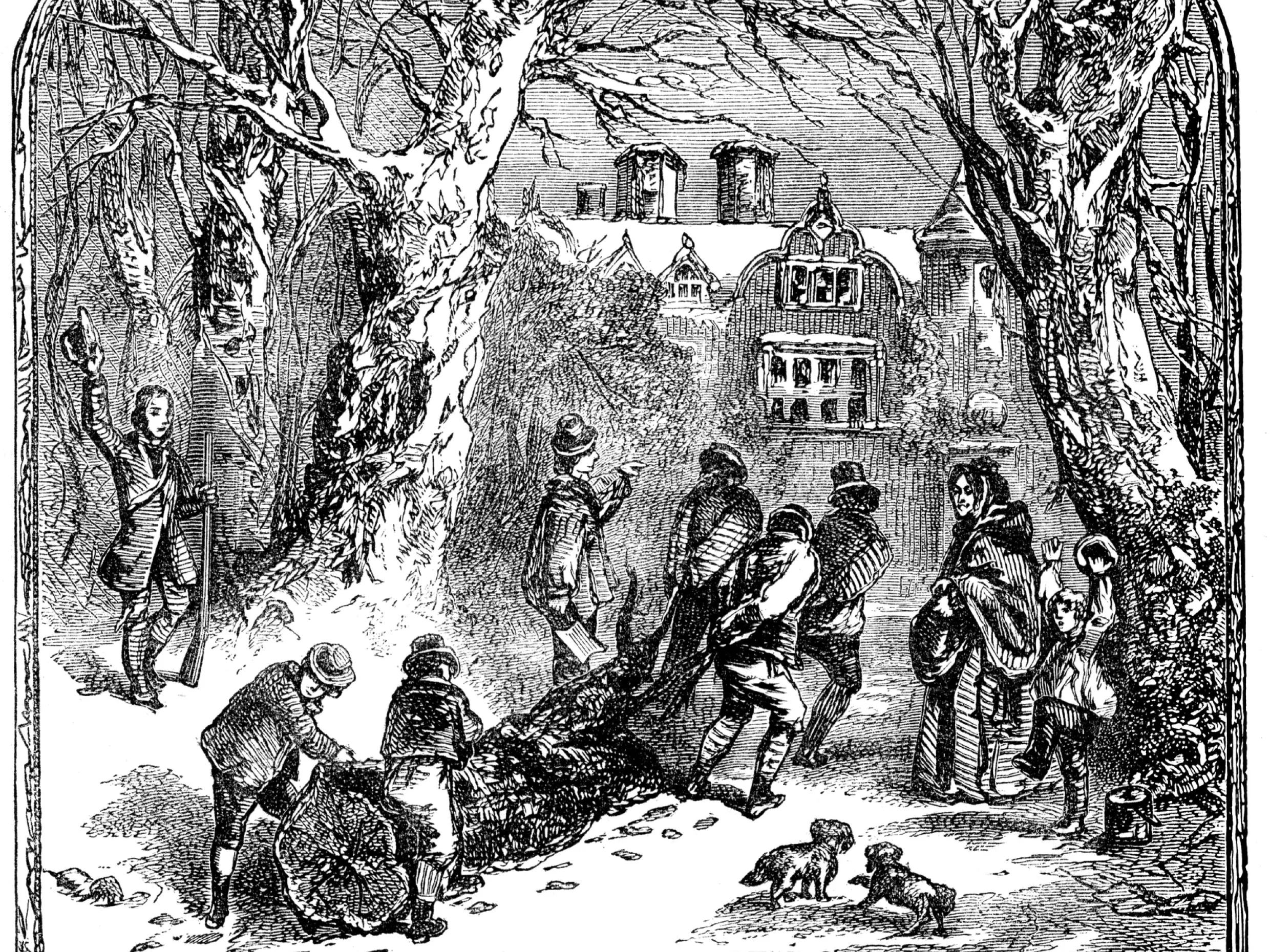
Yes, the Yule log was indeed an actual log. And they weren’t just ceremonial or for effect, families would haul an entire log, sometimes a whole tree trunk, into their homes. The log was blessed, sometimes decorated with greenery, and one end was put into the fire on Christmas Eve, often accompanied by a piece of the previous year’s log for good luck.
Depending on the region or local custom, the log was meant to smolder for days, with some traditions stretching its glow symbolically or literally through the Twelve Days of Christmas to Twelfth Night. Some would save the ashes to protect their home and ensure prosperity in the year ahead.
The Tradition of the Yule Log
The earliest reference to the Yule log tradition appears in a German legal manuscript from 1184, which records that the manse (a clergy house) of Ahlen was entitled to an entire tree for a festive fire on Christmas Eve. Another early mention comes from a statute book from the Republic of Ragusa (modern-day Croatia) in 1272, noting that ship captains and sailors presented a large log to the city count on Christmas Eve, receiving gold coins and alcohol in return.
In English literature, the first written description is believed to be from Robert Herrick's 1648 poetry collection, describing a "Christmas log" brought into farmhouses by cheery lads, who were rewarded with drinks. The term ‘Yule log’ surfaced sometime in the mid to late seventeenth century from writer, philosopher and archaeologist John Aubrey who mentioned a ‘Yule log or Christmas block’.
So how did the Yule log transform from a huge heavy tree trunk to a wickedly decadent chocolate dessert? Like many culinary traditions, we must cast our collective gaze over the Channel to France.
Bonfire to Buttercream: The Yule Log’s Sweet Shift
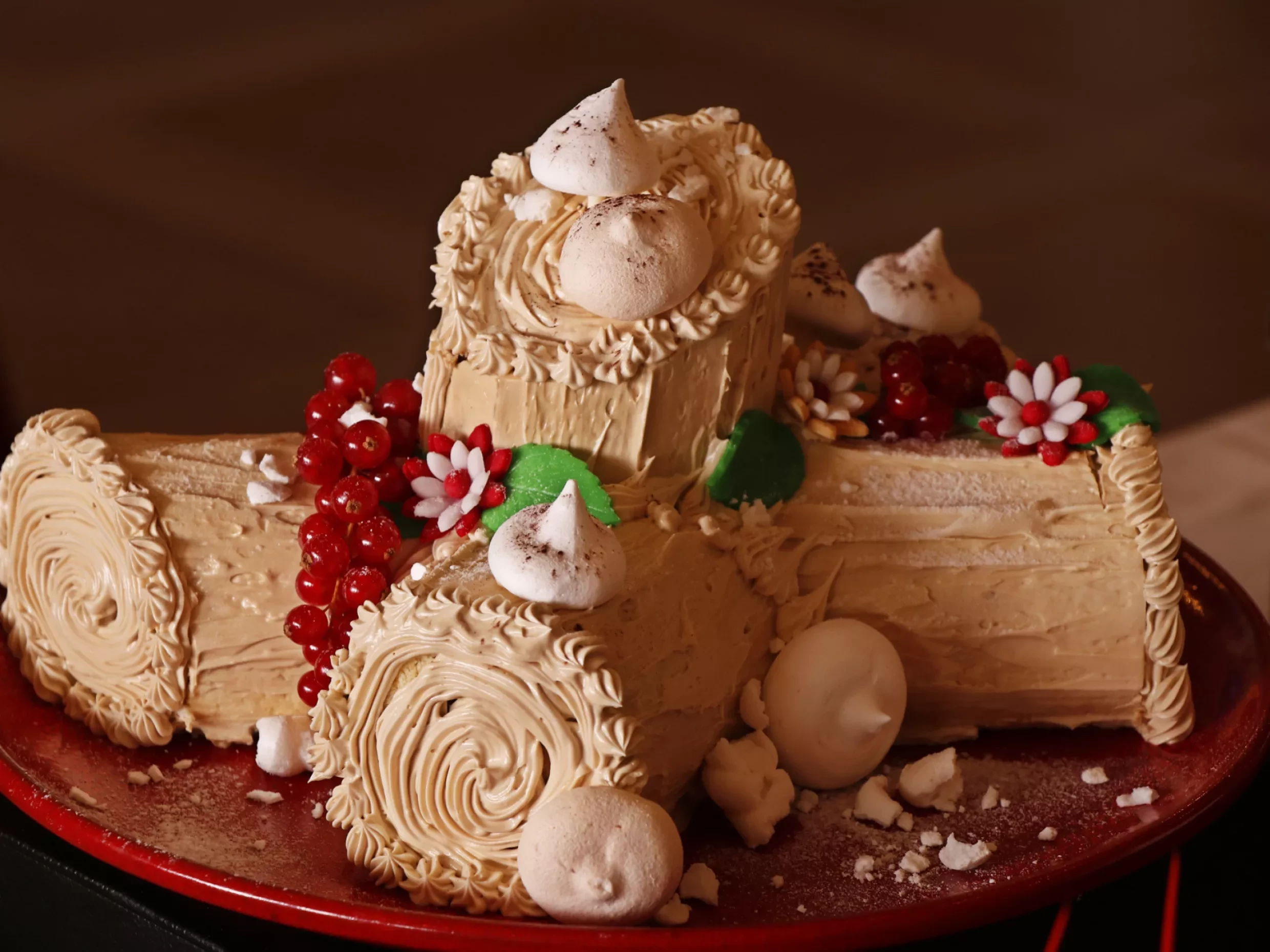
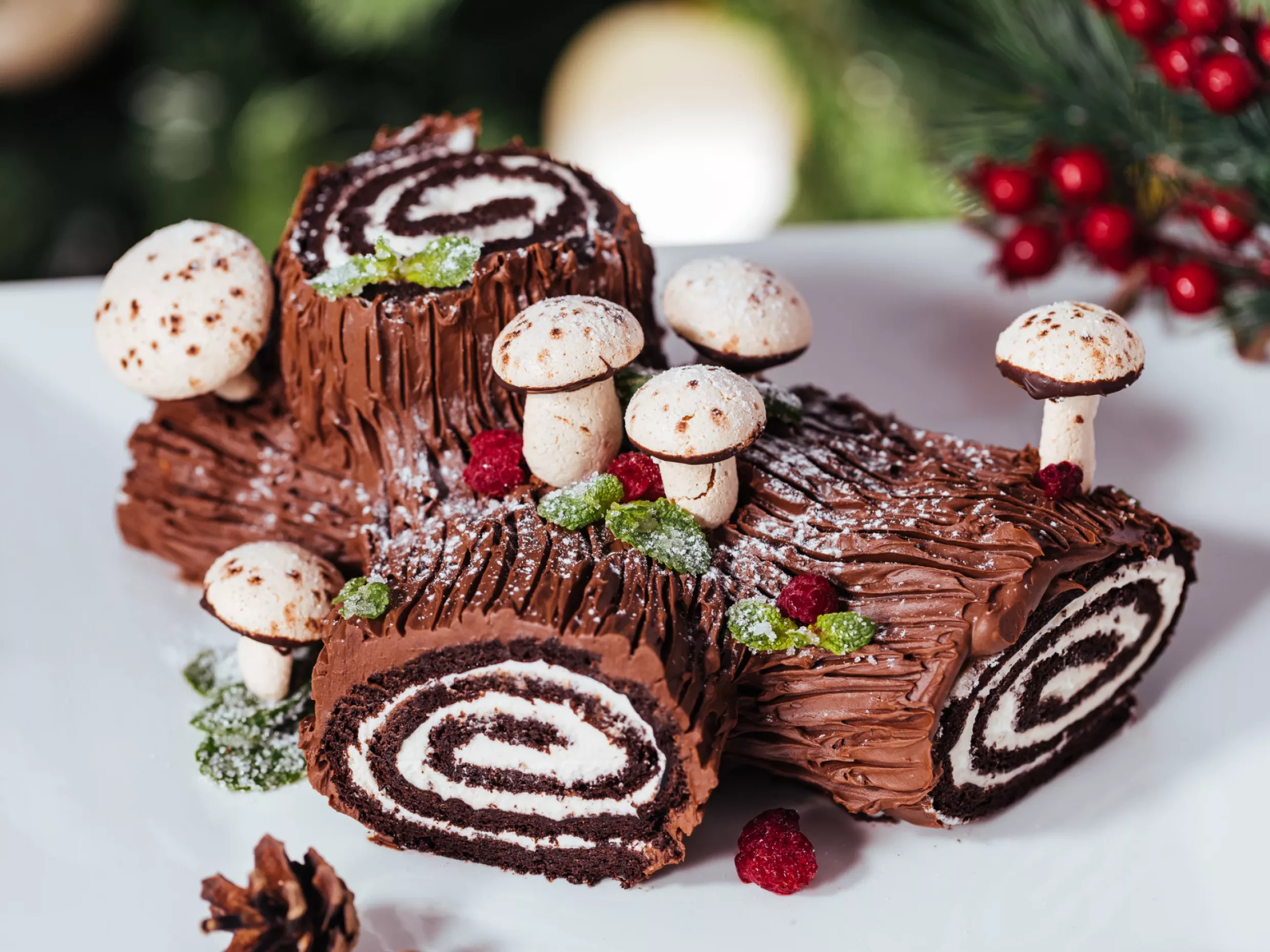
The transition from burning a Yule log to eating one happened sometime in nineteenth century France. As fireplaces gave way to stoves and urbanisation took hold, hauling huge logs indoors became impractical and burning them was impossible (and dangerous). This prompted French pastry chefs to recreate the tradition symbolically as an edible version called bûche de Noël, or ‘Christmas log.’
Similar to many classic dishes, the originator of the Yule log has been lost to history, but there’s a few options that keep cropping up. Some suggest it was invented by an unnamed trainee pastry chef in Saint-Germain-des-Prés, a short walk from the Louvre and Eiffel Tower in the centre of Paris, in the 1830s. Others name chocolatier Félix Bonnat of Lyon as its creator in the 1860s.
One of the most popular names associated with the invention of bûche de Noël is Pierre Lacam, a former ice-cream maker to Prince Charles III of Monaco, who included one of the earliest known recipes in his 1890s book "Mémorial historique et géographique de la pâtisserie" (Historical and Geographical Memorial of Pastry-Making), which remains to this day a valuable resource for the evolution of French pastry-making.
Lacam's recipe outlines the core components that still define the traditional Bûche de Noël today:
- Base Cake: A génoise, which is a light and airy sponge cake.
- Filling and Icing: The sponge cake is rolled and covered with a buttercream frosting, typically flavoured with either chocolate or coffee.
- Decoration: The buttercream is piped using a fluted nozzle to simulate the texture of tree bark. The cake is designed to look like a small log, often with smaller branches cut from the cake and attached with more buttercream.
Pagan Pyre to Patisserie
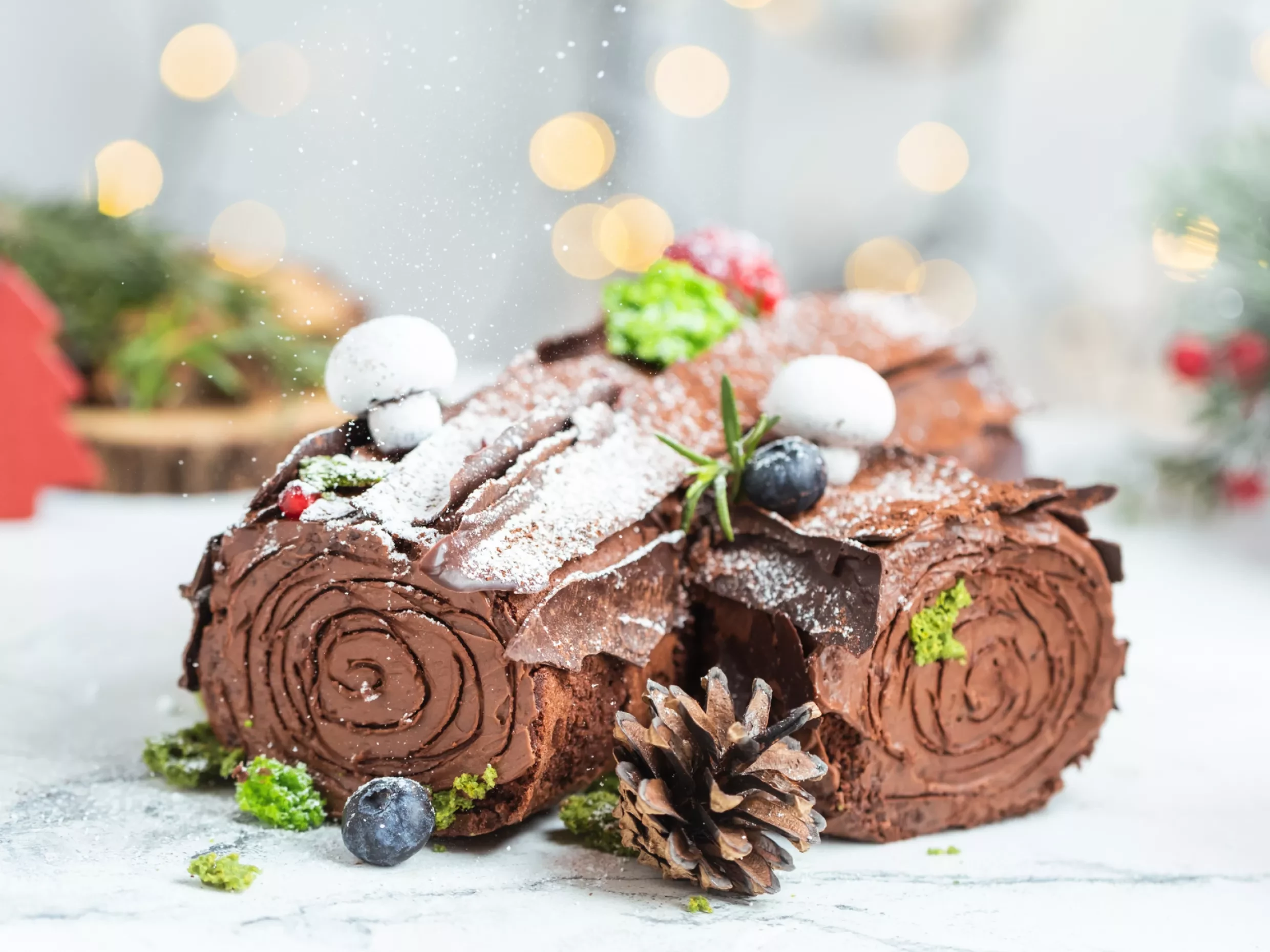
Today’s Yule logs have evolved from simple chocolate-sponge rolls into fancy centerpiece desserts, but they still echo the look of a rustic winter log. The basic recipe is more or less the same as Pierre Lacam’s, and inside, classic fillings include chocolate or coffee buttercream, chestnut cream, praline, vanilla or rum-infused cream, as well as raspberry, cherry, or blackcurrant jams and curds for a bright, tangy contrast to the rich sponge.
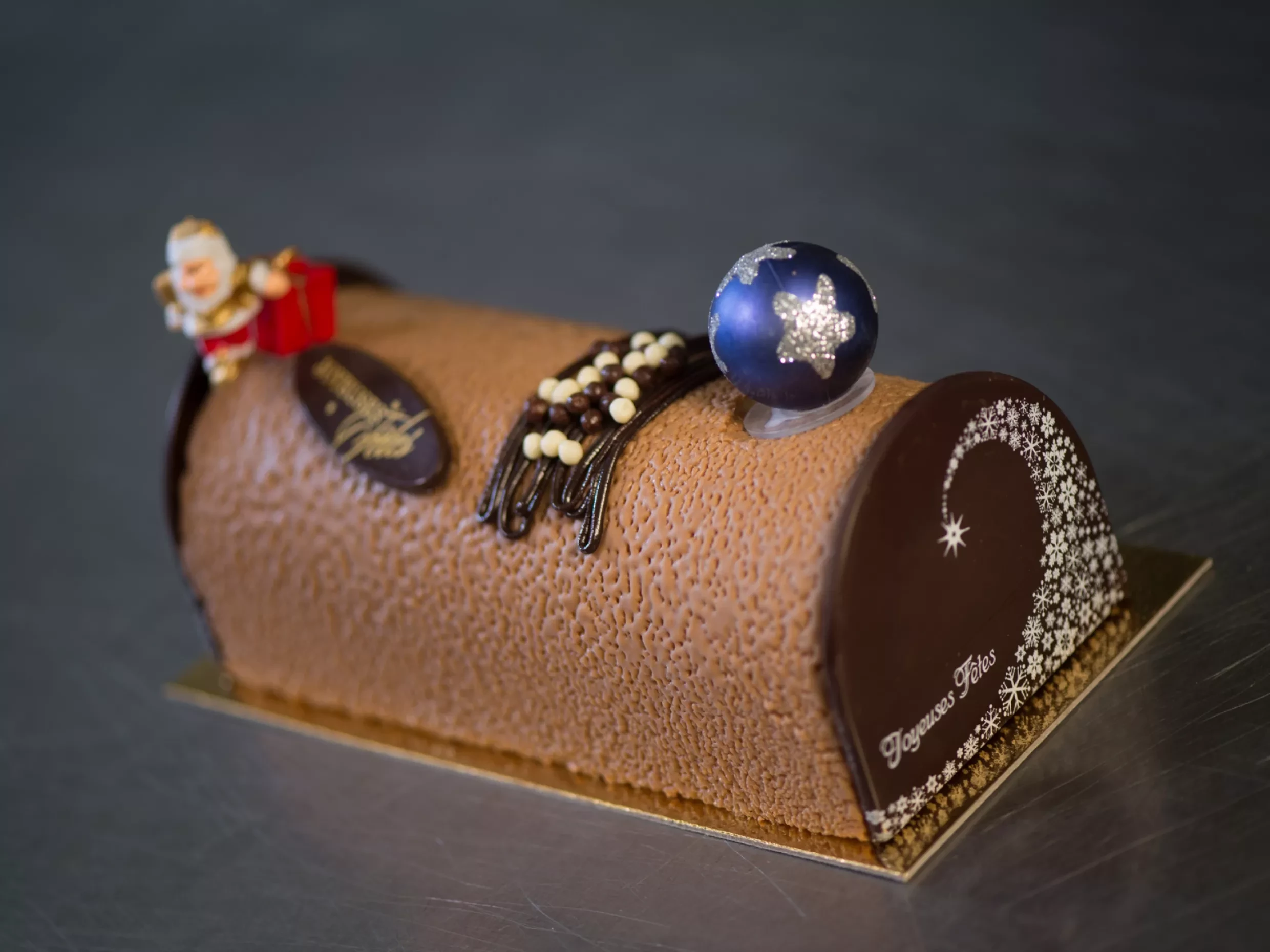
Decoration has become a major creative playground. The exterior is often combed with a fork or special tool to mimic bark, then dusted with cocoa or icing sugar to look like snow. Common garnishes include meringue mushrooms, sugared cranberries, candied chestnuts, sprigs of rosemary or holly-like greenery, chocolate shards or ‘twigs,’ and tiny fondant or plastic figures such as woodland animals, elves or Santa himself. Some bakers add edible gold leaf, mirror glazes, or molded chocolate décor to give the log a more modern pâtisserie sheen, while others keep to its rustic, folkloric roots.
Around the world, the classic Yule log has adapted to local tastes and customs, especially as French pastry traditions reached a global audience. In Vietnam and Cambodia, the cake is particularly popular due to the legacy of French influence in that part of Southeast Asia. French-style bakeries helped cement the bûche de Noël as a fashionable dessert, and these Yule logs often feature lighter, chiffon-style sponges with whipped cream or coffee fillings, tropical fruit flavours, and vivid decorations.
Yule Log Recipes
A classic Yule log is a thing of joy, but we’ve got a number of delicious variations, including a no-bake chocolate mocha Yule log, and a beetroot and dark chocolate Yule log. A white chocolate Buche de Noel is a tastebud-teasing take on tradition, and if you really want to impress your guests, French culinary royalty Michel Roux’s Buche de Noel is nothing short of spectacular!