










Dense, dark, and drenched in brandy, Christmas pudding has come a long way from its humble beginnings as a savoury medieval pottage. How did a simple mix of meat, grains, spices and dried fruit evolve into the flaming finale of Britain’s festive feast? Was it the Georgians, the Victorians, or a touch of Christmas magic? Grab a spoon and a splash of brandy - we’re stirring up a rich helping of history.
What is Christmas Pudding?
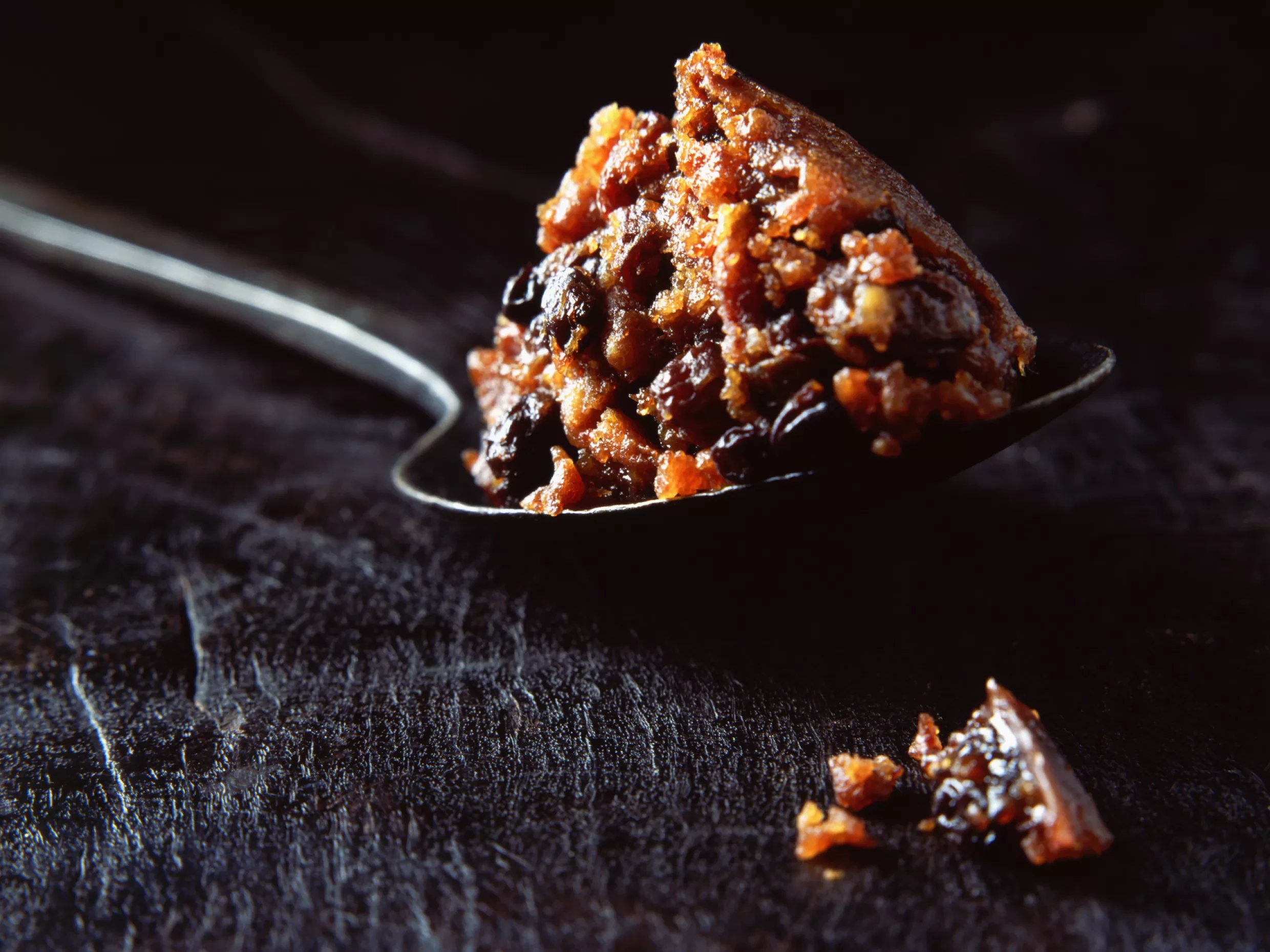
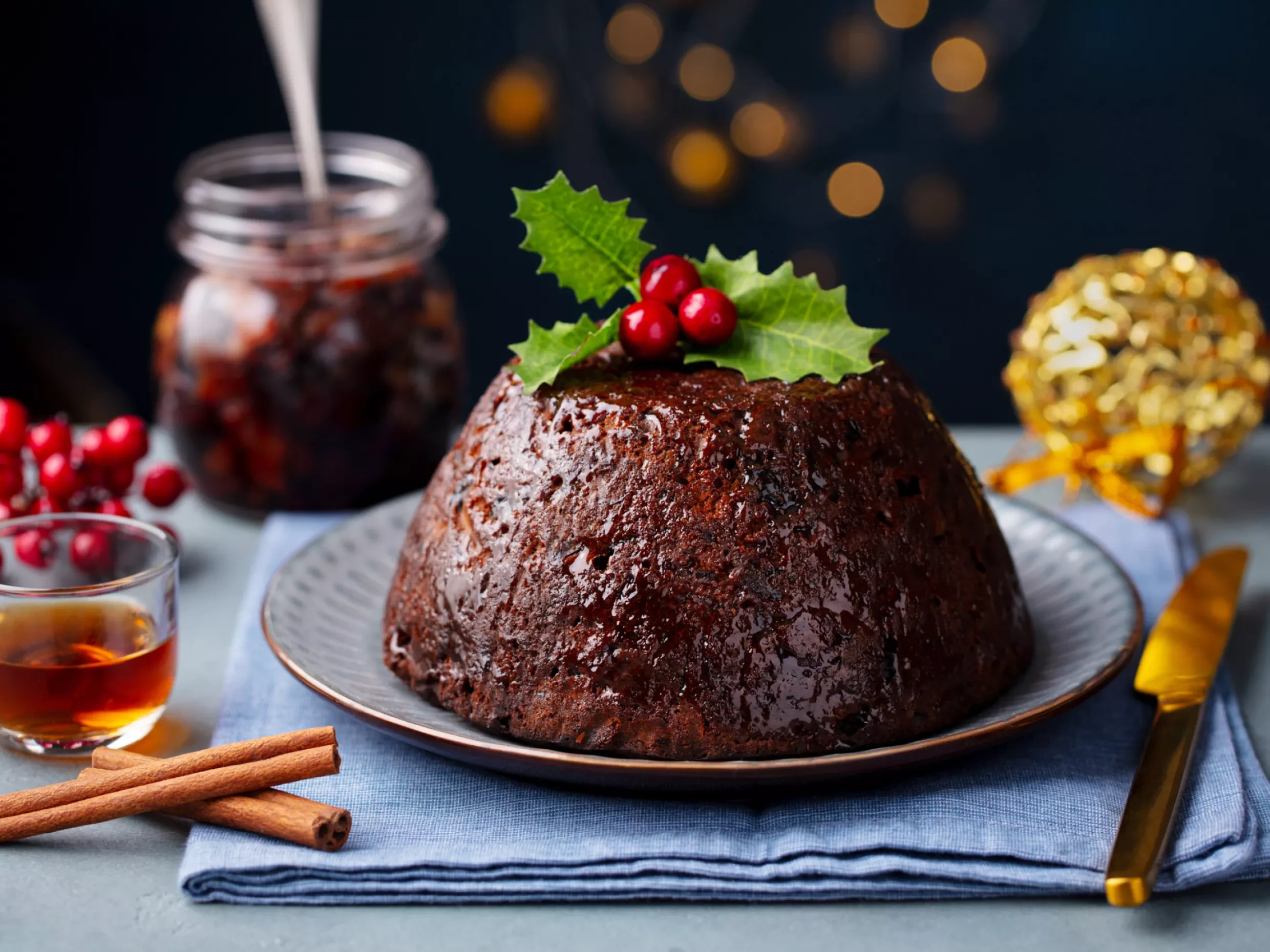
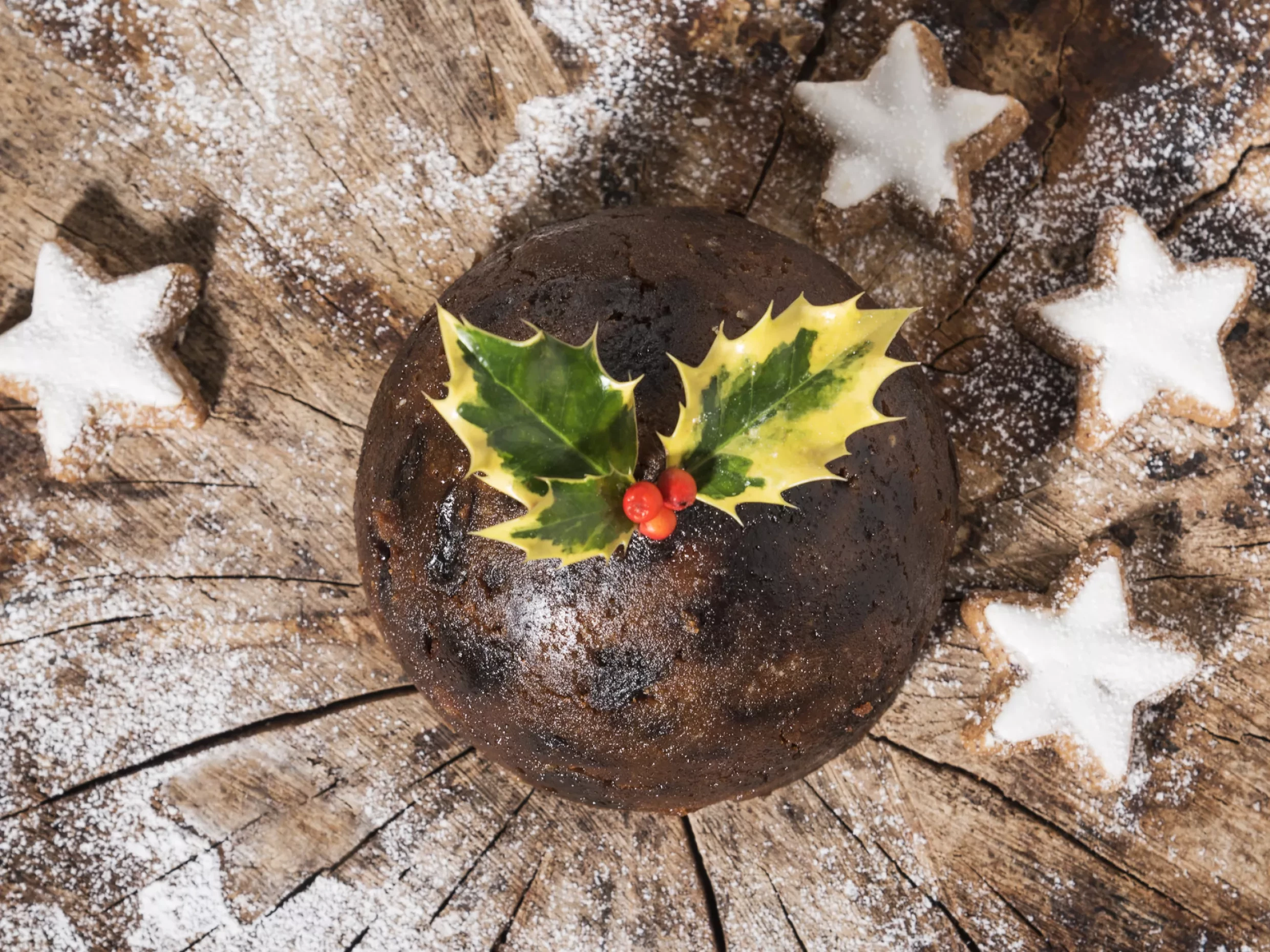
Rich, fruity, spicy, and generously soaked in booze, Christmas pudding is the grand finale of the traditional British festive feast. It’s a dense, steamed dessert packed with dried fruit, spices, and suet, flamed at the table for theatrical joy and then smothered in lashings of brandy butter or thick custard. Some love it, others hate it, but it’s a throwback to tradition that spans hundreds of years - part history, part ritual, but completely Christmas. The Christmas pudding story stretches from medieval kitchens to Victorian parlours, carrying with it the flavours, faith, and folklore of generations who stirred a little bit of Christmas magic into every bowl.
Medieval Origins: From Frumenty to Festive Fare
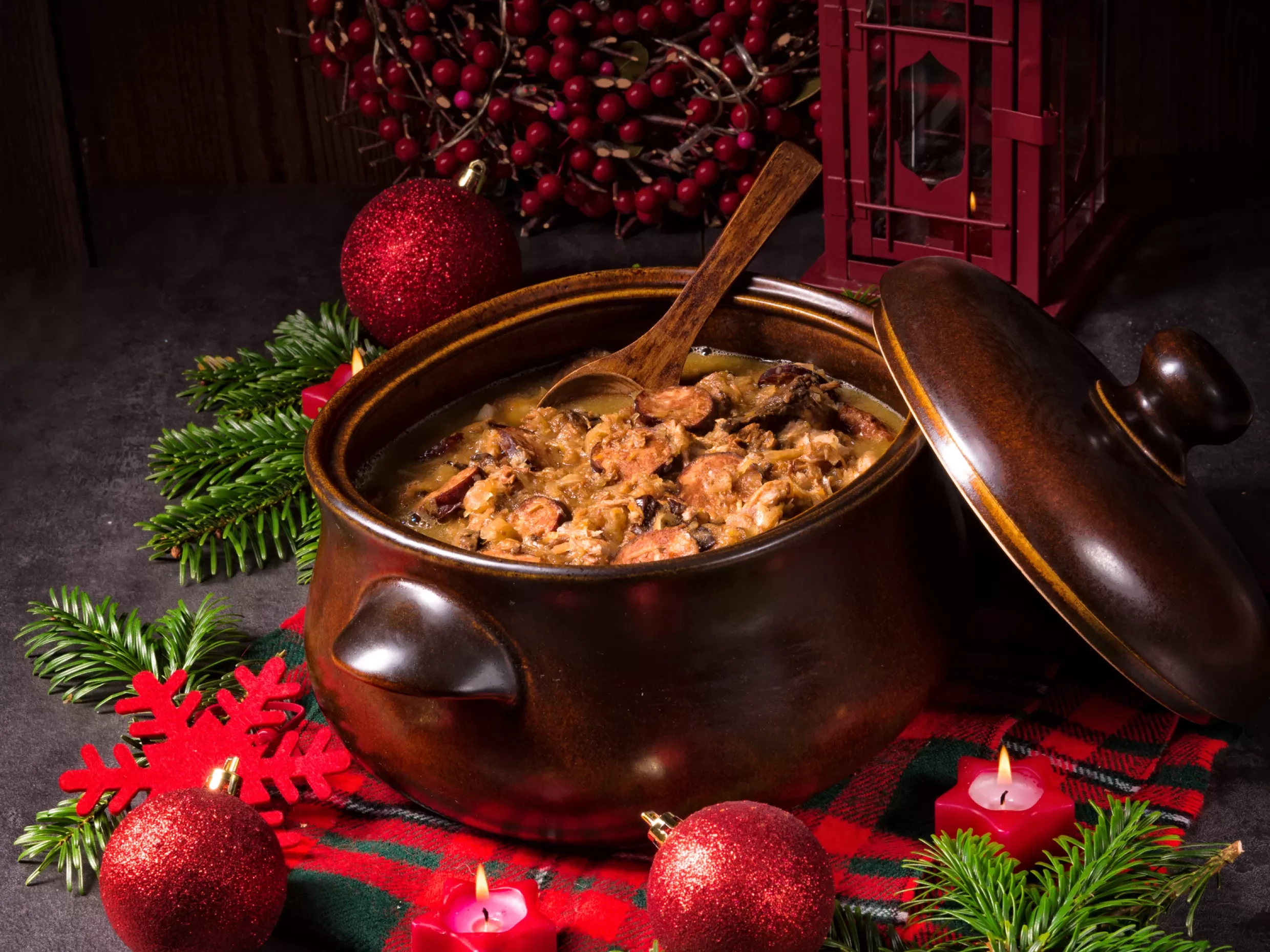
Long before it became the star of the Yuletide table, Christmas pudding was… well… it was hardly even a pudding, at least not a pudding we’d recognise today. Indeed, it started life as a thick and hearty dish known as frumenty (from the Latin frumentum, meaning ‘grain’.) By the fourteenth century, it was a familiar dish in England, with roots reaching back to Anglo-Saxon and Norman times. Made with hulled wheat boiled in milk or broth, it was flavoured with whatever was available, including dried fruits, honey, spices, and occasionally meat. Florence White, a famous cookery writer from the 1920s and 1930s called frumenty ‘England's oldest national dish’, long before fish ‘n’ chips and chicken tikka masala took over!
Back in those days, frumenty was seen as something to sustain people through the dark winter months rather than as an indulgent festive dish, although its richness and sweetness made it suitable for feasts and celebrations. At Christmas, it was often served with game or venison, blurring the line between savoury and sweet in a way that might surprise modern palates.
Over the later Middle Ages, frumenty got thicker and sweeter. As imported dried fruits and spices became more available, the simple grain porridge evolved into what became known as plum pottage - a thick, spicy stew of fruits, breadcrumbs, and alcohol whose flavours were unmistakably festive.
Stir-Up Sunday and Sacred Symbolism: Faith in a Bowl
As the Christmas pudding evolved from medieval pottage into a true festive ritual (perhaps around the late seventeenth or early eighteenth centuries), it gathered layers of legend and meaning along the way, and lots of stories wrapped themselves around the tradition of the Christmas pudding.
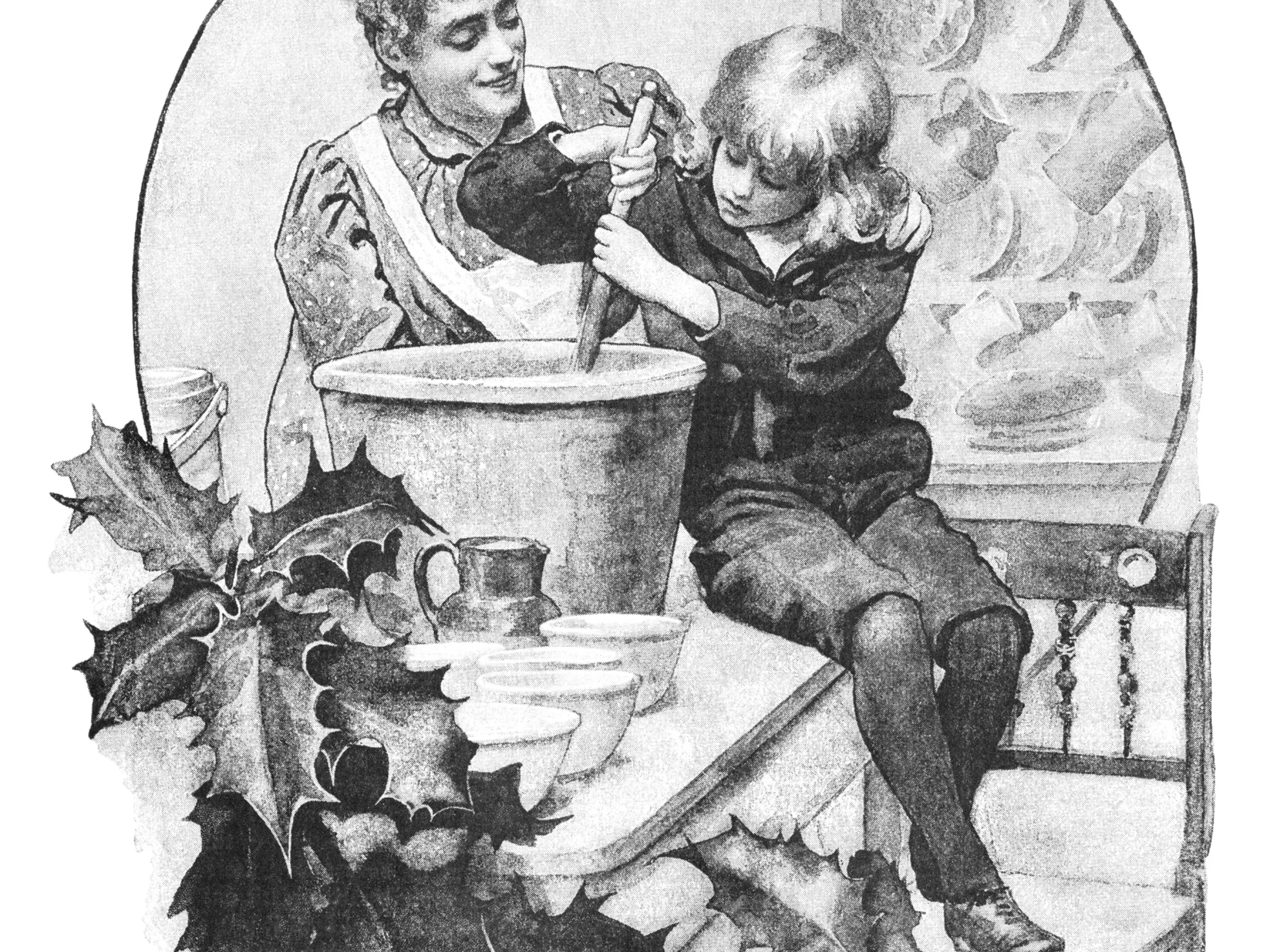
One such story says the pudding should be prepared on the twenty-fifth Sunday after Trinity, a date that usually fell toward the end of November. The opening words of that day’s Anglican collect - “Stir up, we beseech thee, O Lord …” - helped inspire the much-loved idea of “Stir-Up Sunday.” Over the next century or so, other charming tales began to take root. Folklore also told that the Christmas pudding should contain thirteen ingredients to represent Christ and the twelve apostles, and that each member of the family must stir the mixture from east to west in honour of the Magi.
The Seventeenth Century: From Pot to Pudding
By the 1600s, the Christmas pudding was beginning to emerge from its humble, soupy beginnings. English cooks, increasingly influenced by continental techniques and the growing availability of sugar and imported fruits, started to refine the old plum pottage into something richer and more celebratory. Recipes recorded in early modern cookbooks - like those of Elinor Fettiplace (in her Receipt Book written in 1604) and Gervase Markham (in The English Huswife in 1615) - describe mixtures of dried fruits, spices, eggs, breadcrumbs, and ale or wine, cooked inside a skin, like a sausage. It was hearty, homely fare, but it had shed its savoury edge and was fast becoming the sweet centrepiece of Christmas dining.
Perhaps the first recipe we’d immediately recognise today of Christmas pudding came around a century later, in 1714, written by Mary Kettilby in A Collection of above Three Hundred Receipts in Cookery, Physick and Surgery. It was even claimed that King George I asked for plum pudding to be served at his Christmas table, and soon became affectionately known as The Pudding King. Throughout this time, the pudding became firmer, more dessert-like, and decidedly more indulgent. By the start of the eighteenth century, the plum pudding was firmly associated with festive feasting, and it was a dish equally at home on the dining tables of the grandest palaces as well as the simplest of houses.
From the Georges to Victoria: The Pudding Takes a Bow
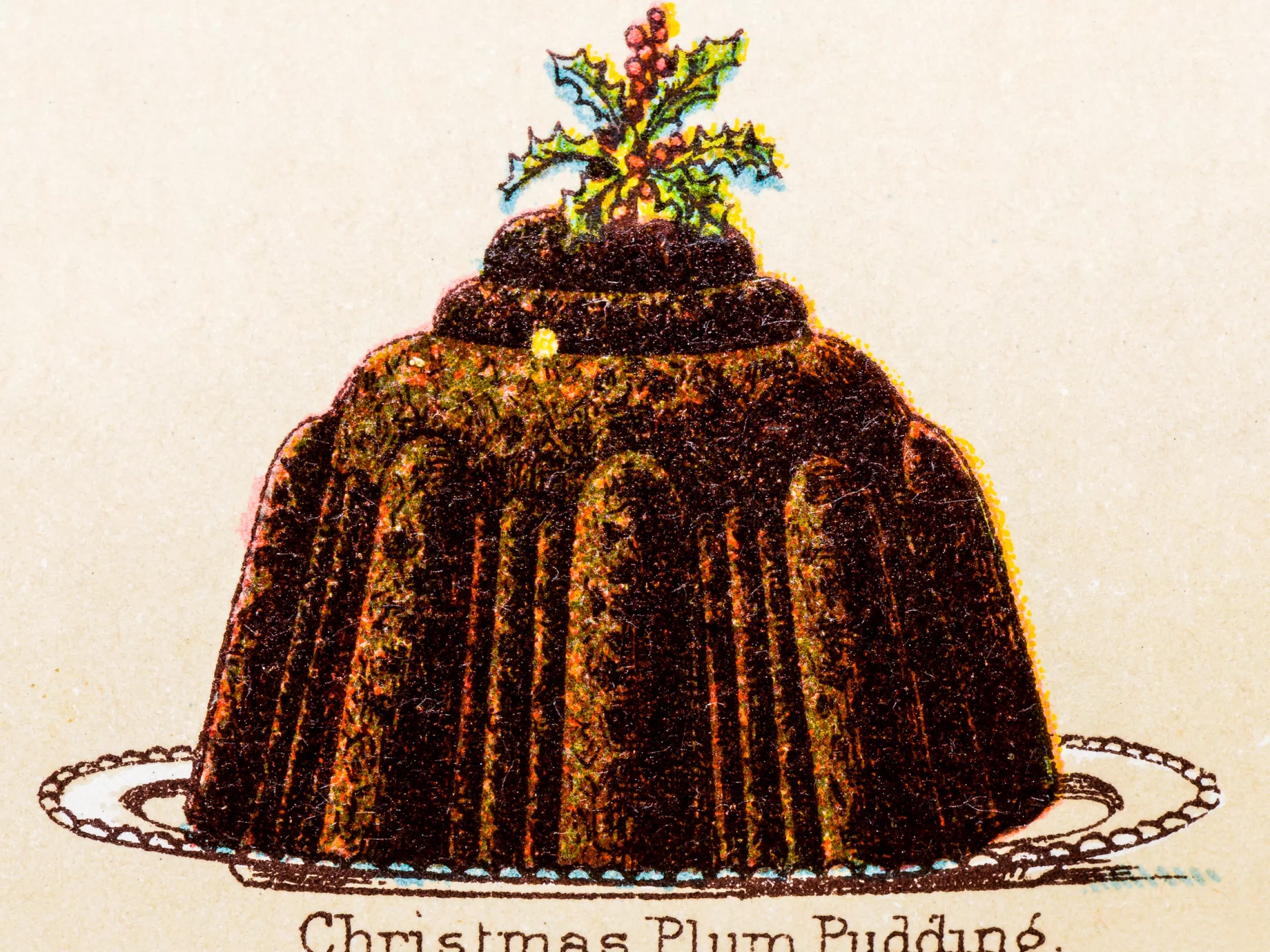
By the mid-eighteenth century, it wasn’t Christmas without a pudding. In Georgian kitchens, it was often known as “plum pudding”, with “plum” being the period term for any dried fruit rather than specifically fresh plums. Wealthier households made theirs luxuriously dense with raisins, currants, candied peel, and brandy, while more modest cooks relied on ale or cider to bind the mixture. These were heavy, fragrant puddings, boiled for hours in muslin and hung to mature. The longer they sat, the richer they became.
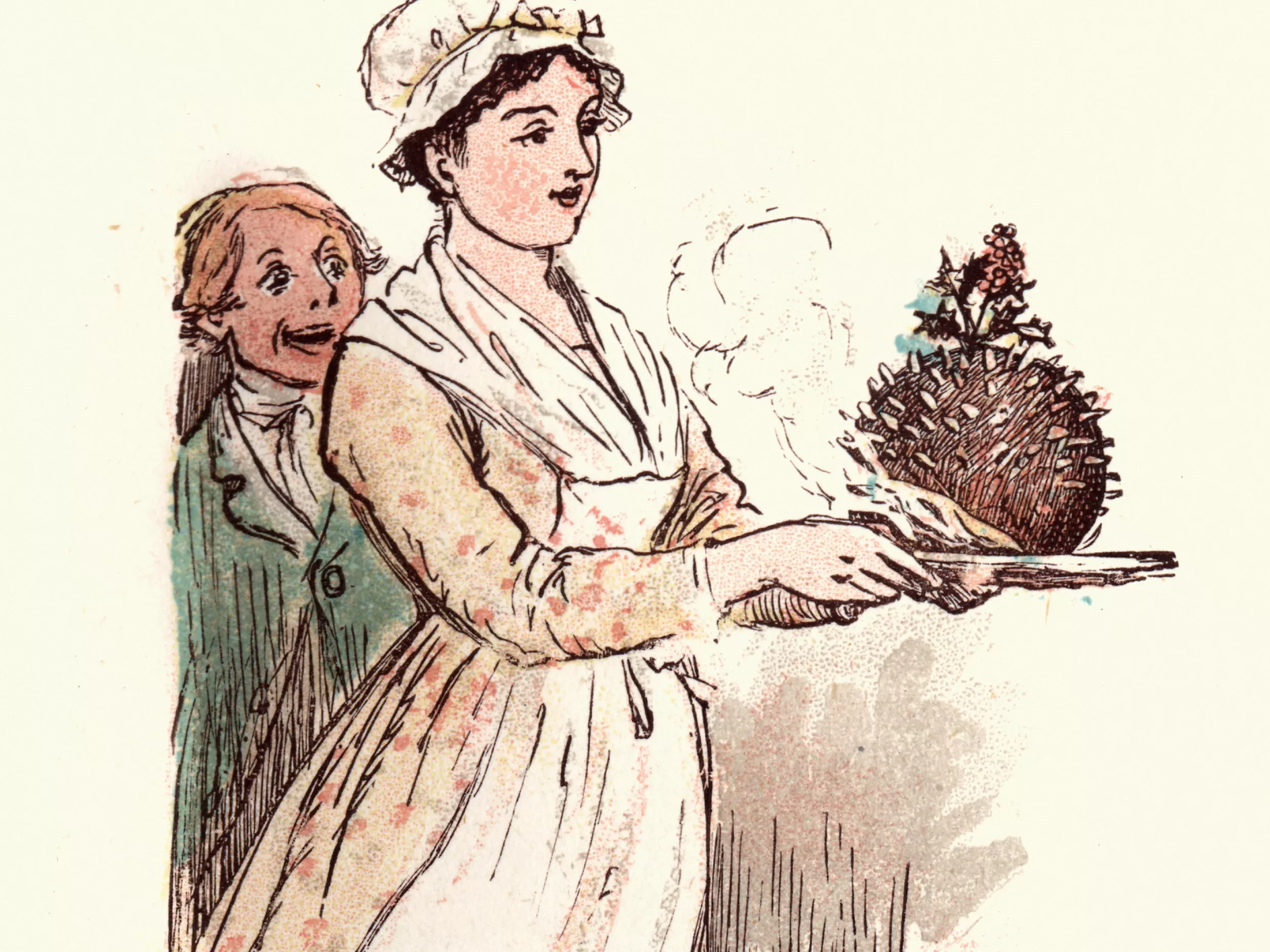
But it was the Victorians who turned plum pudding into something more than a dessert. They made it a symbol of the season. With Christmas revived as a family holiday, thanks in no small part to Charles Dickens’s A Christmas Carol (1843), the pudding was suddenly the star of the show. Dickens described it as “...like a speckled cannon-ball, so hard and firm, blazing in half of half-a-quartern of ignited brandy…”.
By the end of the nineteenth century, every element of the Christmas pudding was steeped in tradition - from the family stirring it weeks before the holiday, to the silver coin hidden inside for luck.
Full Circle: A Taste of Christmas Past, Present & Future
From its early days as medieval frumenty to the rich, fruit-filled puddings of the Victorian era, Christmas pudding has reflected centuries of change in British celebrations. Each version carried something of its time, from the practicality of winter fare to festive symbolism and family tradition.
Today’s Christmas pudding still echoes those origins. It’s steamed, dark, and dense with dried fruit, and often made weeks in advance. At the table, it’s served in much the same spirit as it was in the nineteenth century - drizzled with brandy and set alight, then topped with beautifully boozy brandy butter, or lashings of vanilla custard, connecting modern tables to centuries of Christmas past.