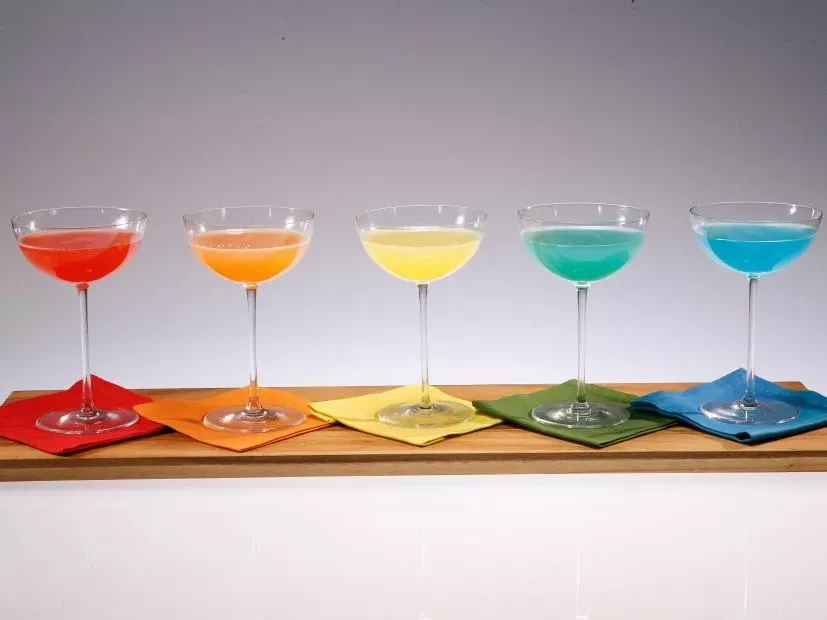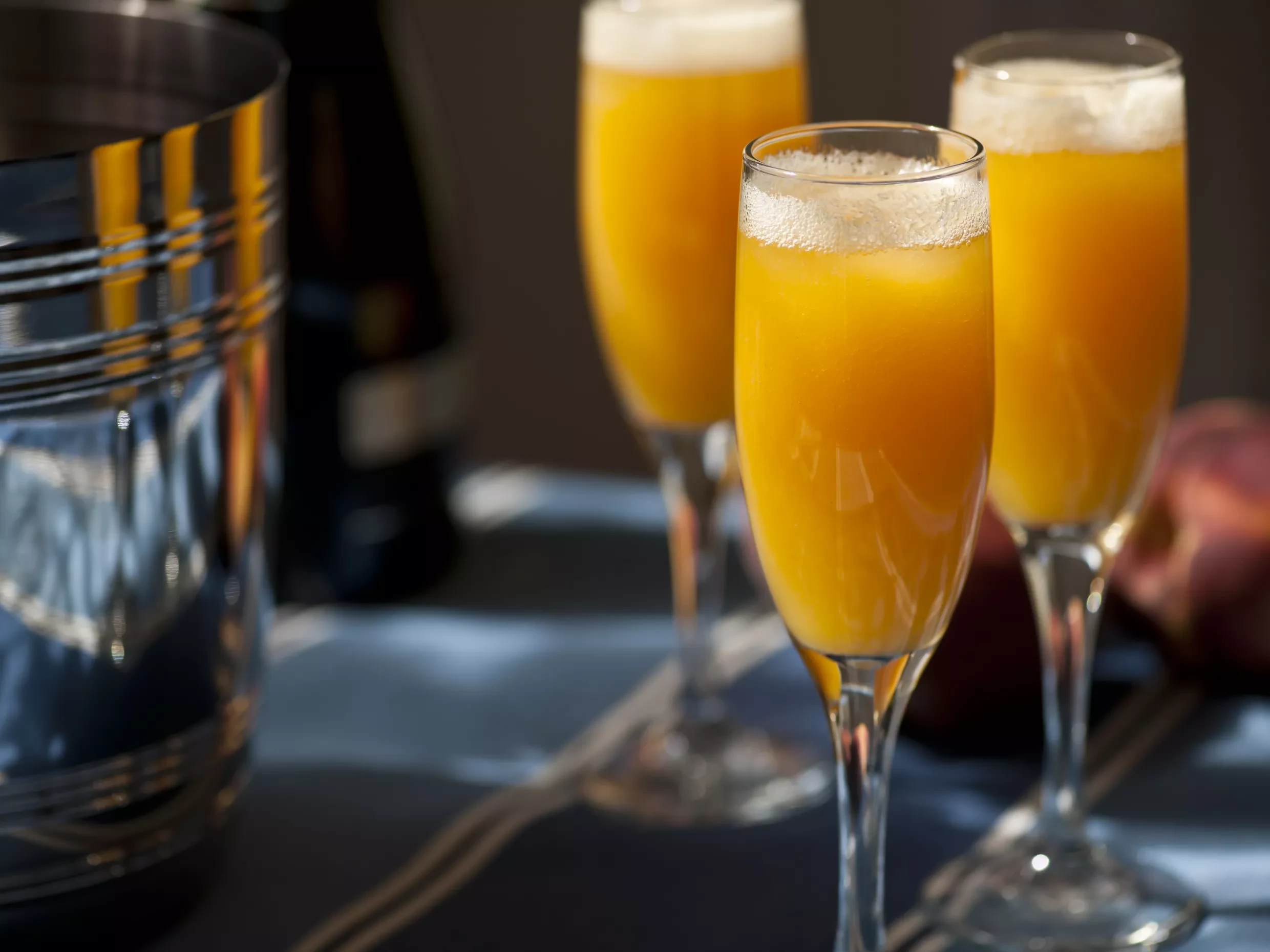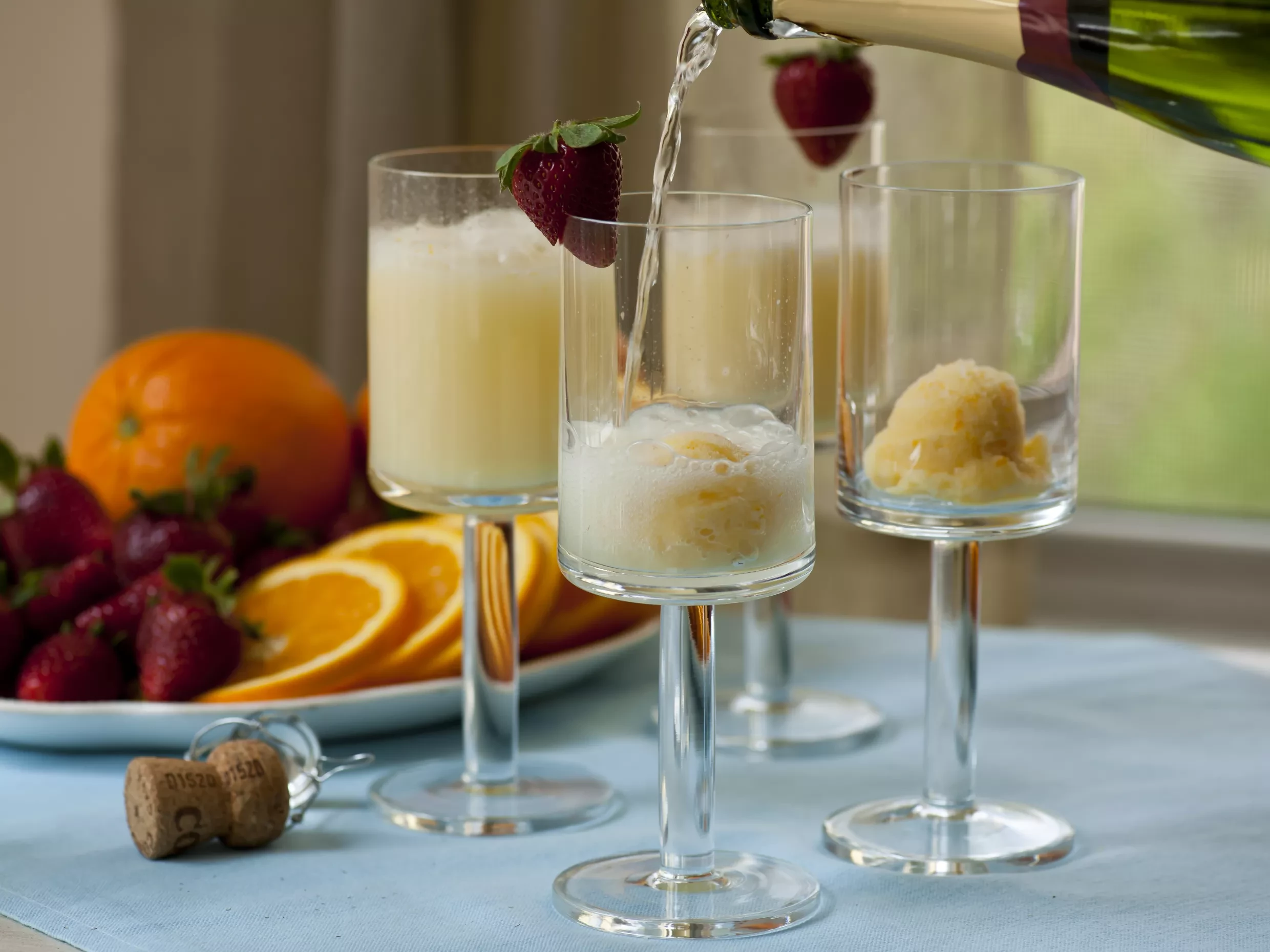


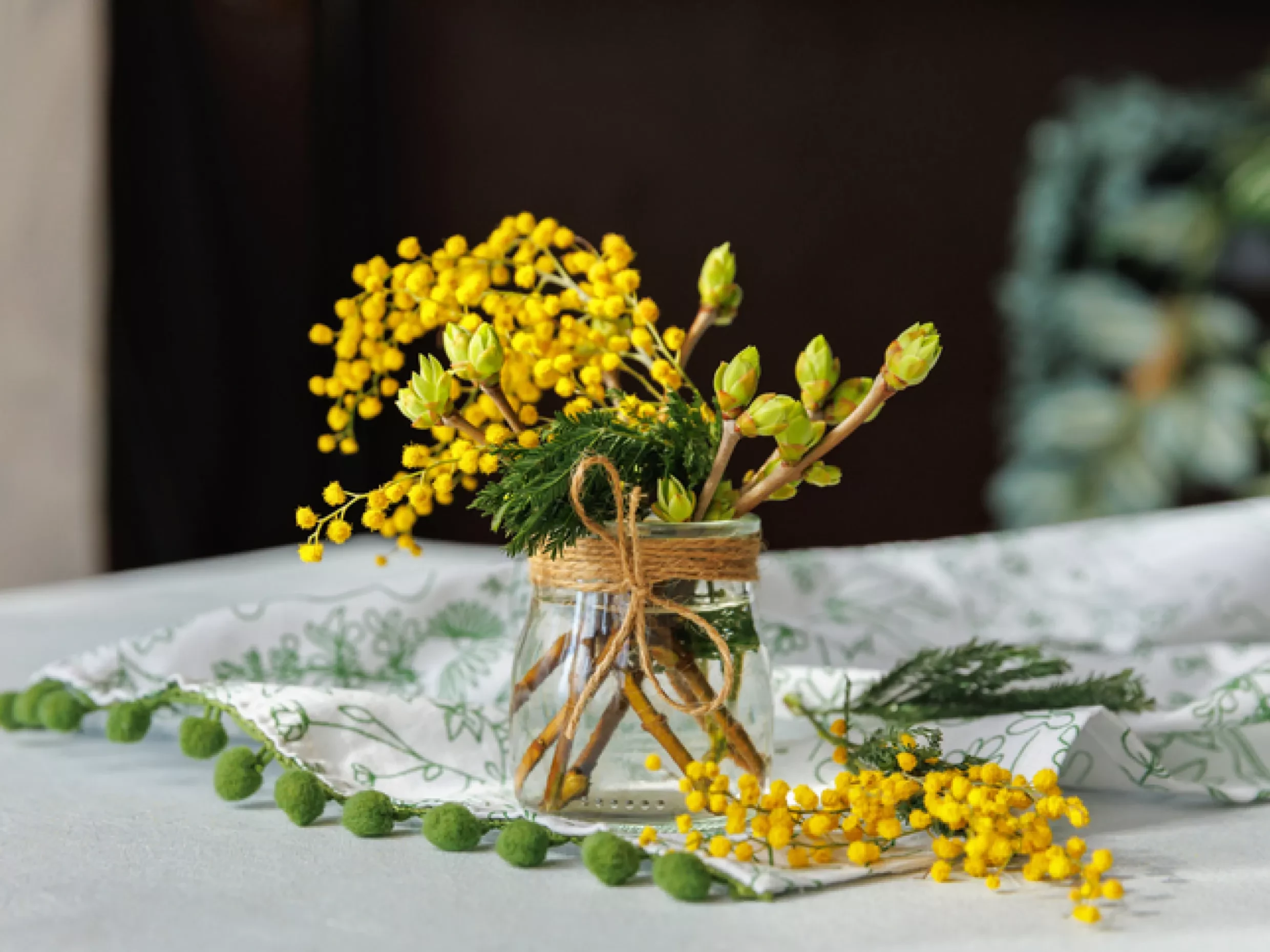
Mimosas seem like they're on every brunch menu you've ever seen. They're popular enough to have their own almost-official national holiday: May 16th (but we're more inclined to think of every Sunday as Mimosa Day). The mimosa cocktail is named for the yellow flower of the Mimosa tree, because the drink resembles the flower’s colour. Mixing orange juice and any sparkling white wine will result in a glass filled with a sunshine-yellow cocktail that can be served as is or dressed up with other juices and garnishes.
What Is a Mimosa?
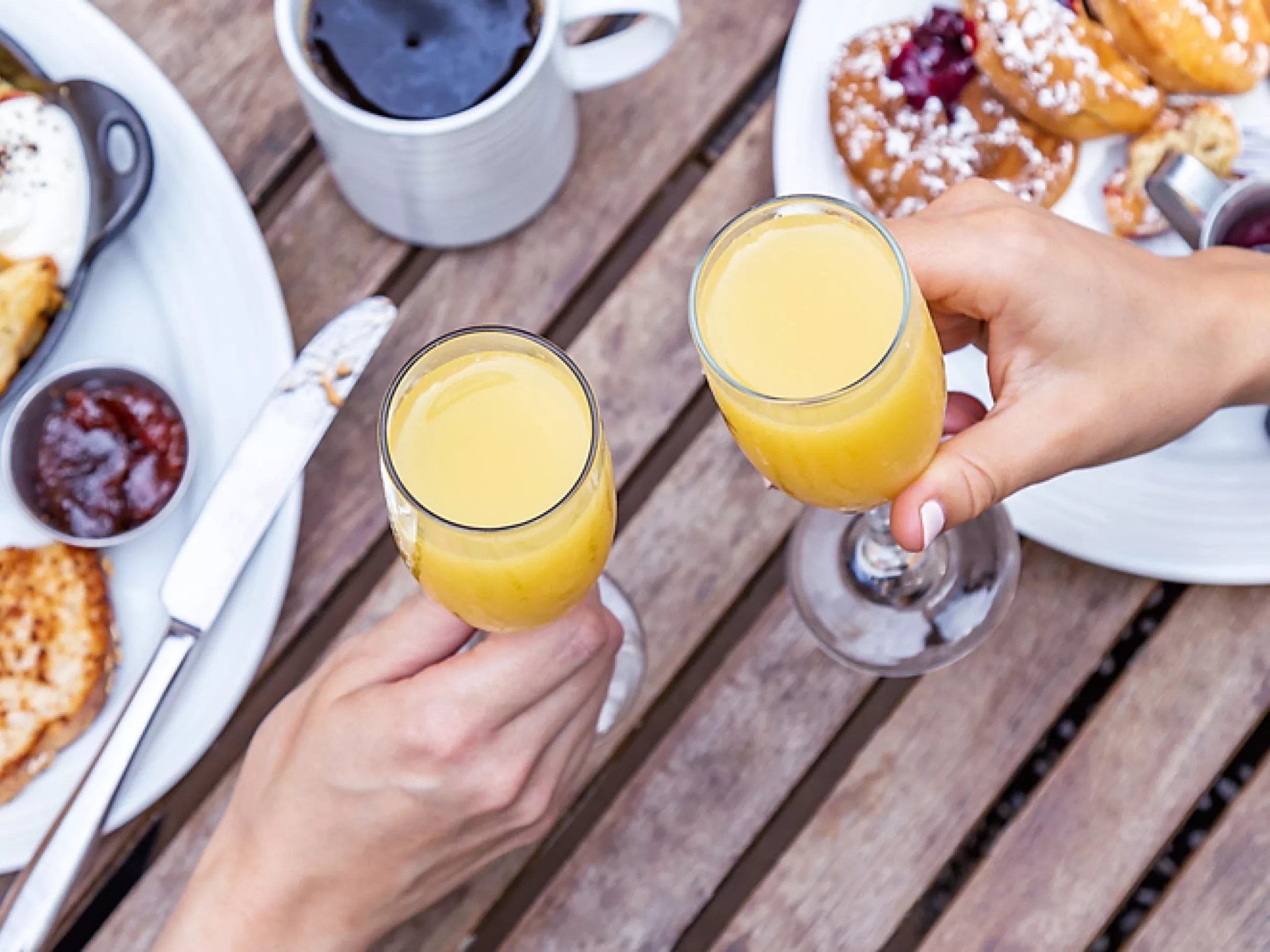
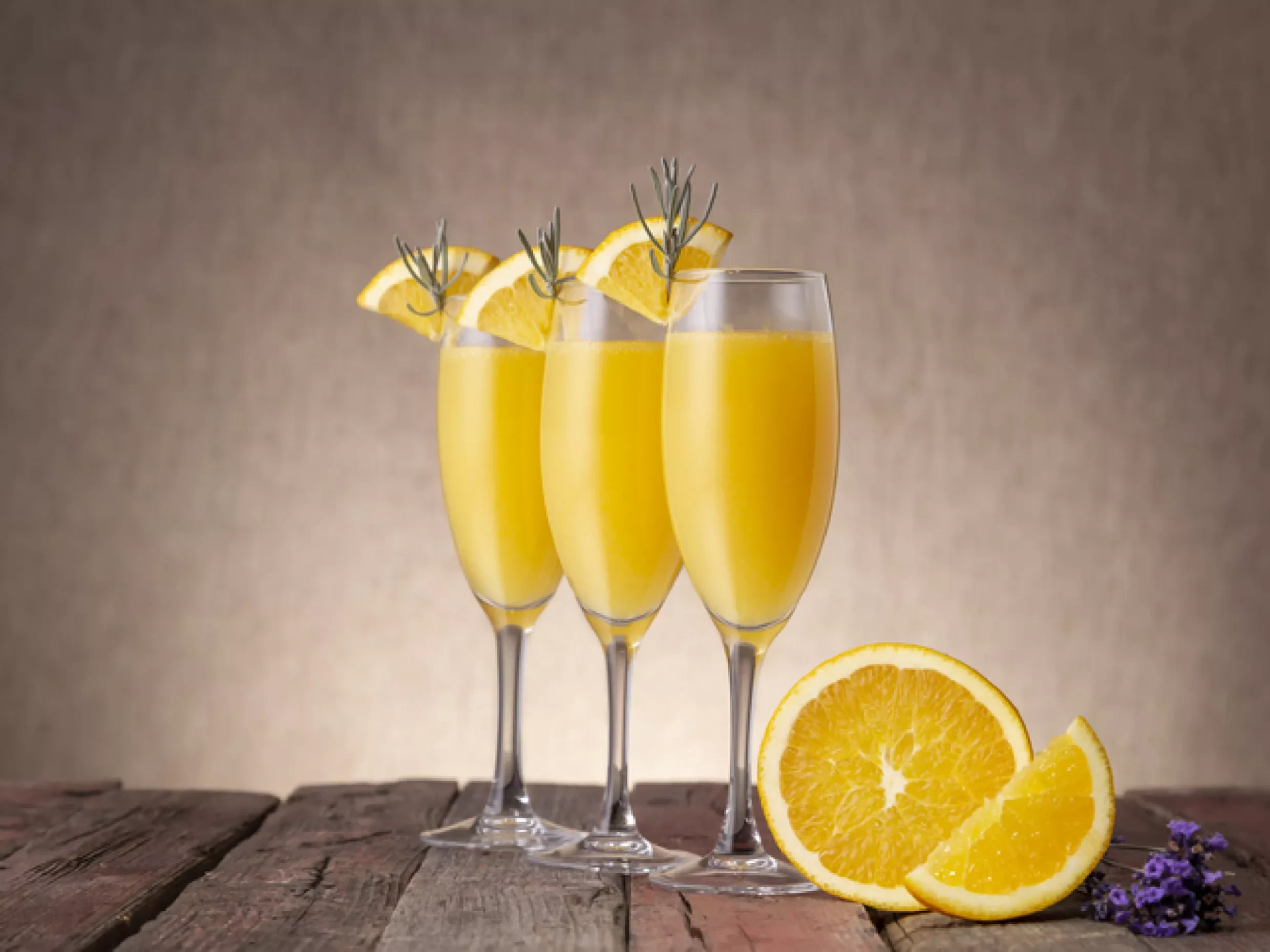
A mimosa is a cocktail that is equal parts orange juice and Champagne or sparkling white wine, usually served in a champagne flute. That’s the basic model: a yellow-orange bubbly beverage served at brunches everywhere. From there, you can add extras or go with another juice altogether.
Originally, mimosas were not a brunch cocktail at all. They were called Champagne oranges and were a popular drink in French wine country. The British royals brought the beverage back to England, where it became known as the mimosa, and pretty soon, notable Europeans were drinking it. A few prominent American bars picked up the drink and it ultimately came to be associated with brunch, along with its partner in crime, the Bloody Mary.
What Does a Mimosa Taste Like?
If you’re talking about a classic mimosa that is equal parts orange juice and sparkling white wine, it’s going to taste only as good as the quality of those two ingredients. Sparkling wine labeled brut is your best bet, since the orange juice is bringing plenty of sugar to the glass. Remember when shopping that extra dry is sweeter than brut. Fresh orange juice will give you the best flavour, and it should be pulp-free.
There are many variations on the mimosa, and each one will change the taste. For example, an orange liqueur will add depth of flavour and make the drink a little boozier.
How Do You Make Mimosas?
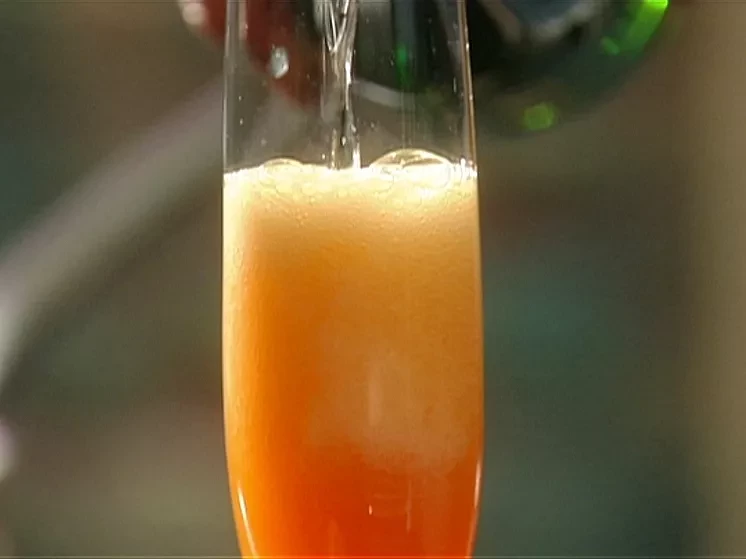
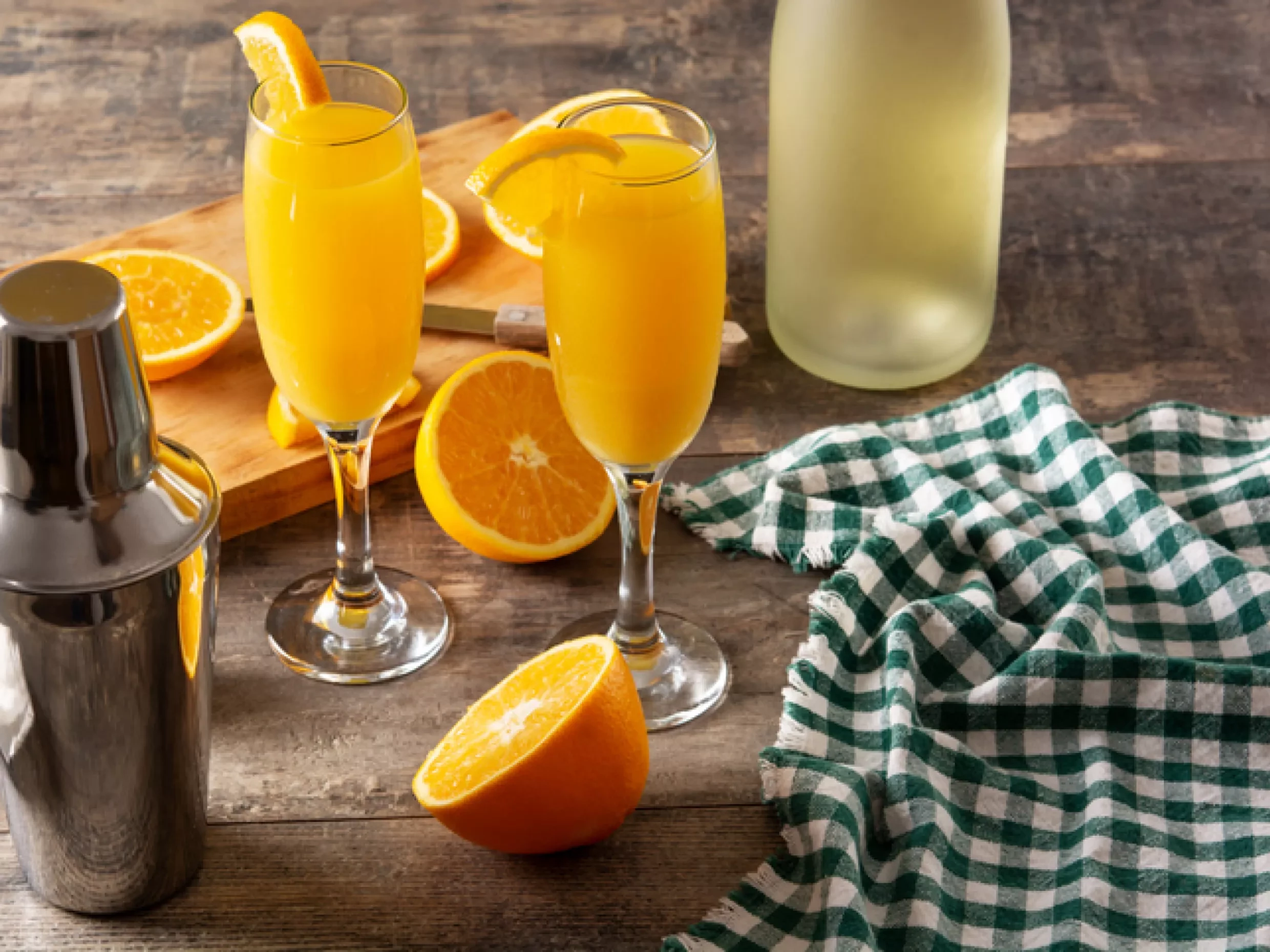
Making the mimosa is easy, you simply pour juice and sparkling wine into a Champagne flute. Keeping the ingredients chilled until right before you’re going to serve the drinks is important.
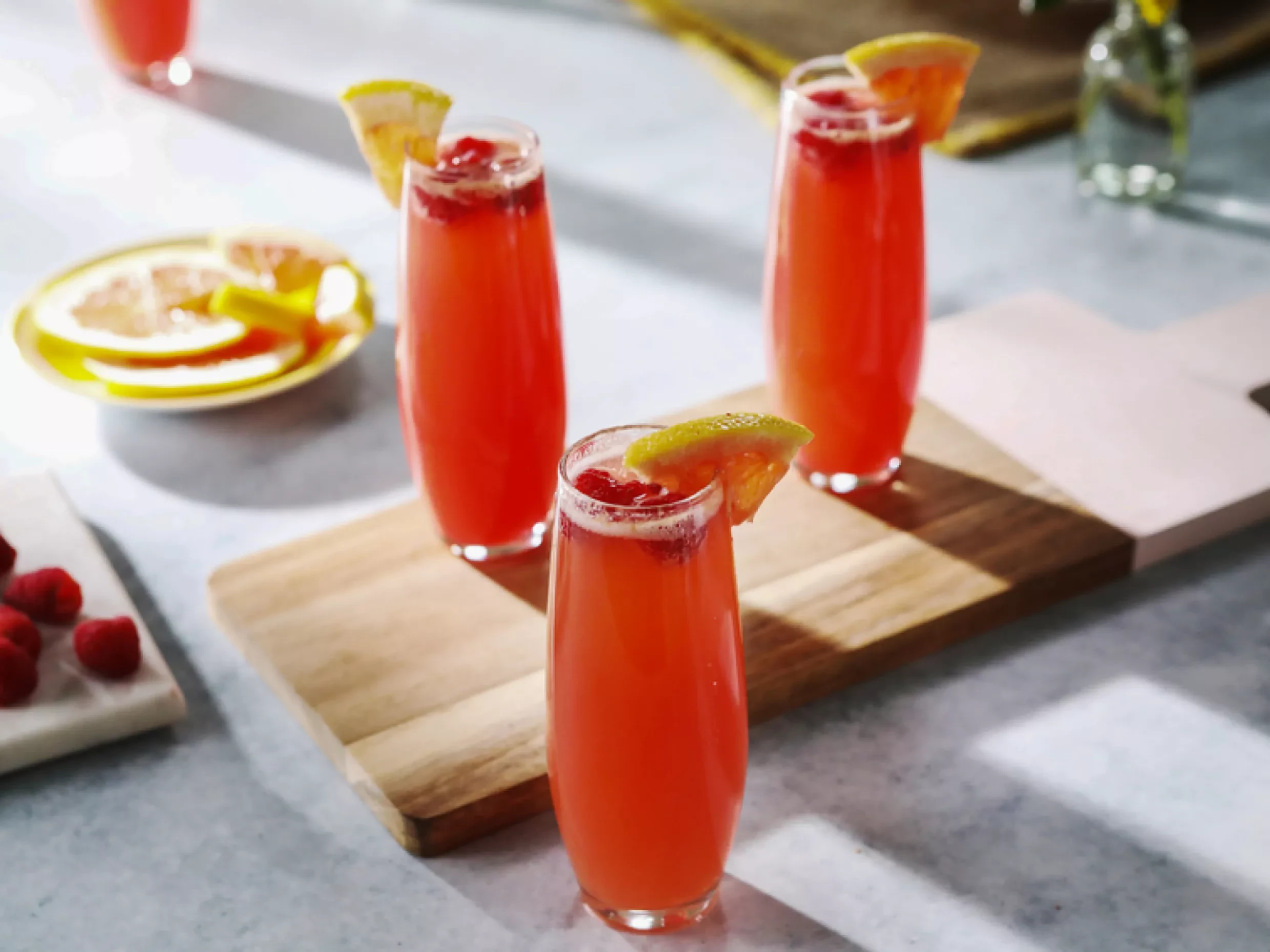
The art of making a mimosa is in the details, and knowing the tastes of your guests. The original formula was equal parts orange juice and Champagne. At some point, it became typical to add a tablespoon of orange liqueur such as Cointreau. Then came the single raspberry or strawberry garnish. At some point most brunch restaurants began upping the percent of sparkling wine and there isn’t a hard and fast rule on that.
Champagne flutes are the best glasses to use because they help the bubbles stay in the drink. A wine glass would be your second go-to. You can easily make a batch of mimosas in a pitcher: put the juice and liqueur in the pitcher and refrigerate it. Add the sparkling wine just before you pour the drinks. You also have the option of setting up a mimosa bar with a variety of juices. Just be sure to keep everything on ice.
For the kids and mums-to-be, we like to go with equal parts orange juice and ginger ale. Adding a little grenadine turns it into a faux Tequila Sunrise.
What Is the Best Champagne for a Mimosa?
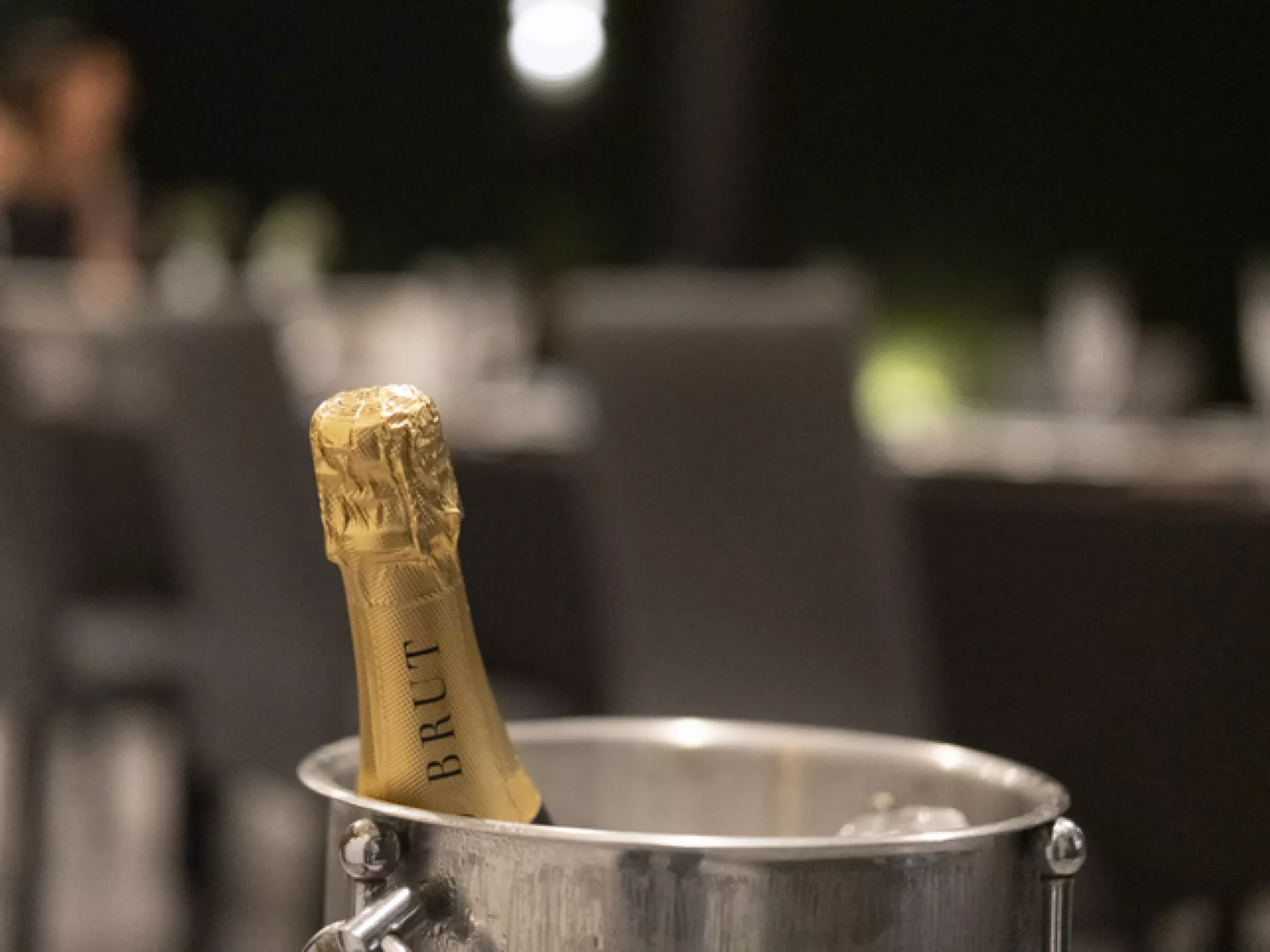
The best Champagne for a mimosa is whatever you like and can afford. For us, buying a decent Champagne is more than we’d spend for making mimosas, in which the flavour will be partially obscured by orange juice. Instead, we recommend a dry sparkling white wine such as a cava from Spain, a dry prosecco from Italy or a British sparkling wine. A budget of around £20 per bottle is what we’re suggesting.
Mimosa Variations
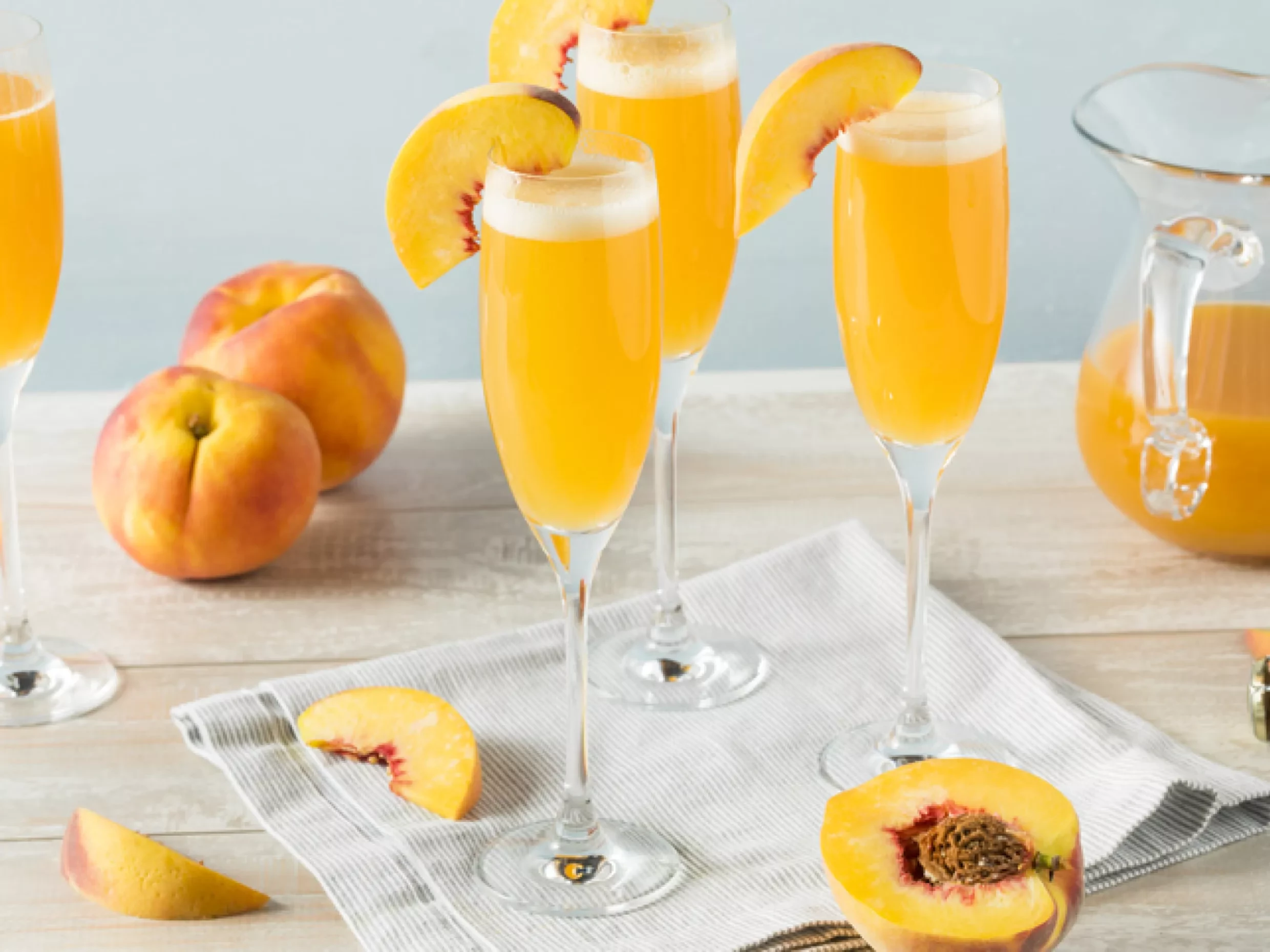
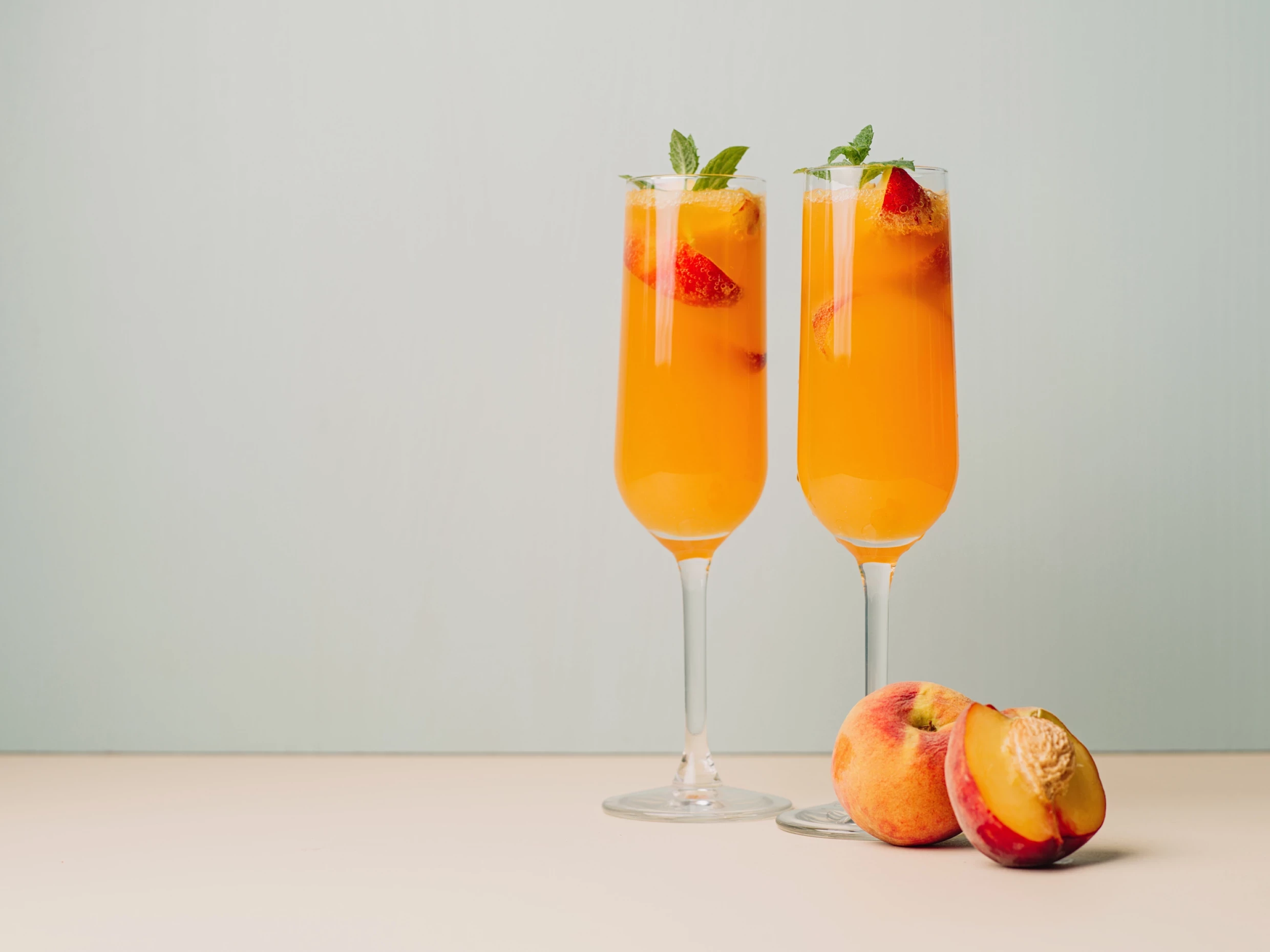
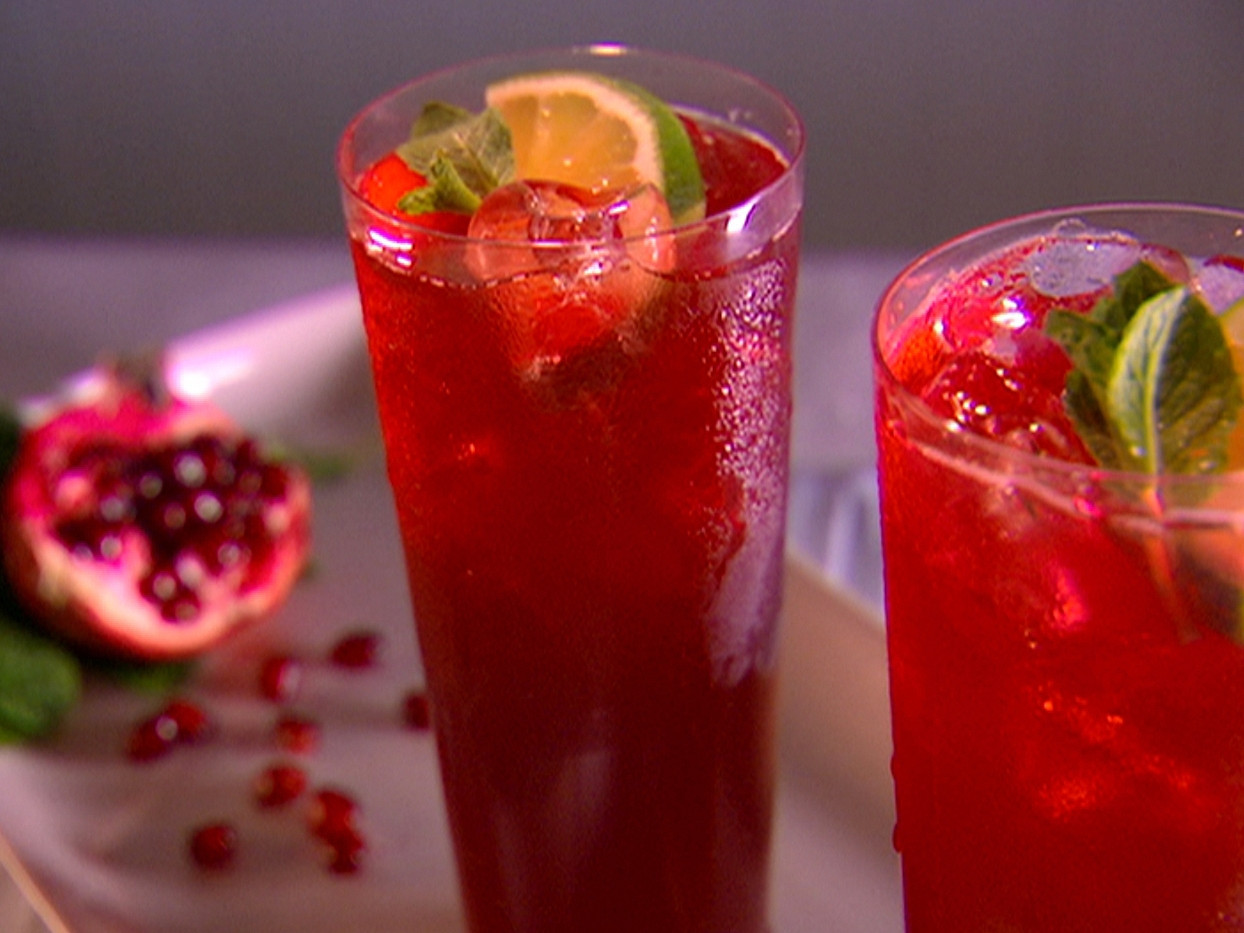
Probably the most well-known juice and sparkling wine that isn’t a mimosa is a bellini, made with peach puree in place of orange juice. Purée of mango or watermelon right from the blender are great options too. Pineapple, strawberry, blackberry and raspberry purées and grapefruit juice should be strained: no one wants pulp or seeds in their cocktail. Pomegranate, apple juice or apple cider can be used right out of the container.